DbcultAccessing Vault...
Cult Review
Senior Film Conservator
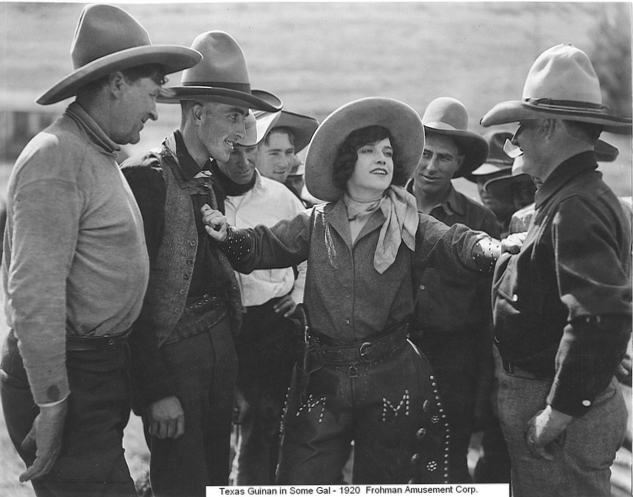
Stepping into the flickering glow of early cinema, one often encounters narratives that, while seemingly straightforward, resonate with the primal pulse of human drama. Roy Somerville's Some Gal is precisely one such artifact, a silent Western that, even in its barest plot description, promises a vivid exploration of peril, coercion, and heroism on the untamed frontier. This isn't just a simple tale of good versus evil; it's a window into the societal anxieties and moral compass of an era, delivered with the visceral immediacy only silent film can truly muster. The film, starring the dynamic Texas Guinan and the stalwart Leo Willis, presents a quintessential conflict, yet one imbued with a particular intensity that sets it apart from its contemporaries.
The narrative core of Some Gal is a harrowing one: a father, trapped by circumstances and the machinations of a ruthless Mexican cattle thief, faces an unthinkable choice. His daughter's hand in marriage to the villain is demanded as the price for his own freedom and, perhaps, his life. This premise alone sets a stage of profound ethical quandary, forcing characters into desperate corners where the line between survival and moral bankruptcy blurs. It's a testament to Somerville's storytelling, even through the lens of a century, that such a scenario can still evoke a sharp sense of injustice and impending doom. The inherent powerlessness of the heroine, a common trope in the era, is here elevated by the sheer brutality of the proposed exchange, making her eventual rescue not merely a plot device but a triumph against profound oppression. The film, though largely lost to time in its full glory, leaves an indelible impression through the sheer force of its dramatic potential.
In an age saturated with cinematic output, it's easy to overlook the foundational artistry of films like Some Gal. Yet, these works are the very bedrock upon which modern storytelling is built. The performance of Texas Guinan, a personality larger than life both on and off screen, would have undoubtedly lent a unique spark to the beleaguered heroine. Known for her vivacious spirit and audacious persona, Guinan’s portrayal would have transcended mere victimhood, likely infusing the character with a latent strength and defiant glint in her eyes, even in the face of such dire circumstances. Her presence alone suggests a heroine who, despite being placed in peril, possesses an inner fire that makes her worth fighting for, a far cry from the passive damsels often depicted. Her dynamic with Leo Willis, the hero tasked with disrupting the nefarious plot, would have been central to the film's emotional resonance. Willis, a veteran of numerous Westerns, brought a rugged authenticity to his roles, embodying the strong, silent type who rides in to right wrongs. Their combined star power, under the direction of Roy Somerville, would have been a significant draw for audiences of the period, eager for tales of frontier justice.
The casting of George Chesebro as the cattle thief would have been a masterstroke in villainy. Chesebro excelled at portraying characters with a menacing edge, his features often conveying a blend of cunning and cruelty that was perfectly suited for the antagonist in such a high-stakes drama. His presence would have provided a palpable threat, making the hero's task all the more daunting and the stakes for Texas Guinan's character terrifyingly real. Supporting players like Clifford Smith, H.N. Dudgeon, and Jack Richardson would have fleshed out the world, adding layers of authenticity to the frontier setting, whether as desperate townsfolk, loyal ranch hands, or other figures caught in the crossfire of this dramatic struggle. Their collective contributions, though perhaps secondary to the main triumvirate, would have been crucial in building the immersive atmosphere necessary for a compelling silent Western.
The directorial choices of Roy Somerville, working within the constraints and innovations of early filmmaking, would have been pivotal in translating this intense plot onto the screen. Silent films relied heavily on visual storytelling, using exaggerated gestures, dramatic close-ups, and meticulously staged action sequences to convey emotion and narrative progression. One can imagine Somerville employing sweeping wide shots to establish the vast, indifferent landscape that serves as both backdrop and silent antagonist, emphasizing the isolation and vulnerability of the characters. Intertitles would have been carefully crafted, not merely to convey dialogue but to punctuate moments of high tension, ethical dilemma, and heroic resolve. The pace would have likely alternated between suspenseful build-ups and explosive bursts of action, particularly during the hero's efforts to thwart the villain's plot. The kinetic energy of the cattle rustling, the desperate flight of the heroine, and the climactic confrontation would have been orchestrated to maximize audience engagement, a silent ballet of peril and rescue.
Comparing Some Gal to other films of its era, one can discern its place within the broader tapestry of silent cinema. The theme of a woman in peril, forced into an undesirable union, echoes through many narratives of the time. For instance, the dramatic stakes in The Splendid Sin, while perhaps more focused on moral transgression within a societal context, shares a similar undercurrent of a woman navigating treacherous personal circumstances. Similarly, the desperate plight of the heroine in A Child of Mystery or A Child of the Paris Streets, though set in vastly different urban environments, reflects the common narrative thread of innocence threatened by malevolent forces. Some Gal, however, grounds this universal theme within the uniquely American mythology of the Western, where justice is often swift and personal, and the landscape itself is a character.
The Western genre, even in its nascent stages, was a powerful vehicle for exploring themes of autonomy, lawlessness, and the establishment of order. Films like Stingaree, with its focus on a charismatic outlaw, or The Fugitive, depicting a relentless pursuit, would have provided a contextual backdrop against which Some Gal distinguished itself through its specific focus on a domestic crisis played out on a grand, dangerous stage. The pressure exerted on the father, a man stripped of his agency, is a nuanced element that adds depth beyond a simple hero-versus-villain showdown. This internal conflict, the moral agony of a parent contemplating an unimaginable sacrifice, elevates the narrative beyond mere adventure to a more profound human tragedy that only a timely intervention can avert.
Furthermore, the element of coercion and forced marriage finds parallels in international silent cinema as well, although often with different cultural nuances. While Hans nåds testamente (His Lordship's Last Will) and Nerven (Nerves) explored psychological and social pressures within European settings, Some Gal places this harrowing dilemma squarely within the rugged, unforgiving world of the American West. The raw, immediate danger of the borderlands, populated by figures like the cattle thief played by George Chesebro, adds a layer of visceral threat that distinguishes it from more psychological dramas. The hero's intervention isn't merely a legal or social one, but a physical confrontation with an immediate, palpable evil.
The very existence of films like Some Gal, even if only fragments or plot summaries remain, underscores the incredible output and diverse storytelling of the early film industry. Each production, whether a grand epic like The Diamond from the Sky or a tightly wound drama like Some Gal, contributed to the evolving language of cinema. The film's emphasis on a clear moral struggle, where the hero's actions directly counteract a grave injustice, speaks to a fundamental desire for order and righteousness in a chaotic world. It’s a narrative blueprint that continues to be relevant, albeit reinterpreted, in modern storytelling. The simplicity of its premise belies a profound capacity for emotional engagement, a hallmark of effective silent film.
The enduring appeal of the Western, a genre that Some Gal comfortably inhabits, lies in its myth-making capabilities. It presents a world where individual courage can truly make a difference against overwhelming odds. The hero, often a lone figure, embodies the hope for justice when formal institutions are absent or ineffective. This film, with Leo Willis stepping into that archetypal role, reinforces this potent mythology. His frustration of the thief's plot isn't just a personal victory for the heroine but a symbolic triumph for the values of freedom and self-determination against the forces of tyranny and greed. It’s a narrative that speaks to the core tenets of American identity, even as it explores its darker, more lawless corners.
Reflecting on Some Gal allows us to appreciate the foundational artistry of Roy Somerville and the compelling performances of Texas Guinan and Leo Willis. It serves as a reminder that even the most straightforward plots can carry immense dramatic weight when handled with sincerity and skill. The film, a product of its time, nonetheless speaks to timeless human experiences: the desperation of a father, the terror of a daughter, and the courage of a hero. Its legacy, though perhaps obscured by the mists of time, is a valuable piece of cinematic history, inviting us to imagine the vivid spectacle that once captivated audiences and continues to inform our understanding of storytelling on screen.
IMDb 4.7
1929
Community
Log in to comment.