DbcultAccessing Vault...
Cult Review
Senior Film Conservator
The opening frames of *Some Judge* plunge the viewer into a world where ambition collides with tradition, and the scales of justice are as much a prop as a principle. The protagonist, a lithe and eager young man, secures a judgeship through a blend of political maneuvering and sheer audacity—a premise that immediately signals the film’s willingness to satirize institutional gravitas. This audacious premise is not merely a comedic device; it establishes a thematic through‑line that interrogates how power can be both a shield and a sword.
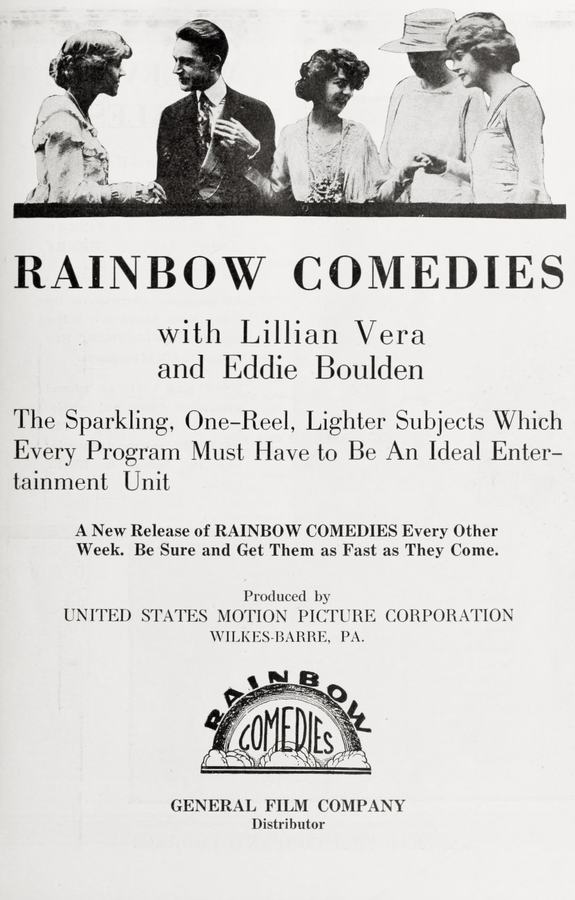
Lillian Vera, portraying the spirited daughter, radiates a defiant energy that is both endearing and catalytic. Her chemistry with the titular judge—embodied by Edward Boulden—creates a dynamic that oscillates between tender affection and razor‑sharp wit. Boulden’s performance is a masterclass in restrained authority; he exudes confidence without descending into caricature, allowing the audience to empathize with a character who is simultaneously a law‑giver and a lover.
The narrative arc unfolds like a meticulously crafted legal brief. The father‑in‑law’s refusal to sanction his daughter’s union ignites the central conflict, prompting the young judge to summon the patriarch to a private hearing. What follows is a series of courtroom vignettes that blend slapstick humor with incisive social commentary. The judge’s courtroom, bathed in dim, amber lighting, becomes a stage where propriety is interrogated and hypocrisy is laid bare.
When the patriarch’s clandestine liaison with a chorus of vivacious girls leads to a breach of the town’s liquor statutes, the film pivots from familial drama to a full‑blown legal farce. The scene in which the judge discovers the illicit gathering is shot with a kinetic camera that darts between the revelers and the stern visage of the law, underscoring the tension between public decorum and private indulgence. The choreography of this sequence is reminiscent of the chaotic energy found in The Criminal, yet *Some Judge* retains its own tonal identity through its satirical lens.
The judge’s evolution from a self‑appointed arbiter to a conduit for redemption is subtle yet profound. Initially, his motives appear self‑serving—using the bench to coerce the father‑in‑law into compliance. However, as the trial progresses, the judge’s own moral compass is tested. Boulden’s nuanced delivery—particularly in the courtroom monologues—reveals a character grappling with the weight of his own authority. His transformation mirrors the arc of classic protagonists such as those in Mariute, where personal growth is catalyzed by societal pressure.
The patriarch, portrayed with a dignified gravitas, embodies the old‑world ethos that clings to hierarchy and reputation. His eventual confession—“Heaven bless you, my children”—is delivered with a tremor that hints at genuine contrition. This moment, bathed in a soft sea‑blue wash, is a visual metaphor for the cleansing of past transgressions. The use of the color #0E7490 in this scene is deliberate, evoking a sense of calm after the storm of chaos.
Visually, *Some Judge* is a study in contrast. The dominant black backdrop of the film’s mise‑en‑scene amplifies the brilliance of the accent colors—dark orange (#C2410C) for moments of heated confrontation, yellow (#EAB308) for fleeting instances of levity, and sea blue (#0E7490) for introspective beats. The strategic deployment of these hues creates a rhythm that guides the viewer’s emotional response, much like the tonal shifts observed in On the Night Stage.
The cinematography employs tight close‑ups during the courtroom exchanges, allowing the audience to read the subtle flicker of doubt in the judge’s eyes or the lingering shame in the patriarch’s gaze. Wide shots of the illicit party, conversely, capture the exuberance of the chorus girls, whose vibrant costumes punctuate the otherwise monochrome setting.
At its core, *Some Judge* interrogates the paradox of wielding power to protect love. The judge’s legal maneuvering is not merely a plot device; it serves as an allegory for the lengths individuals will go to safeguard personal bonds against institutional rigidity. This thematic thread aligns with the narrative concerns of The Clever Mrs. Carfax, where societal expectations clash with personal desire.
The film also touches on the concept of redemption through communal forgiveness. The courtroom, traditionally a venue for judgment, becomes a sanctuary where the patriarch’s misdeeds are absolved not through punitive measures but through a collective benediction. This inversion of judicial purpose is a bold narrative choice that invites viewers to reconsider the function of law in the tapestry of human relationships.
When placed alongside contemporaneous works such as Perils of the Secret Service or the more melodramatic En vinternat, *Some Judge* distinguishes itself through its deft balance of satire and sincerity. While the former leans heavily into espionage tropes, and the latter indulges in overt melodrama, *Some Judge* remains anchored in the quotidian absurdities of small‑town jurisprudence.
The film’s script, though lacking a credited writer in the provided material, exhibits a lyrical cadence reminiscent of early 20th‑century stage comedies. Dialogue is peppered with witticisms that echo the repartee found in Das Laster, yet it maintains an original voice that feels both timeless and immediate.
Beyond the central duo, the supporting ensemble contributes layers of texture. The chorus girls, each embodying a distinct archetype—from the flirtatious ingénue to the world‑weary veteran—serve as both comic relief and narrative catalysts. Their presence underscores the film’s commentary on gender dynamics, subtly critiquing the patriarchal structures that the judge seeks to dismantle.
The film’s sound design, featuring a score that oscillates between jaunty brass motifs and somber strings, mirrors the tonal shifts in the narrative. The auditory palette, much like the visual one, utilizes the dark orange and yellow accents to heighten moments of tension and release.
The pacing of *Some Judge* is deliberately measured, allowing each courtroom revelation to breathe before the next escalation. This measured tempo ensures that the audience remains engaged without feeling overwhelmed by the rapid succession of comedic set‑pieces. The film’s three‑act structure—inciting incident, escalating conflict, and cathartic resolution—adheres to classical storytelling while injecting fresh, idiosyncratic beats that keep the narrative from feeling formulaic.
The climax, wherein the patriarch delivers his benediction, is executed with a restraint that avoids melodramatic excess. The camera lingers on his face as he whispers the blessing, the sea‑blue lighting enveloping him in a halo of forgiveness. This visual choice underscores the film’s ultimate message: that true justice is often found in compassion rather than condemnation.
Although set in an indeterminate era, the film’s exploration of legal authority and familial duty resonates with contemporary audiences grappling with the balance between personal autonomy and societal expectations. The judge’s unorthodox approach to law—using his bench as a platform for personal advocacy—mirrors modern debates surrounding judicial activism versus restraint.
The film also subtly critiques the double standards surrounding gendered morality. While the patriarch’s transgression—illicit drinking—receives public censure, the chorus girls’ participation is portrayed with a lightness that challenges traditional moral judgments, echoing themes explored in Frivolité.
*Some Judge* stands as a compelling amalgam of courtroom drama, romantic comedy, and social satire. Its deft use of color, nuanced performances, and incisive script coalesce into a work that is both entertaining and thought‑provoking. The film’s ability to navigate the fine line between humor and earnestness, while delivering a resonant commentary on authority, love, and redemption, marks it as a noteworthy entry in the canon of legal comedies.
For viewers seeking a film that challenges conventions with wit and heart, *Some Judge* offers a richly textured experience that lingers long after the final verdict is rendered.

IMDb 7.3
1931
Community
Log in to comment.