DbcultAccessing Vault...
7/10
Senior Film Conservator
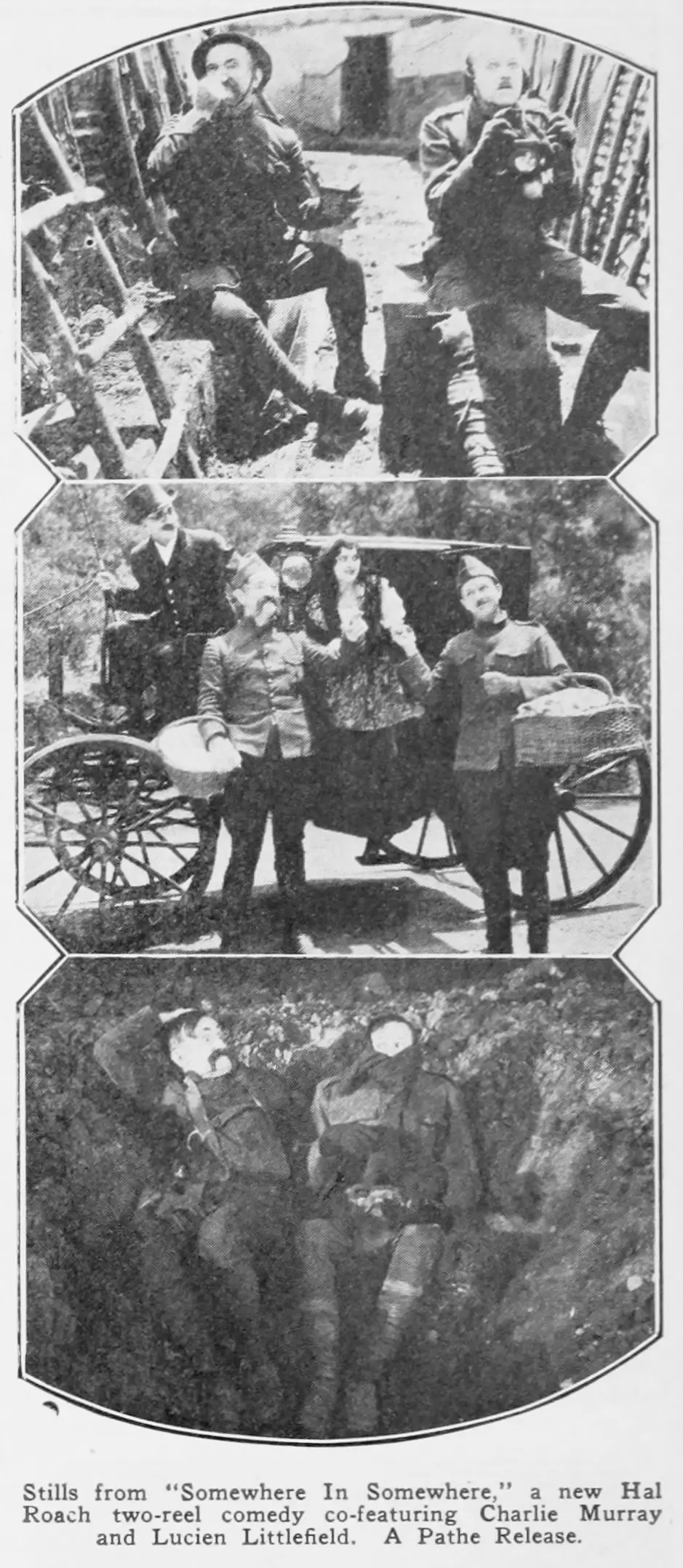
A definitive 7/10 rating for a film that redefined the boundaries of cult cinema. Somewhere in Somewhere remains a cornerstone of transgressive art.
Is Somewhere in Somewhere a relic best left to the dusty archives, or does this silent-era WWI comedy still hold a surprising charm for modern audiences? Short answer: yes, but with significant caveats that ground it firmly in its historical context and the specific tastes of its viewers.
This film is an absolute must-see for aficionados of early cinema, particularly those with a keen interest in silent slapstick and the unique ways filmmakers of the 1920s grappled with the grim realities of war through the lens of comedy. It is decidedly not for those accustomed to the rapid-fire pacing, intricate plotlines, or sophisticated character development of contemporary cinema, nor for anyone seeking a serious, poignant depiction of wartime life.
The landscape of WWI cinema is often dominated by grim realism or heroic sacrifice. Yet, Somewhere in Somewhere carves out its own distinct niche, opting for a brand of humor that is both physical and, at times, surprisingly dark in its absurdity. The premise, two mismatched soldiers in a forward trench, is a classic comedic setup, but H.M. Walker's writing imbues it with a particular innocence that feels both dated and endearing.
The core dynamic between the world-weary O'Brien and the utterly clueless Toots drives the narrative. Toots, a character of almost unbelievable naiveté, is the engine of nearly every comedic set piece. His mistaking a gas alarm for a dinner call isn't just a simple gag; it's a profound statement on his disconnect from the brutal reality surrounding him, or perhaps, a desperate coping mechanism. This early scene sets the tone: danger is ever-present, but our protagonists will consistently misinterpret or narrowly escape it through a blend of luck and O'Brien's exasperated competence.
The film's pacing, typical of silent comedies, relies heavily on visual gags and physical performance, punctuated by intertitles. While this can feel slow to a modern viewer, it allows the individual comedic beats to breathe. The sequence involving the Limburger cheese, for instance, isn't rushed. We see the cheese arrive, Toots's confusion, the slow build-up to his misidentification of the odor as gas, and the subsequent panic. It's a masterclass in comedic escalation, proving that even simple concepts can be stretched for maximum effect with careful timing.
This film works because it commits wholeheartedly to its specific brand of naive, physical comedy, offering a unique, if simplified, look at the absurdities of war through an early cinematic lens. It fails because its reliance on broad, often repetitive gags and minimal character development can test the patience of anyone not deeply invested in the historical context of silent film. You should watch it if you appreciate the pioneering efforts of early filmmakers to find humor in challenging circumstances and enjoy the unvarnished charm of silent-era slapstick.
In silent cinema, acting is a different beast entirely. It demands an almost balletic physicality, exaggerated facial expressions, and a keen understanding of visual storytelling. Noah Young, as the bumbling Toots, delivers a performance that is both frustratingly inept and utterly charming. He embodies the 'fool' archetype with gusto, his wide-eyed confusion and clumsy movements painting a vivid picture of a man out of his depth. One particular moment, where he fumbles with his gas mask, only to realize the 'threat' is a piece of cheese, is a highlight, showcasing his ability to convey panic and then sudden, sheepish understanding without a single spoken word.
Al Hallett, as the more grounded O'Brien, serves as the perfect foil. His performance is a masterclass in silent exasperation. His eye-rolls, quick glances to the heavens, and the way he physically guides (or drags) Toots through perilous situations speak volumes. He's the audience's surrogate, reacting to Toots's antics with a weariness that is both relatable and genuinely funny. The chemistry between Young and Hallett is palpable, a classic 'straight man and comedian' pairing that predates countless duos in cinematic history. Their 'races with shells' sequence, where O'Brien's frantic determination is constantly undermined by Toots's oblivious meandering, is a testament to their physical synchronicity.
The supporting cast, including Marjorie Whiteis and Charles Murray, provide solid background performances, grounding the absurdity in a semblance of wartime reality. Lucien Littlefield, likely as the captain, effectively conveys authority and frustration through his stern posture and gestures. It's a collective effort that leans into the strengths of silent acting: broad strokes, clear emotions, and physical comedy that transcends any language barrier.
H.M. Walker, as the director, navigates the delicate balance of wartime setting and comedic tone with a light touch. He understands that the humor in Somewhere in Somewhere comes not from lampooning the war itself, but from placing inherently silly characters within its serious confines. The choice to send the duo 'over the top' isn't just a plot device; it's an opportunity for a series of escalating visual gags, each more absurd than the last.
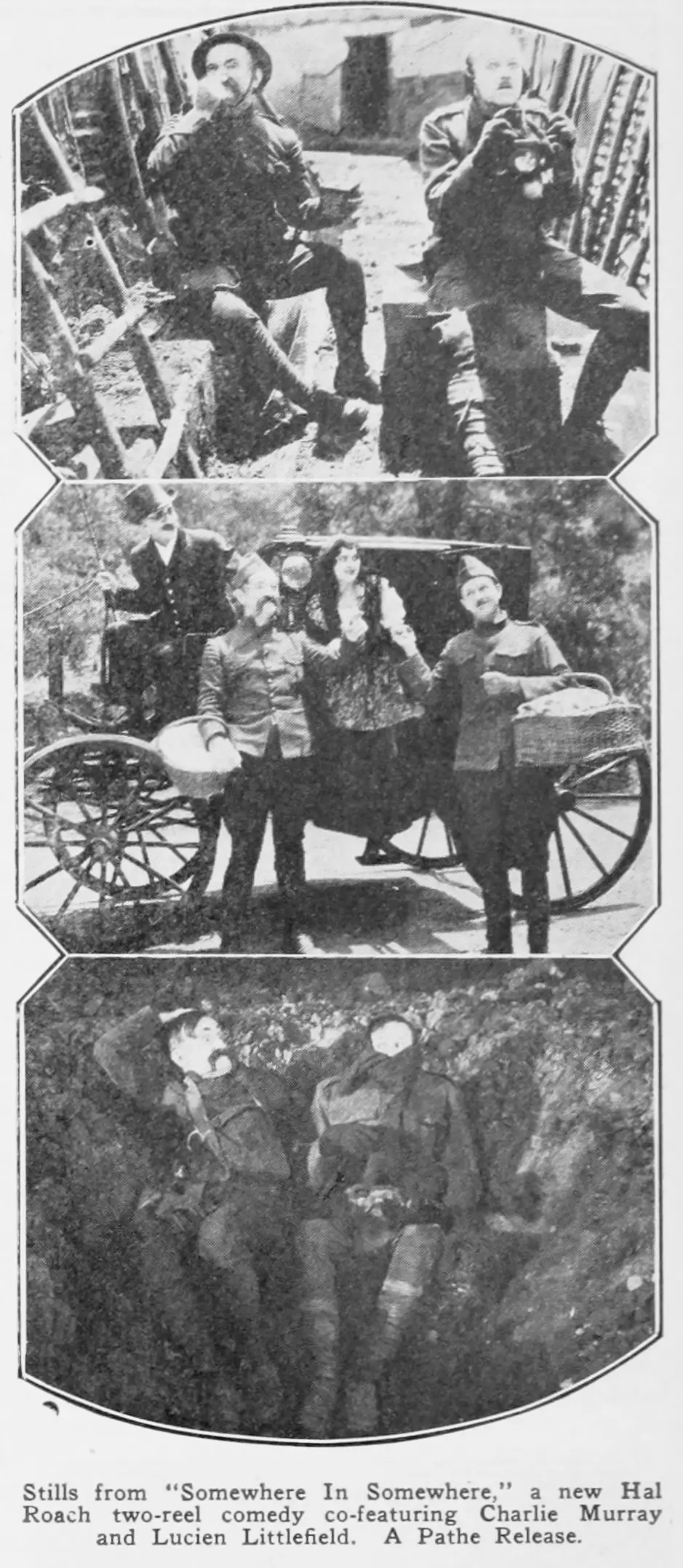
The pacing, while deliberate, is never truly stagnant. Walker uses quick cuts during moments of peril – like the near-misses with artillery shells – to inject energy, contrasting them with longer takes that allow the physical comedy to unfold. For instance, the extended shots of Toots struggling with his equipment or misinterpreting a command are essential for building the comedic tension. This rhythm, a hallmark of early silent comedies, demands a different kind of viewership, one willing to slow down and appreciate the visual storytelling.
One unconventional observation is how the film, despite its comedic intent, inadvertently highlights the sheer randomness and absurdity of survival in trench warfare. The 'victories in races with shells' aren't due to skill, but pure, unadulterated luck. This subtle undercurrent, while never overtly stated, gives the film a surprising depth beyond its surface-level gags. It’s a comedy, yes, but one that can be interpreted as a commentary on the arbitrary nature of life and death in conflict.
The visual language of Somewhere in Somewhere is, by necessity, incredibly important. Without dialogue, every frame must convey information, emotion, and comedic timing. The cinematography, though basic by today's standards, effectively establishes the bleakness of the trenches and the chaos of 'no man's land.' The use of wide shots to show the vast, empty expanse during the 'over the top' sequence emphasizes the isolation and danger faced by Toots and O'Brien, even as their antics unfold.
Close-ups are used sparingly but effectively, often to capture the exaggerated expressions of surprise, fear, or annoyance on the actors' faces. This is crucial for conveying the emotional beats of the comedy. The film's visual clarity ensures that even without sound, the audience understands the escalating stakes and the humorous nature of the characters' predicaments. The practical effects, such as the 'exploding' shells, are rudimentary but serve their purpose, adding a layer of physical danger to the slapstick.
The enduring appeal of Somewhere in Somewhere lies in its historical significance and its unpretentious commitment to simple, physical humor. It’s a snapshot of a particular era of filmmaking, an artifact that shows how early cinema tackled complex subjects like war with a lighthearted touch. It stands in contrast to the more overtly political or satirical war comedies that would emerge later, like Chaplin's The Scarecrow (though that's a different kind of war altogether) or even the more direct WWI satire of The Early Bird in subsequent years.
However, its flaws are equally apparent. The plot is thin, essentially a series of escalating gags strung together. Character development is minimal, relying on archetypes rather than nuanced portrayals. The humor, while effective for its time, can feel repetitive and simplistic to a contemporary audience. There's little in the way of profound insight or emotional resonance beyond the immediate laughs. It's a film designed for immediate entertainment, not lasting contemplation.
Yet, this simplicity is also its strength. It’s honest about what it is: a lighthearted diversion. It doesn't pretend to be anything more. This directness is refreshing. It works. But it’s flawed.
Yes, Somewhere in Somewhere is worth watching, but with a specific mindset. It offers a fascinating glimpse into early cinematic comedy and the ways filmmakers approached a sensitive subject like war through humor. For those interested in film history, the evolution of comedic timing, or simply a charming, if unsophisticated, silent film experience, it provides genuine value. However, if you're not already inclined towards silent cinema, its deliberate pacing and broad humor might prove challenging. It's an educational and mildly entertaining experience for the right viewer.
Somewhere in Somewhere is a fascinating, if slight, piece of cinematic history. It's a testament to the ingenuity of early filmmakers who found ways to entertain amidst the grim realities of war, relying on the universal language of physical comedy. While it won't challenge your intellect or stir deep emotions, it offers a delightful, if fleeting, escape into a bygone era of moviemaking. It’s a film that deserves to be seen, not necessarily for its artistic profundity, but for its historical charm and the sheer, unadulterated joy of watching two skilled silent comedians navigate the absurdities of life and war. Come for the history, stay for the laughs – just adjust your expectations accordingly. It's a solid, if unspectacular, recommendation for the right audience.
IMDb 5.5
1935
Community
Log in to comment.