DbcultAccessing Vault...
Cult Review
Senior Film Conservator
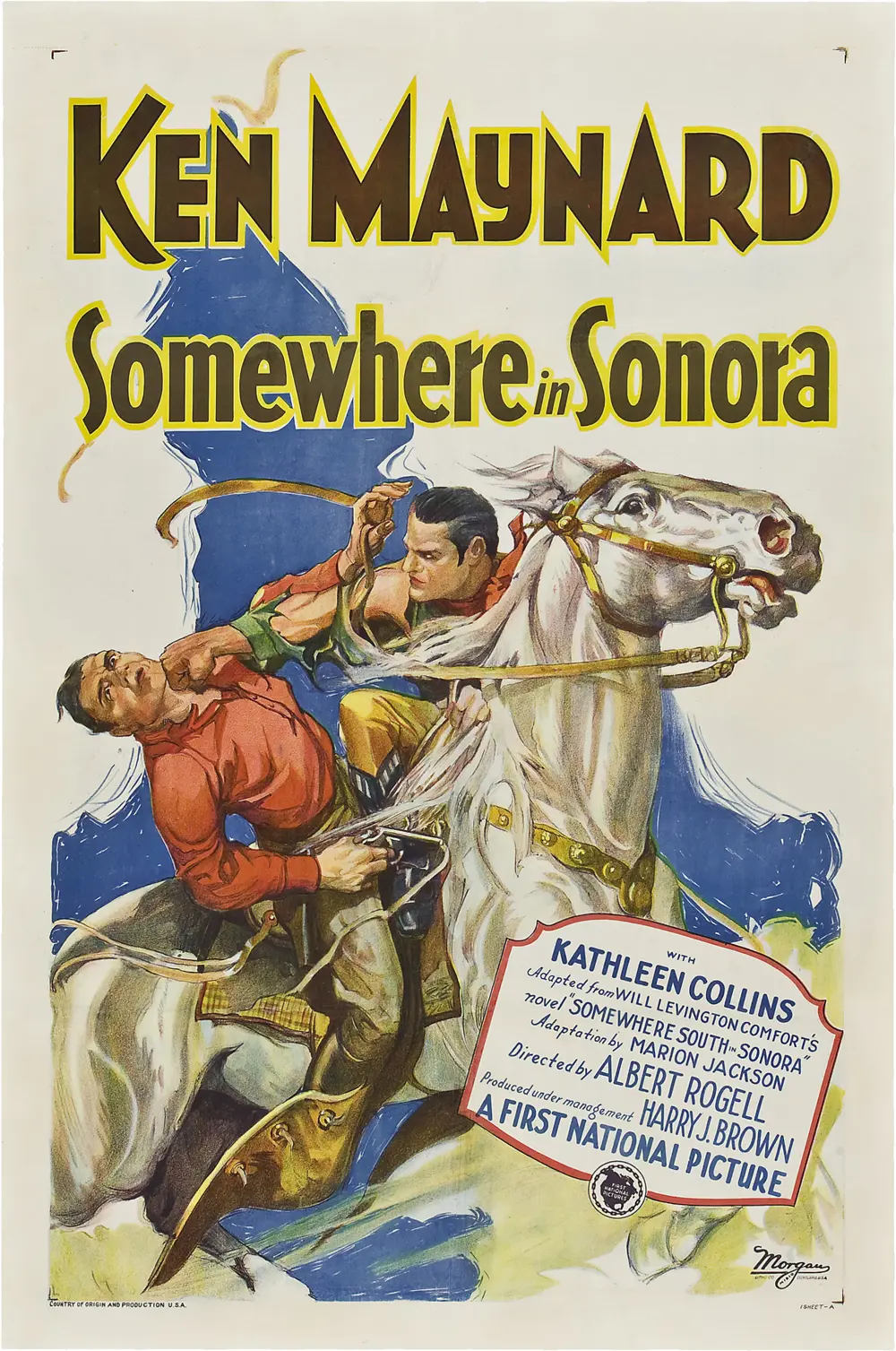
Is 'Somewhere in Sonora' worth watching today? Short answer: yes, but with significant caveats. This is a film primarily for ardent fans of silent Westerns, cinema historians, and those curious about Ken Maynard's early career, not for casual viewers seeking modern narrative sophistication or high-octane action. For those willing to engage with its particular charms, it offers a fascinating glimpse into a formative era of American cinema.
This film works because of Ken Maynard's undeniable charisma and the surprisingly effective action sequences for its era, particularly those involving his magnificent horse, Tarzan. This film fails because its narrative predictability and occasionally sluggish pacing diminish its overall impact for a contemporary audience, making some stretches feel more like a historical document than engaging entertainment. You should watch it if you appreciate the foundational elements of the Western genre, are keen to witness early cinematic stunt work, and are willing to embrace the stylistic conventions of silent film.
'Somewhere in Sonora' (1927) emerges from an era when the Western genre was not just popular, but foundational to the burgeoning art of cinema. It’s a film that, despite its age, still possesses a certain rugged charm, primarily due to the magnetic presence of its star, Ken Maynard. The plot, while undeniably simplistic by today's standards, is a classic template: a good man, John Bishop, wronged by circumstance, is thrust into a perilous mission of redemption and rescue. This narrative simplicity is, paradoxically, both its strength and its weakness.
The story kicks off with Bishop being framed for a stagecoach accident, a contrivance that quickly establishes his moral compass and sets him on a path of injustice. His subsequent escape, aided by Bob Leady, isn't just a plot device; it's a symbolic break from societal constraints, propelling him into the untamed wilderness where his true character can shine. This initial setup, a staple of countless Westerns, feels less like a fresh narrative and more like a comforting, familiar embrace for genre aficionados.
What follows is Bishop’s journey into Sonora to find Leady’s missing son, a quest that inevitably leads him into the clutches of Monte Black’s gang. The idea of a gang from which 'no member has ever escaped alive' immediately raises the stakes, even if the execution sometimes struggles to maintain that tension. It’s a world painted in broad strokes, where heroes are noble, villains are dastardly, and the lines between right and wrong are as clear as the desert sky.
The film’s appeal, therefore, isn't found in its intricate twists or profound character development, but in its earnest portrayal of classic Western archetypes. It’s a cinematic time capsule, offering a window into how these stories were told before sound, before complex psychological studies, when heroism was often defined by a man's ability to ride a horse and dispense justice with a six-shooter. The film's reliance on visual storytelling, given its silent nature, forces a certain purity of action and expression that modern cinema often foregoes.
At the heart of 'Somewhere in Sonora' is Ken Maynard, a figure whose name might not resonate with contemporary audiences but was, in his time, a bona fide silent screen superstar. Maynard brought a unique blend of athleticism, sincerity, and raw cowboy authenticity to his roles. He wasn't just an actor; he was a rodeo champion, a trick rider, and a genuine horseman, and it shows in every frame. His performances are less about nuanced emotional displays and more about dynamic physicality and unwavering resolve.
Maynard’s charisma is palpable, even without dialogue. His piercing gaze, his confident stride, and his effortless command of his equine companion, Tarzan, are the film's true anchors. He embodies the stoic, honorable Western hero with an almost effortless grace. When he’s on screen, especially during action sequences, the film crackles with an energy that transcends its technical limitations. His stunts, often performed without doubles, are genuinely impressive, adding a layer of authenticity that many of his peers couldn't match.
And then there’s Tarzan. Maynard’s horse is not merely a prop; he is a character in his own right, often stealing scenes with his intelligence and agility. The bond between Maynard and Tarzan is a core element of the film's appeal, a testament to the real-life partnership they shared. Watching Tarzan navigate treacherous terrain, execute precise maneuvers, or even 'act' on cue is a constant delight. In many ways, Tarzan’s contributions are as vital to the film's success as Maynard's, perhaps even more so for audiences less accustomed to the stylistic acting of the silent era. It's a bold claim, but one I stand by: Tarzan often out-acts some of his human co-stars, conveying more emotion and purpose through his movements than some actors do with their expressions.
The supporting cast, including Monte Montague as the nefarious gang leader and Yvonne Howell as the romantic interest, fulfill their roles adequately, but they largely serve as foils or catalysts for Maynard’s actions. Montague, in particular, leans into the archetypal silent villain, all scowls and menacing gestures. While effective for the period, their performances lack the distinctiveness that Maynard brings, making them feel somewhat secondary to the star and his horse.
Directed by Frank Leigh, 'Somewhere in Sonora' showcases the nascent stages of cinematic language, particularly within the Western genre. The direction is functional, prioritizing clear storytelling and highlighting Maynard's action sequences. There aren't many groundbreaking artistic flourishes, but the film effectively utilizes its chosen locations and the inherent drama of the Western landscape.
Cinematography, while not revolutionary, is competent for the period. The wide-open spaces of Sonora are captured with a sense of scale, even if the compositions are straightforward. There's a particular beauty in how the landscape often becomes a character itself, vast and unforgiving, mirroring the challenges faced by John Bishop. The camera work, though largely static, occasionally employs tracking shots to follow Maynard on horseback, adding a dynamic energy to the chases and rides. One particular sequence involving a cliffside pursuit stands out, demonstrating a surprisingly adept use of depth and peril.
The use of intertitles, a necessity for silent films, is judicious. They convey dialogue and narrative exposition without overwhelming the visual storytelling. While some might find them disruptive, they are an integral part of the silent film experience, often delivering information with a dramatic flourish or a touch of period-specific rhetoric. They bridge the gap between action and meaning, ensuring the audience is always aware of the plot's progression.
However, the direction sometimes struggles with pacing in non-action sequences. Scenes of exposition or character interaction can feel protracted, a common issue in silent cinema where the absence of spoken dialogue sometimes led to over-reliance on drawn-out pantomime. This is a film that truly comes alive when Maynard is in motion, a testament to his star power and the genre's inherent kinetic energy.
The pacing of 'Somewhere in Sonora' is a mixed bag, characteristic of many films from the late silent era. There are moments of exhilarating speed, particularly during the aforementioned horseback chases and confrontations with Black's gang. These sequences are edited with a surprising verve, building tension through rapid cuts and dynamic movement. Maynard's physical prowess shines here, making these sections genuinely engaging and demonstrating the raw power of early action filmmaking.
Conversely, there are periods where the film noticeably drags. The initial setup and some of the more expository scenes suffer from a slower rhythm, which, for a modern viewer, can test patience. The absence of synchronized sound means that every emotional beat, every narrative turn, must be conveyed visually, often through exaggerated expressions or extended silent exchanges. This can lead to a feeling of narrative inertia when the plot isn't actively advancing through physical action.
The film's tone is consistently adventurous and morally upright, typical of the era's Westerns. It champions heroism, loyalty, and justice, with very little ambiguity. There’s a clear demarcation between good and evil, and the film never deviates from this straightforward moral compass. While this can feel simplistic, it also provides a comforting, almost mythic quality to the narrative. The stakes are clear, the hero's intentions are pure, and the resolution is predictable but satisfying within its own framework.
One unconventional observation is how the film, despite its focus on a male hero, subtly highlights the resilience of the supporting female characters, even if they are primarily there for romance or peril. Yvonne Howell’s character, for example, isn’t entirely helpless, demonstrating a quiet strength that was perhaps more progressive than many might assume for a 1927 Western, even if it’s not explicitly central to the plot.
For those who appreciate cinematic history and the foundational myths of the American West, 'Somewhere in Sonora' offers a valuable, if imperfect, viewing experience. It's a window into a bygone era of filmmaking, showcasing the raw talent of its star and the nascent storytelling techniques of the genre.
It is not a film that will convert skeptics of silent cinema. However, for those already inclined towards early Westerns or interested in the evolution of film, it provides ample rewards. Expect impressive horsemanship, clear moral lines, and a straightforward adventure.
It serves as an excellent reference point for understanding the roots of the Western genre. Its influence, though perhaps not direct, can be seen in the tropes and characterizations that would define countless Westerns for decades to come.
'Somewhere in Sonora' is a fascinating relic, a testament to the formative years of the Western genre and the star power of Ken Maynard. It works. But it’s flawed. Its strengths lie squarely in Maynard's electrifying performance and the incredible stunts he performs with his horse, Tarzan, which remain genuinely engaging even nearly a century later. These moments of thrilling action and the sheer authenticity of its star elevate the film beyond a mere historical curiosity.
This isn't a film that will redefine your understanding of cinema, nor will it likely top anyone's all-time favorite list. Yet, it possesses an undeniable charm, a rugged honesty that speaks to the enduring appeal of the Western myth.
However, its narrative simplicity and the occasionally sluggish pacing outside of the action sequences prevent it from being a truly compelling watch for a broad modern audience. It's a film best approached with an understanding of its historical context and a willingness to appreciate its raw, unpolished energy. For fans of silent Westerns, it's a solid, enjoyable ride, offering a direct lineage to the genre's golden age. For others, it might feel like a beautiful, but slow, journey through a dusty, familiar landscape. It’s certainly worth seeing for its place in history and for the sheer spectacle of Maynard and Tarzan in their prime, even if it requires a little patience. Consider pairing it with other foundational Westerns like The Bar Sinister or even a later silent gem like The Illustrious Prince to fully appreciate its context.
IMDb 6.6
1915
Community
Log in to comment.