DbcultAccessing Vault...
6.1/10
Senior Film Conservator
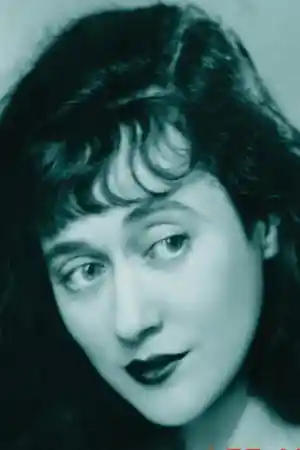
A definitive 6.1/10 rating for a film that redefined the boundaries of cult cinema. Song Service remains a cornerstone of transgressive art.
So, you’ve got Song Service. Is it worth tracking down today? Well, that depends on what you’re after. If you’re someone who loves digging into early film history, or you just enjoy seeing a performer *do their thing* without much fuss, then yeah, absolutely. It’s a neat little time capsule. But if you’re looking for a plot-heavy narrative or big dramatic moments, you’ll probably find this one a bit… still. It’s definitely not for folks who need explosions or fast cuts every few seconds.
The premise is simple enough: Lee, our main performer, shows up at a studio expecting a chat. Instead, it’s all hands on deck for a rehearsal. And that’s pretty much the movie. She sings a couple of songs, and the settings change slightly around her. No big reveal, no dramatic arc.
What I found really striking was just how **uncomplicated** it all felt. You see the studio. You see Lee. She just starts singing. It’s almost like you’re a fly on the wall, peeking in on a genuine moment, not a polished final product. There’s a certain charm in that directness.
Lee herself has this really calm presence. She’s not trying to blow the roof off; her voice just fills the space. And you can tell she’s comfortable, even with the camera right there. There’s one shot where she just slightly shifts her weight, almost imperceptibly, and you feel like she’s just *living* the song.
The “different settings” are quite subtle, too. It’s not like they move her to a whole new elaborate set. It’s more like a quick rearrangement of a few props, or maybe a different backdrop pulled into place. It really highlights the artificiality of the studio environment, but in a way that feels honest, not cheap. Like, ‘here’s what we have, let’s make it work.’
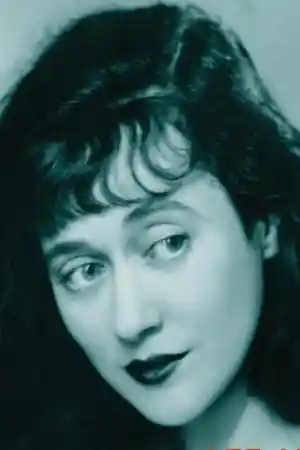
There’s a moment, I think it’s during the second song, where the lighting just hits her face in a particular way. It’s not fancy, but it makes her expression just *pop*. You feel the emotion she’s putting into the lyrics, even if the lyrics themselves aren’t… revolutionary. It’s all about the delivery.
I kept thinking about Die badende Nymphe while watching this, not because they’re similar in content, but in how they both feel like very *early* experiments in capturing something specific on film. One is a mood, the other is a performance. Both are pretty raw.
You can tell Clyde Fillmore is in this, though his role isn't really the focus. He’s more in the background, part of the studio team, maybe observing. It really is Lee’s show. This isn't about the grand production, it's about the **intimacy** of the act itself.
The silence between songs, or sometimes even just the sound of the studio, is quite potent. It lets you breathe with the film. It makes you feel the *waiting* before the next performance starts. It’s a very patient film.
Honestly, it’s a sweet little piece. It’s not trying to be anything more than what it is: a recording of a moment, a rehearsal, a song. And sometimes, that’s just enough. It’s the kind of film that reminds you how simple cinema could be, and how captivating a single, focused performance can be.
IMDb —
1924
Community
Log in to comment.