DbcultAccessing Vault...
Cult Review
Senior Film Conservator
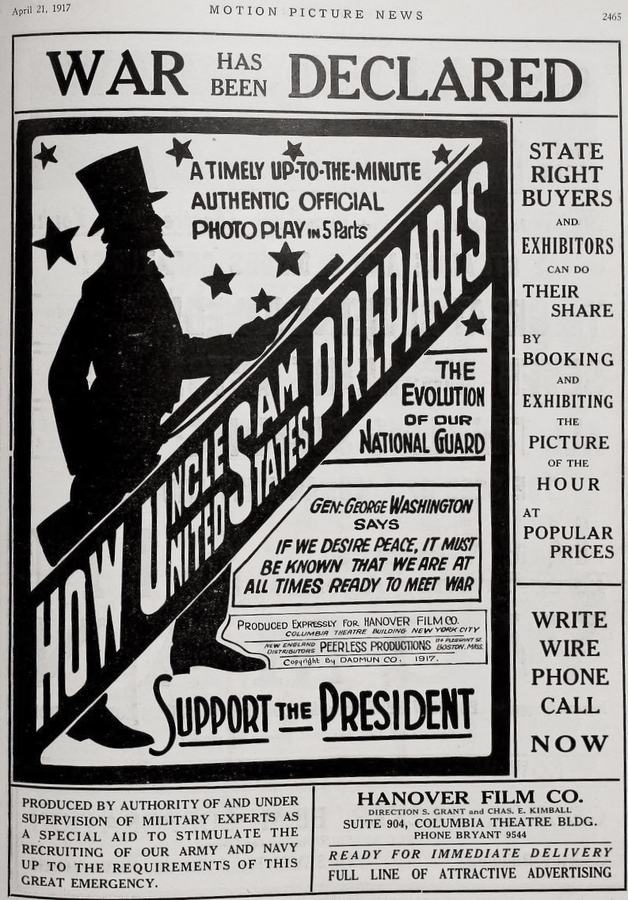
Stepping back into the annals of early American cinema, one encounters films like How Uncle Sam Prepares (slug: how-uncle-sam-prepares) — a fascinating, if often overlooked, cinematic document that offers a unique window into the national psyche during a period of intense global flux. This isn't a narrative driven by star-crossed lovers or a gripping crime; rather, it's a meticulously crafted visual essay on the formidable machinery of national preparedness. Released at a time when the world teetered on the brink, or was already embroiled in, monumental conflicts, this film served a crucial dual purpose: to inform and to inspire. It speaks volumes about the societal values of its epoch, particularly the burgeoning sense of national identity and the solemn responsibility of citizenship. The film’s power lies not in dramatic arcs, but in its almost anthropological observation of a nation gearing itself for an uncertain tomorrow, transforming its populace into a unified, resolute force. It’s a testament to the early filmmakers' understanding of cinema's potential beyond mere entertainment, venturing into the realm of public education and collective motivation, shaping perceptions one frame at a time.
The very title, How Uncle Sam Prepares, immediately signals its didactic intent. It positions itself as an instructional guide, a cinematic manual for the citizenry, meticulously detailing the journey from civilian life to military readiness. We witness the systematic process of recruitment and training, from the initial enlistment — perhaps a young man, hesitant but ultimately resolute, stepping forward from a bustling street — to the rigorous physical conditioning designed to forge resilient bodies and minds. The camera lingers on drills, on the precise movements of marching formations, on the intricate handling of weaponry, all rendered with an almost reverential focus on order and efficiency. This isn't merely documentation; it’s a carefully curated portrayal designed to instill confidence and pride, emphasizing the transformative power of discipline. The visual rhetoric underscores uniformity, synchronization, and the collective spirit — values deemed paramount for national strength in an unpredictable world. It’s a stark contrast to films focused on individual struggle or triumph, instead highlighting the subsumption of individual will into a greater collective purpose. One might draw parallels, in its thematic exploration of societal roles and the molding of individuals, to works like The Miner's Daughter, though the latter often delves into personal sacrifice within a different social context, whereas How Uncle Sam Prepares frames sacrifice as a shared, noble endeavor for the nation's sake, a patriotic duty undertaken with dignity and resolve. The film portrays this transformation as both necessary and inherently ennobling.
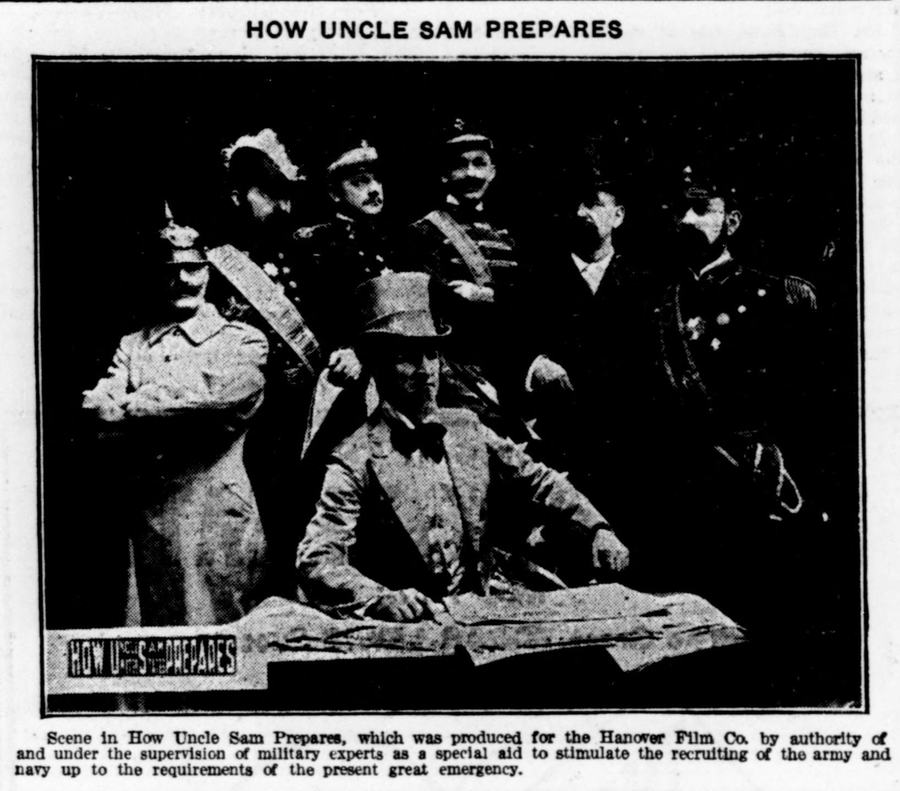
Despite its seemingly straightforward subject matter, the film demonstrates a surprising degree of cinematic craftsmanship for its era, elevating it beyond simple documentation. The framing is often purposeful, utilizing expansive wide shots to emphasize the sheer scale of military operations and the impressive numbers of men involved, creating a sense of overwhelming power and unity. Conversely, closer shots might meticulously focus on the intricate details of a rifle assembly, the precise movements of a drill, or the determined, almost stoic expression on a recruit's face as they master a new skill. The editing, though likely less frenetic than modern sensibilities demand, serves to maintain a steady, purposeful rhythm, effectively conveying the relentless, methodical nature of military training and the steady progression of skill acquisition. Intertitles, crucial for silent films, are employed not just to convey factual information but also to reinforce patriotic messages and underscore the importance of each stage of preparation, often with stirring rhetoric. There's an undeniable artistry in how the filmmakers manage to imbue repetitive actions with a sense of gravitas and national importance, making the mundane seem monumental. The careful use of natural light, the stark contrasts of uniforms against varied landscapes, and the dynamic compositions all contribute to a visual aesthetic that is both informative and quietly compelling, showcasing the early understanding of how to communicate complex ideas and emotions without spoken dialogue, relying solely on the evocative power of the moving image and carefully chosen textual inserts.
Even within a film primarily focused on process and collective identity, the presence of specific individuals lends a crucial human dimension, preventing the narrative from becoming purely an abstract exercise. While detailed character arcs are understandably absent, the contributions of performers like S. Grant and Charles E. Kimball would have been vital in grounding the film's overarching message and providing points of identification or aspiration for the audience. We can infer that S. Grant, perhaps portraying a stern but fair drill sergeant or a distinguished commanding officer, would have embodied the unwavering authority and discipline central to military training. Their posture, their gestures, and their focused gaze would have projected competence and leadership, providing a formidable yet reassuring figure for the recruits — and the viewers — to look up to. Charles E. Kimball, perhaps cast as a civilian recruit undergoing the arduous transformation, or an expert instructor demonstrating specific skills with precision, would have offered a relatable entry point for the audience, mirroring their own potential journey or showcasing the ideal outcome of the training. Their actions, even in the absolute absence of dialogue, would convey determination, nascent skill, or the journey from civilian awkwardness to military precision. In a film emphasizing the collective, these individuals act as crucial anchors, providing a human face to the rigorous demands of national service. Their unspoken performances, conveyed through body language and subtle expressions, would have been instrumental in communicating the seriousness and the ultimate reward of commitment to the nation, making the abstract concept of 'Uncle Sam's preparation' tangible through human endeavor and disciplined sacrifice.
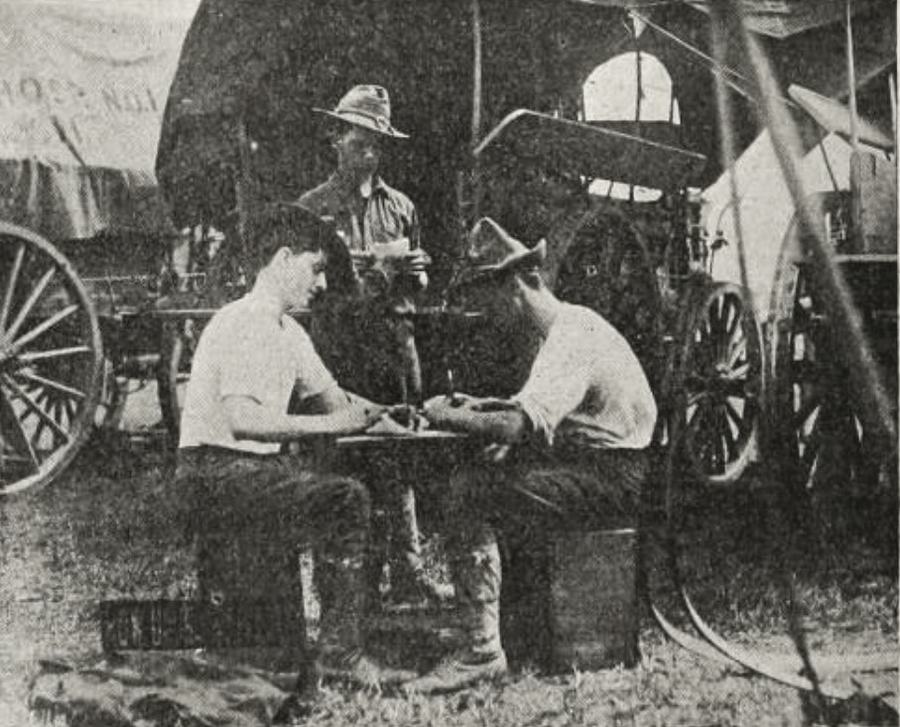
It's impossible to discuss How Uncle Sam Prepares without acknowledging its potent role as a piece of early 20th-century propaganda. Far from being a pejorative term in its historical context, propaganda was a vital tool for national cohesion, morale-building, and public mobilization. The film wasn't merely showing; it was actively advocating for a specific worldview and a call to action. It aimed to persuade citizens of the necessity and inherent nobility of military service, to cultivate a profound sense of shared purpose and national resilience. The portrayal of military life is invariably positive — orderly, purposeful, and ultimately empowering. Any hardships encountered are meticulously framed as character-building experiences, while any sacrifices are presented as patriotic duties, integral to the fabric of national honor. This persuasive rhetoric finds echoes in other films of the era that sought to rally public sentiment, such as American Maid, which likely presented idealized visions of American life and values, reinforcing a sense of national exceptionalism. The profound effectiveness of How Uncle Sam Prepares lies in its subtlety; it doesn't overtly harangue, but rather demonstrates through compelling visuals. It presents a clear, aspirational vision of a capable, organized nation, ready to face any challenge, thereby fostering a deep sense of security and collective strength among its viewers. It was a potent visual argument for unity, discipline, and the comprehensive preparedness that underpins national sovereignty, a powerful and timely message for an era defined by global uncertainty and shifting geopolitical landscapes.
To fully appreciate the profound significance of How Uncle Sam Prepares, one must situate it firmly within its specific historical context. This was a period marked by unprecedented industrialization, profound social change, and the seismic shifts of global power dynamics, with nations increasingly interconnected yet simultaneously threatened. The film vividly reflects a society grappling with its evolving identity on the world stage, understanding that national strength was inextricably tied to military capability and the readiness of its citizenry. Its legacy extends far beyond its immediate persuasive goals; it serves as an invaluable historical document, offering modern viewers a privileged glimpse into the training methods, military equipment, and prevailing public perception of the armed forces during that tumultuous time. It's a meticulously preserved snapshot of a particular moment in American history, revealing the cultural anxieties, patriotic fervor, and national aspirations of the era. Much like The Light That Failed, which, though a fictional drama, often explored profound themes of duty, sacrifice, and the harsh realities of military life, How Uncle Sam Prepares contributes significantly to our understanding of how these critical ideals were presented and instilled in the public consciousness. It stands as a foundational text for understanding the nascent evolution of military public relations and the burgeoning role of cinema as a powerful medium in shaping national narratives. The film’s silent frames echo with the earnestness of a nation finding its footing in a rapidly changing world, a world where vigilance, preparedness, and collective resolve were paramount for survival and prosperity.
Placing How Uncle Sam Prepares alongside other films of its time illuminates its unique and significant position within the cinematic landscape. While films like Blodets röst or Das Defizit from European cinema might have grappled with more introspective, psychological, or socially critical themes, often reflecting the specific anxieties of their own nations, How Uncle Sam Prepares maintained a resolutely outward, nationalistic, and pragmatic gaze. It wasn't concerned with the inner turmoil of individuals, but with the outward manifestation of collective strength and organizational efficiency. Even within American cinema, where melodramas like The Fatal Card or fantastical adventure serials like Homunculus, 6. Teil - Das Ende des Homunculus captivated audiences with escapism, How Uncle Sam Prepares carved its own distinct niche as a film of civic instruction and patriotic reinforcement. It stands as a compelling precursor to countless informational films and documentaries, unequivocally demonstrating the early power of cinema to educate, influence, and mobilize on a grand scale. Its unwavering focus on process, national purpose, and collective duty fundamentally differentiates it from more personal narratives such as A Question of Right, which would likely explore individual moral dilemmas and their consequences, or the more whimsical and fantastical elements seen in The Flying Circus. Instead, it anchors itself firmly in the tangible reality of national service and preparation, presenting a clear, unequivocal message of readiness and collective responsibility that resonated deeply with its contemporary audience.
In conclusion, How Uncle Sam Prepares is far more than a mere historical curiosity or a relic of a bygone cinematic era. It is a powerful and enduring testament to the early capabilities of cinema as a formidable tool for national communication and profound persuasion. Its silent frames, devoid of spoken rhetoric, nevertheless convey a message of resolute strength, disciplined action, and unwavering patriotism that transcends the limitations of its medium. The film, through its meticulous and almost reverential portrayal of military training, effectively celebrates the transformation of ordinary citizens into dedicated guardians of the nation. It vividly reflects an era's earnest belief in collective effort, the foundational importance of a well-prepared defense, and the intrinsic value of civic duty. For modern viewers, it offers an exceptionally fascinating glimpse into the visual language of early propaganda, the societal values and anxieties that underpinned it, and the enduring human desire for security in an unpredictable world. The film, featuring the commanding presences of S. Grant and Charles E. Kimball, remains a compelling artifact, reminding us of the profound and often understated impact of cinematic storytelling in shaping public discourse and forging national identity, a legacy that continues to resonate powerfully through the decades, offering timeless insights into the mechanics of national mobilization and the power of visual rhetoric. It’s a compelling reminder that even without sound, cinema possessed, and still possesses, an immense capacity to move, inform, and inspire on a grand, collective scale.
IMDb 1.7
1926
Community
Log in to comment.