DbcultAccessing Vault...
Cult Review
Senior Film Conservator
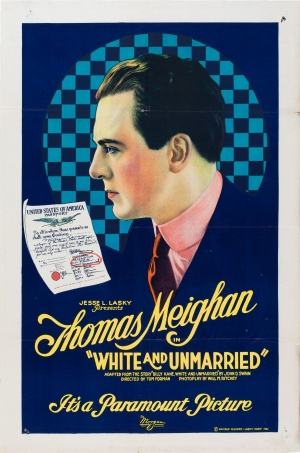
An heiress without a ring, a crook without a crime—yet the ledger of fate never balances.
If jazz were bottled and decanted into celluloid, the resulting effervescence might resemble White and Unmarried, that oft-overlooked 1926 curio now bobbing in the wake of more mythic silent landmarks. Picture a smoky Prohibition night suddenly slit open by magnesium flashbulbs: here is Thomas Meighan’s reformed rum-runner, Tom Stoddard, stepping off the gangplank in Cherbourg with star-spangled naïveté stitched into his dinner jacket. The camera, restless as a gossip columnist, drinks in the Atlantic mist, the gull-cry, the brass-band discord—then pirouettes toward Loretta Young’s wistful ingenue, Mary Bernard, clutching a return ticket she never intends to use. Within three rhyming cuts we intuit the film’s thesis: reinvention is merely another racket, albeit one where the house always wins.
Directors Will M. Ritchey and John D. Swain, both newspapermen before they trafficked in flickers, approach narrative like beat reporters chasing deadline: every scene break snaps like a typewriter carriage return. The inheritance device—a cool million left by a teetotaler aunt—arrives via telegram so abruptly it feels almost sardonic, as though the plot itself were laundering credibility. Yet the screenplay’s cynicism is couched in such silken visual luxury that we forgive the contrivance. Cinematographer Glen MacWilliams bathes Parisian interiors in pools of topaz lamplight; faces emerge from chiaroscuro as if sculpted from butter and shadow. When Tom first strides into the Ritz bar, the camera cranes up to reveal a stained-glass skylight depicting Bacchus mid-revel. The irony is silent but deafening: the ex-bootlegger now worships under the god of wine he once sold by the case.
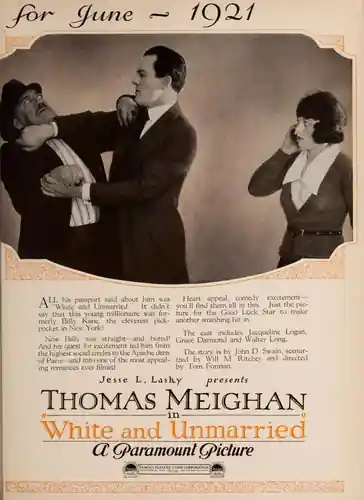
What ensues plays less like a con-job caper than a leisurely dismemberment of masculine ego. Lloyd Whitlock’s Count André de Valon—mustache waxed to razor sharpness—slides into the narrative wearing evening capes and the faint scent of bankrupt nobility. He introduces Tom to baccarat tables where the chips are ivory and the banter gilt-edged. Every smile is a transaction; every toast, a lien on tomorrow. The screenplay’s genius lies in letting the audience stay three beats ahead of Tom: we see the stacked deck, the loaded dice, the perfumed distraction planted in his lap. Yet Meighan’s naturalistic acting—those wounded, searching eyes—keeps us emotionally tethered to the mark. We dread the fall even as we anticipate its splendor.
Loretta Young, only fourteen during production, exudes the brittle melancholy of someone who has read every heartbreak in advance and still demands the encores. Her Mary is nominally the ingénue, yet she performs that role like an actor stepping through a role she has already outgrown. Watch the way she fingers a strand of pearls while lying to Tom about her past: the gesture is so microscopic it feels captured rather than performed. In a medium that rewarded theatrical broadness, such restraint was—and remains—electrifying.
Production designer William Cameron Menzies (future mastermind of Gone with the Wind’s burning Atlanta) renders Montmartre as a cubist fever dream: staircases zig-zag into nowhere, boulevard lamps lean like drunks, moonlight drips across cobblestones the way syrup slides over broken glass. The effect is both intoxicating and menacing, a postcard from a city perpetually on the cusp of curfew. In one bravura sequence, Tom chases a pickpocket through a maze of mirrored arcades; every reflection fractures his identity until he confronts a dozen selves, each more gullible than the last. The metaphor is unsubtle yet ravishing, a visual dissertation on the price of self-delusion.
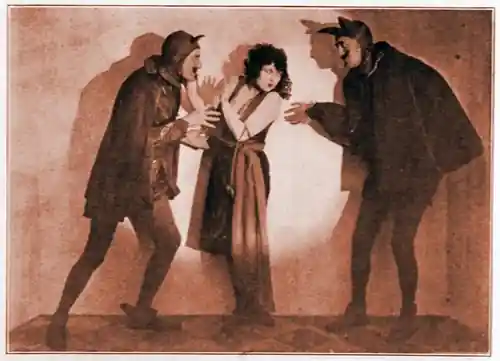
Meanwhile, Marian Skinner’s Madame Celeste—a sort of Sapphic puppeteer in ostrich feathers—hosts salons where the champagne is iced and the morals room-temperature. She stages private theatricals: tableaux vivants that reenact the fall of Carthage, with Tom’s bankroll cast as the elephant. These interludes flirt with camp, yet Skinner’s regal menace anchors them in genuine menace. When she purrs, “Money is merely congealed time,” the line lands like a guillotine.
Viewed today, the absence of synchronized dialogue intensifies the film’s emotional synesthesia. Every intertitle arrives like a telegram from the unconscious—terse, elliptical, occasionally surreal. When Mary confesses, “I have sold my yesterdays for a tomorrow that never delivers,” the words shimmer like heat haze above Young’s trembling pupils. Modern exhibitors often pair the film with live jazz trios, and rightly so: the story’s pulse is percussive, syncopated, a Charleston danced on the lip of an abyss. The restoration circulated by Kino Lorber features a score compiled from 1926 Brunswick sides—Bix Beiderbecke’s cornet solos bleed into Duke Ellington’s jungle nights, creating a temporal slipstream that makes the Roaring Twenties feel contemporaneous, almost predatory.
For those weaned on talkie screwball, the pacing may feel glacial—yet that languor is strategic. The film wants us to stew in Tom’s bourgeois ennui, to feel every franc evaporate in real time. The camera lingers on a moth battering a chandelier crystal, on the slow unfurl of cigarette smoke, on Young’s fingers drumming a waltz on a café table. These ostensible indulgences accumulate into a trance that makes the eventual rug-pull feel existential rather than merely narrative.
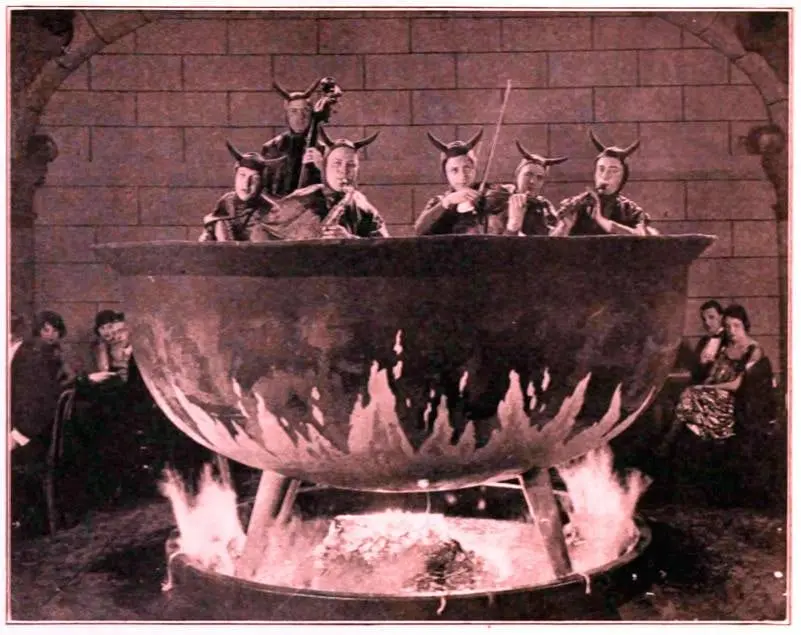
Ritchey and Swain, both closeted aesthetes, smuggle in a queer subtext that flickers like a clandestine signal. Grace Darmond’s vamp, Yvette, flirts with every gender in the room, her eyelids heavy with opium and insinuation. In a dim corridor she breathily assures Tom, “Respectability is just another costume—some buttons fasten in the back.” The line never clarifies its innuendo, yet 1926 audiences—versed in coded language—would have caught the shimmer of lavender. Meanwhile, Jacqueline Logan’s bit part as a garçonne painter who seduces Mary with talk of “the blue hour” feels like a dispatch from a parallel film, one where women elope not with men but with possibility itself.
Against these fluid identities, Tom’s machismo becomes almost quaint, a bull in a boutique of mirrors. His final bid for redemption—an impromptu stock-market coup meant to out-con the conmen—plays like a feverish hallucination of masculine competence. The montage that follows, all ticker-tape and spinning newspaper headlines, satirizes the very myth of the self-made man. When the market crashes (off-screen, via title card), the sound we imagine is not thunder but a woman’s laughter echoing down a corridor.
Cinephiles tracking thematic lineage will detect traces of Little Lord Fauntleroy’s inherited wealth anxiety, though where that tale ennobles its heir, White and Unmarried prefers acid-etched irony. Likewise, the continental swindles anticipate the machinations of The Ne'er Do Well, yet without that film’s moral absolutism. More intriguing is its tonal kinship with Charge It to Me, another Jazz-Age parable where credit is both aphrodisiac and anchor. Together these films form a loose triptych on capital as erotic solvent, a pre-Code whisper that money is merely the most socially acceptable fetish.
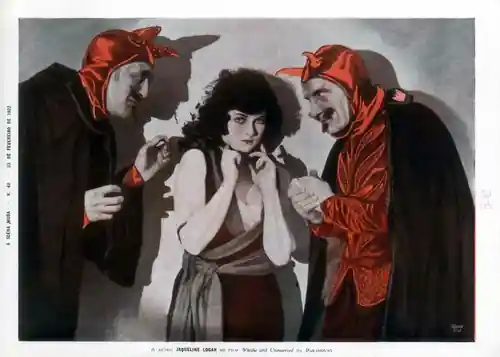
Despite critical raves—Photoplay called it “a mint julep spiked with strychnine”—the picture vanished during the nickelodeon purge of the early sound era. For decades the only remnant was a 9.5 mm Pathescope abridgment sold in French department stores as a children’s toy. Then, in 2018, a 35 mm nitrate print surfaced in the crawlspace of a Montmartrois ciné-club, its emulsion bruised but breathing. The Lobster Films restoration team performed digital alchemy: rehydrating shrunken frames, grafting missing intertitles from the sworn continuity script, and commissioning a new English title card set based on Swain’s original handwritten notes. The result, toured globally with live accompaniment, reveals textures unseen even in 1926—the glint of Young’s lip rouge, the soot on Whitlock’s cuff, the cocaine residue dusting Skinner’s vanity mirror.
Viewers allergic to silent cinema often cite “motion fatigue”—that twitchy impatience bred by TikTok velocity. Yet White and Unmarried rewards surrender. Let the flicker overtake you, let the orchestral clarinet mimic human breath, let the intertitles linger like koans. Halfway through, you may notice your own heartbeat syncing to the 24-frames-per-second waltz. That is not nostalgia; that is cinema reasserting its primal hypnosis.
Great films often dramatize the moment innocence recognizes its reflection in the abyss. White and Unmarried stages that recognition as a carousel bathed in champagne and strobe-lit by moral lightning. It is both artifact and oracle, a Jazz-Age time capsule that predicts our own crypto-gilded age where reinvention is marketed as a lifestyle. To watch it is to feel the moment when the Roaring Twenties inhale their last gin-soaked breath before the crash—an exquisite suspension between carnival and hangover.
Seek it out however you can: DCP at your local cinematheque, Blu-ray from Kino, or a bootleg rip whispered through cinephile Telegram channels. Just ensure the room is dark, the bourbon neat, and your illusions securely locked away. Because this film, like the best cons, wins your trust only to lift your wallet of certainty—and you will thank it as the curtain falls.
Streaming availability: currently out of print; repertory screenings listed on Silent London and Cinefamily Archive. Blu-ray rumored for 2025 from Masters of Cinema.
IMDb 7.4
1932
Community
Log in to comment.