DbcultAccessing Vault...
6.8/10
Senior Film Conservator
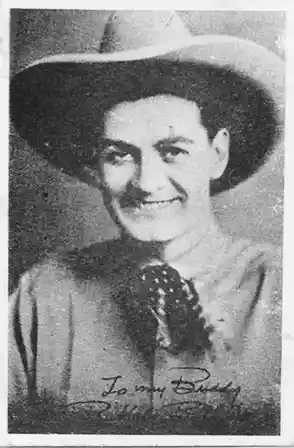
A definitive 6.8/10 rating for a film that redefined the boundaries of cult cinema. South of Sonora remains a cornerstone of transgressive art.
Okay, so you’re wondering if South of Sonora is worth your time today. Look, if you’re a die-hard old Western fan, the kind who seeks out anything from the era, you might find some charm here. For everyone else? Probably not. This one's really more for the curious historian or someone who needs background noise while doing chores. Don't go in expecting a hidden gem. You’ll be bored if you need high stakes or fast pacing.
The story itself is classic B-movie Western fare, pulled straight from a dime novel cover. Bill Tracy, played by Merrill McCormick, is this undercover agent for the Cattleman's Protective Association. He’s on his way to Sonora, a town apparently just full of rustlers. Right off the bat, he saves Betty Carter from some trouble, which felt a little rushed, like they just needed to get her into the plot as quickly as possible.
But then, Betty's dad, Mr. Carter, gets swayed by his shifty foreman, Blackie, who of course says Bill is one of the rustlers. It’s a setup you’ve seen a hundred times, but it means Bill has to work extra hard to prove himself. Merrill McCormick, as Bill, mostly rides horses and looks generally concerned. His expressions are often… subtle. Sometimes you wonder if he's thinking about the rustlers or what he's having for dinner. 🤠
His pal, Heinie Schmaltz, played by Gene Schuler, is probably the most memorable part of the film for me. Heinie’s always getting into scrapes and Bill always has to pull him out. Or Heinie pulls Bill out. They’re a good team in that very predictable way. There’s this one scene where Heinie falls into a ditch after a mild scuffle, and Bill just kind of sighs before helping him. It’s a small beat, but it felt very real, like they’d done this a hundred times before.
The whole thing revolves around these rustlers. They’re everywhere! Ambush after ambush. The "various plots" mentioned in the synopsis mostly boil down to "shoot at them from behind rocks" or "try to lasso them from horseback." Not a lot of strategic genius on display. You can almost feel the director thinking, "Right, another chase scene, boys! And make sure there's lots of dust."
And the chase scenes... oh boy. Horses running, dust flying. Sometimes it's a bit hard to tell *who* is chasing *whom*. The camera work isn't always the clearest. One specific moment, a horse just stopped mid-gallop for a second, like it was confused about its direction. *Did anyone else catch that?* It gave me a chuckle, a little moment of unplanned honesty.
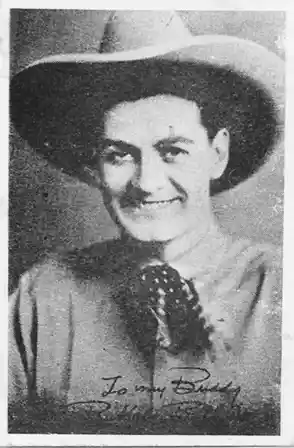
The big reveal, that Blackie is the head rustler, isn't exactly a shocker. From the moment he shows up, looking all shifty and whispering in Carter’s ear, you pretty much know it. Horace B. Carpenter plays Blackie with a good, sneering sort of villainy, but it’s still very much by the numbers. He chews the scenery a little, which is appreciated in a film that often feels a bit flat, like a stale biscuit.
What really kept surprising me, or rather, what I kept noticing, was the sound design. Or the distinct lack thereof. Gunshots often sound like someone dropping a tin can onto a wooden floor. And the silence during some of the more "dramatic" conversations is almost deafening, especially when they're supposed to be in a bustling saloon. It adds to this slightly *off* feeling the whole movie has. Like it was recorded in a very echoey barn, or maybe they just didn't have many microphones.
Betty Joy, as Betty Carter, doesn't get a whole lot to do besides be rescued and look worried. She’s fine, but the character is just there to be the reason Bill gets involved and to provide some nominal romantic interest. There’s a scene near the end where she tries to talk sense into her father, and it’s one of the few times she feels like an active participant, rather than just a plot device to be shuffled around.
The overall pacing is... deliberate. There are moments that stretch on a bit too long, like a horse ride across an empty plain that feels more like real-time than cinematic time. You get a real sense of the budget constraints here; the sets are minimal, the action often repeats similar sequences, and the cast feels small. It’s a glimpse into how these movies were churned out, one after another, for eager audiences who just wanted a quick Western fix.
The movie wraps up pretty neatly, as you’d expect. The good guys win, the bad guys lose. There isn't much lingering emotion or anything *deep* to take away. It’s just... over. You get the sense they made it, shot it, and moved on to the next one. No frills. No big surprises. Just a straightforward tale, told simply.
South of Sonora feels less like
IMDb —
1923
Community
Log in to comment.