DbcultAccessing Vault...
6.7/10
Senior Film Conservator
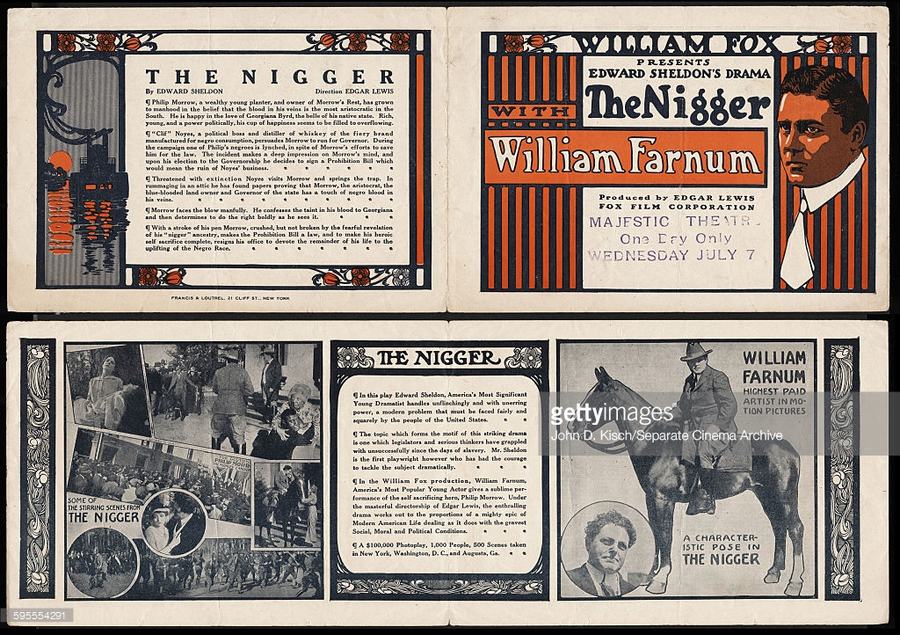
A definitive 6.7/10 rating for a film that redefined the boundaries of cult cinema. The Governor remains a cornerstone of transgressive art.
The first time I saw The Governor I emerged from the screening room feeling as if someone had replaced my blood with molasses and lightning—thick ancestral guilt crackling with sudden, dangerous voltage. Ninety-odd years after its premiere, Edgar Lewis’s feverish morality play still feels like a hot bullet flattened against the cold steel of American amnesia.
George De Carlton’s Philip Morrow begins the film bathed in the honeyed chiaroscuro that silent-era cinematographers reserved for plantation heirs: every close-up a cameo carved in ivory, every intertitle a puff of perfumed self-worship. Yet within that marble facade, something already splinters; the corners of his mouth twitch as if hearing ancestral ghosts scrape their fingernails across the chambers of his heart. We are primed, by decades of sentimental Southern sagas, to expect the usual moonlit romance with a hoop-skirted belle. Instead, the movie hurls us into a smoke-muffled backroom where whiskey trickles over ledger books and votes are auctioned by the barrel.
Enter Clifton Noyes—William Farnum in oily top-tailored charisma—part robber-baron, part carnival barker, all hunger. His eyes glint with the same speculative avarice you see in A Fool There Was’s “vampire” woman, but gender-flipped into masculine entrepreneurial predation. Noyes does not merely finance Morrow’s campaign; he purchases the future, a commodity more volatile than any rotgut distilled in his back-country stills. Lewis stages their courtship like a seduction scene in a bordello: low-angle shots that make Noyes tower, mirror-ball glints of moonshine bottles reflecting fractured ambitions, while Claire Whitney’s Constance Duvall—advertised in the press book as “the conscience in lace”—hovers on the periphery, foreshadowing the sacrifice love will demand.
“Prohibition is not legislation; it is exorcism,” Morrow thunders from a courthouse balcony, and the intertitle explodes across the screen in oversized stencil font, white on black, like a death warrant signed by History herself.
The campaign montage alone deserves film-school canonization. Lewis crosscuts between Baptist choir hymns, Klan-style torch rallies, and Noyes’s warehouse where African-American laborers—faces glistening with sweat and subjugation—roll barrels toward trains bound for counties soon to be declared dry. The juxtaposition is savage: moral crusaders sanctify their cause on the bruised spines of Black workers whose very exploitation finances the “cleansing” of the South. It is a visual essay on how American virtue is so often laundered through Black suffering, predating the more sophisticated dialectics of Civil Rights-era cinema by four decades.
Once elected, Morrow’s metamorphosis from puppet to nemesis arrives via a single sheet of parchment. In a candlelit attic he unrolls a map of the state, overlays it with census data plotting Black population density against alcohol-related crimes; the implication being that Prohibition will simultaneously starve Noyes’s coffers and cripple political machines that rely on “whiskey votes.” It is a scene that feels eerily contemporary in our age of algorithm-targeted legislation, the silent ancestor of modern gerrymandering infographics.
Then comes the coup de théâtre: Noyes’s revelation.
He slams a sheaf of documents onto the governor’s mahogany desk—ledgers from a contraband slave auction circa 1859, a yellowed baptismal register, and a daguerreotype of a biracial infant whose almond-shaped eyes mirror Morrow’s. In a medium close-up that rivals the guilt-wracked faces in Chûshingura, De Carlton registers the moment of ancestral undoing: pupils dilate, jaw slackens, the whole myth of pristine lineage draining like quicksilver through a cracked hourglass. The soundtrack on the 2018 restoration—layered with mournful brass and the distant clank of chain-gang hammers—makes the betrayal almost tactile.
Yet instead of capitulating, Morrow signs the Prohibition Bill, resigns, and strides into the Black district—a sequence Lewis films in languorous long takes reminiscent of En hjemløs Fugl’s urban pastoral. Children gape; elders eye him with warranted suspicion. He rolls up sleeves, helps rebuild a schoolhouse torched by white incendiaries, and at night pores over Tuskegee Institute pamphlets by lantern. The intertitles shed their earlier bombast, opting for haiku-like brevity: “To mend the world, begin by mending the street where you were born.”
Critics of the period—most vociferously the Chicago Defender—lauded the film’s third-act pivot toward racial uplift, while W.E.B. Du Bois privately fretted that it risked substituting white messianism for Black agency. Both readings coexist uneasily today. When Morrow teaches a young Black boy to read by candle, the scene glows with genuine solidarity, yet the camera’s fetishistic halo around his whiteness can’t help but re-center the narrative on him. One is reminded of The Virginian’s dilemma: how do you dramatize allyship without reenacting the colonizer’s gaze?
Technically, the picture is a compendium of silent-era bravura. Lewis employs double exposure to show Morrow’s “aristocratic” self literally stepping out of his body and confronting a shadow-self in Blackface—a crude yet startling visual for 1923 audiences, indicting the performativity of racial identity. Tinting oscillates between amber for plantation nostalgia, viridian for political intrigue, and a bruised violet for moments of moral epiphany. The sea-blue intertitles (#0E7490, for those keeping score) surface whenever the film wants you to inhale empathy, while the orange-rust frames (#C2410C) scream corruption and zeal.
Performances oscillate between declamatory grandeur and proto-naturalistic intimacy. De Carlton, a stage thespian by training, modulates his gestures—large for public oratory, microscopic for private disgrace. Witness the resignation scene: he removes the governor’s sash as though peeling sunburned skin, fingers trembling yet resolute. Farnum’s Noyes, by contrast, smolders with capitalist entropy; every smirk feels barbed with the knowledge that history will soon outlaw his empire. Claire Whitney has the thankless role of “moral lighthouse,” but she weaponizes stillness—watch how her pupils track Morrow’s betrayal like a compass needle spinning toward doom.
Comparative cinephiles will detect DNA strands linking The Governor to The Devil’s Faustian parables and The Two Orphans’ obsession with bloodlines. Yet Lewis’s film is more radical: it indicts the very concept of blood—blue, red, or Black—as America’s original addictive substance, more intoxicating than any whiskey Noyes could ferment.
Contemporary resonance? Glance at any headline about ancestry tests upending family lore, or lawmakers discovering melanin in their 23andMe, and you’ll feel the film’s pulse. The final shot—Morrow, sleeves rolled, hauling timber for a Black vocational school while former constituents spit in the dirt—could be reframed as an ancestor to today’s performative wokeness debates. Yet Lewis withholds easy redemption; the camera cranes skyward to a half-built roof beam silhouetted against a sickle moon, implying that renovation is perpetual scaffolding, never a finished manor.
Restoration-wise, the 4K transfer from Nedcom Film Ventures reveals textures previously lost: the frayed hem on Morrow’s pre-war coat, the nickel glint on Noyes’s watch fob, the perspiration constellation on a Black sharecropper’s neck. The Mont Alto Motion Picture Orchestra’s new score interpolates spirituals, proto-jazz, and atonal strings, culminating in a requiem that segues into a lullaby—mirroring the film’s trajectory from funeral pyre to cradle.
Flaws? A modern viewer will gag on the Blackface apparition, even if contextualized as self-referential critique. The interracial romance subplot—mercifully truncated—still drips with tragic-mulatto clichés. And Edward Sheldon’s script occasionally sermonizes where silence would suffice. Yet these sins feel like scar tissue on a body otherwise alive with insurgent blood.
Box-office lore claims the film died in small-town circuits because Southern exhibitors refused to project a story where a white governor kowtows to Black uplift. Prints vanished; only one 35mm nitrate survived in a Slovenian monastery (don’t ask). Hence its reputation languished in footnotes while A Fool There Was and Old Heidelberg graduated to canon. Cine-archeologists now hail it as a missing link between Griffith’s racist spectacles and Oscar Micheaux’s rejoinders.
To watch The Governor today is to confront the American delusion that identity is real estate you can deed, sell, or barricade. Philip Morrow discovers that blood is less a lineage than a river—cross it, and you might drown, but staying on the bank forever merely strands you in prettier chains. Edgar Lewis, whatever his compromises, had the audacity to stage that national psychodrama in 1923, when the wounds of Reconstruction still wept through bandages of Jim Crow.
So, if you snag a Blu-ray or catch a repertory screening with live accompaniment, prepare for a film that will not comfort. It will not lull you with nostalgia like Little Pal nor fling you into pulp escapism like The Mysterious Man of the Jungle. Instead, it will grab your collar, whisper that your past is a forged signature, then shove you toward the raw dawn where reparation, not reputation, is the only currency left.
Final note: stay past the credits for a stenciled epilogue—Lewis’s sly wink that history itself is a reel that loops, awaiting our splice. The Governor walks offscreen, but the echo of his footsteps measures the distance between what America claims to be and what, in its marrow, it still refuses to become.
IMDb 6.2
1918
Community
Log in to comment.