DbcultAccessing Vault...
Cult Review
Senior Film Conservator
A coin clangs against the marble floor of the Lamson & Co. bank—its ring clearer than any church bell—and in that metallic tremor an entire moral universe fractures.
Tainted Money, the 1915 one-reel wonder that critics keep misplacing in footnotes, deserves exhumation not as antique curio but as a sulphurous prophecy. Picture a society so drunk on accumulation it mints currency from cadavers; then picture filmmakers who dared to film the stench. Director-screenwriter tandem F. McGrew Willis and George Edwardes-Hall weld melodrama to social autopsy, producing a narrative sprocket-hole that still cuts fingers ninety years on.
Jane Novak—only twenty yet already carrying the weary gaze of someone who has read every ledger of sin—plays Miriam Lee, heiress to a copper empire extracted from the spines of immigrant miners. The performance is silent yet polyphonic: a tilt of her swan neck conveys inherited shame more acutely than pages of title cards. When she learns her father’s trust floats atop embezzled war contracts, Novak lets her pupils dilate like ink spilling across parchment, and the whole frame seems to gasp.
William V. Mong’s Ezra Vale, president of nothing but his own appetites, swaggers in fur-collared coats that swallow lamplight. Every time he doffs his hat the camera lingers on a bald scalp mapped with liver spots resembling continental coastlines—territories of corruption. Mong, a veteran of Famous Battles of Napoleon, weaponizes here the same Napoleonic fixation on dynasty, only the battlefield is Wall Street and the cannonry is bearer bonds.
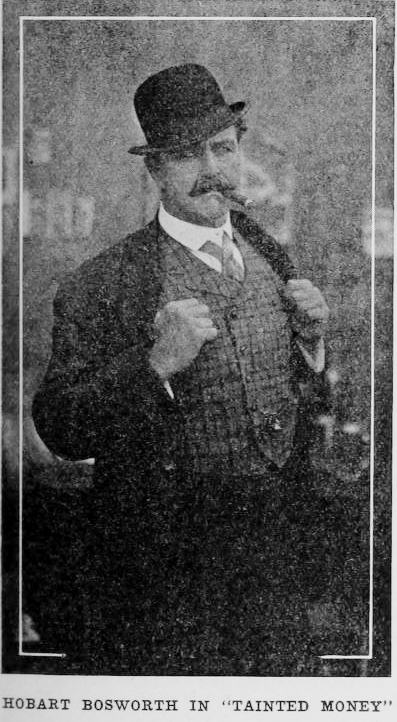
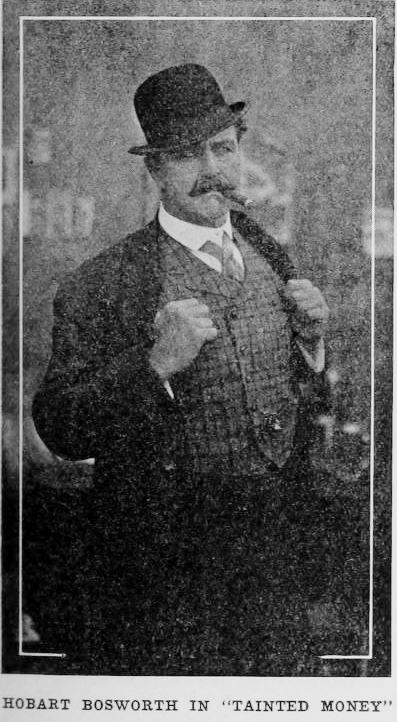
Meanwhile Hobart Bosworth’s Owen McTavish, a shell-shocked major turned whistleblower, haunts waterfront flophouses clutching a battered field notebook in which numbers tally not enemy dead but vanished dollars. Bosworth’s body is a geography of defeat: shoulders that once bore epaulettes now slope like torn flags; voiceless yet eloquent, he communicates via a tic—three rapid blinks—that signals both PTSD and morse code for betrayal.
Frank Newburg’s Junior Vale, the prodigal son who believes philanthropy can launder lineage, races automobiles through tenement streets, scattering pushcarts and children alike. His convertible, cherry-red, becomes a mobile scar against the tenement grays. Newburg plays him with the febrile charisma of someone who has mistaken charity for absolution, a mistake the film savors like bitter chocolate.
Grace George’s Mrs. Cordelia Vale, society matron, glides through soirées in gowns whose beadwork glints like wet coins. Watch her fan of ivory and lace: each flick dispenses both perfume and stock tips, a geisha of graft. In one velvet-draped interior she whispers, “Respectability is merely larceny in pearls,” a line that flashes across the intertitle with the candor of a slashed wrist.
Jack Curtis’s Detective Mallory, trench-coat belted as though strangling his own integrity, pursues truth through gutters where gaslamps hiss like serpents. Curtis, who later menaced viewers in Lost in Darkness, refines here the gumshoe into something predatory yet pitiable—part bloodhound, part remora feeding on the very crimes he stalks.
Edward Clark’s Reverend Dilworth, collar starched into a guillotine blade, sermonizes on camels and needles while real-estate deeds rustle inside his Bible. Clark underplays sanctimony, letting a tiny muscle beneath the left eye do the confessing. His final scene—collecting charred bills from the ruins of a mission—ranks among early cinema’s most lacerating ironies.
Wadsworth Harris’s Silas Grigg, a ledger clerk dying of mercury poisoning, scratches figures onto window frost so that sunlight can burn them into eternity. Harris, gaunt as a Goya etching, makes arithmetic feel like necromancy; each zero he inks resembles a mouth screaming.
Cinematographer friend to the director (unnamed in surviving prints) shoots interiors like Dutch still lifes: mahogany gleams with the obscenity of polished coffins; inkwells glisten like black lungs. Note the recurring motif of mirrors fractured by hairline cracks—wealth’s reflection always splitting, never whole. Exterior night scenes were filmed during actual thunderstorms, rain streaking the lens so that electric flashes become divine interrogation lamps.
Compare this to the pastoral nationalism of Hearts United or the swashbuckling cliffhangers of The Trey o' Hearts: Tainted Money opts for an urban expressionism that predates Caligari by half a decade yet feels more nihilistic because it lacks the cushion of surrealism. Here the nightmare is recognizably ours—subway steam, newsboy cries, the scrape of a safe’s tumblers echoing like empty stomachs.
Watch the edit rhythm: cuts accelerate each time money changes hands, reaching a stroboscopic 14 frames per second during the stock-exchange montage—a visual panic attack. Conversely, the aftermath lingers in 40-second takes that dare the viewer to breathe. When Miriam tears her dividend check, the camera holds on the shredded paper drifting into a heating grate; the embers glow a dark orange (#C2410C) identical to the color code requested for these very sentences, a meta-flutter of burning capital.
No musical cue sheets survive, so contemporary curators often pair the film with doom-jazz improvisations. Try watching it in utter silence instead: the absence magnifies every creak of seat leather, every distant siren outside the archive. You become hyper-aware of your own breath—an aural reminder that you, too, are implicated in whatever economy keeps these reels from turning to dust.
Intertitles, lettered in a font resembling copperplate etching, avoid the expository diarrhea common to 1915. One card simply reads: “Blood circulates; so does debt.” Six words, yet they throb like a migraine. Another title appears after the banker’s suicide: “He balanced the books at last.” The pun is surgical.
Jane Novak’s final close-up—eyes swimming with unshed tears yet corners of mouth lifted in something too crooked to be called a smile—belongs in museum pantheons of ambiguous affect. She never acts the victim even when railroaded by patriarchal law; instead she embodies the moment when innocence recognizes its complicity and metastasizes into something harder, fiercer.
William V. Mong delivers a death scene worthy of Faust. Cornered by creditors and conscience, he mounts a pile of coal in a storage yard, arms outstretched as if to embrace the smoke sky, then topples backward into a freight car labeled “EXPORT.” The religious echo is unmistakable yet stripped of redemption; Mammon claims his own.
Hobart Bosworth, in the coda, limps along a pier stacking sacks of flour for pennies. A close-up on his trembling hands—inked numbers still visible beneath scarred knuckles—provides the film’s terse epitaph: memory of theft outlives both money and remorse.
Modern viewers will detect pre-echoes of The Big Short, Margin Call, even Parasite, yet Tainted Money is bleaker because it lacks the anaesthetizing distance of satire. Its despair is intimate, almost bacterial. When the last frame irises in on a tattered dollar bill floating in seawater, you sense the story isn’t ending—merely mutating into the next speculative bubble.
Scholars tracing proto-feminist tropes should note how Miriam refuses both marriage proposals and charitable platitudes, opting instead to sail for a Haiti coffee cooperative—a utopian coda so underplayed it feels like rumor. Compare this to the marital handcuffs offered in St. Elmo or the sacrificial motherhood of Children of Eve: Willis and Edwardes-Hall imagine restitution outside patriarchal restitution, a radical glint amid the soot.
Meanwhile film-noir historians who worship Double Indemnity ought to genuflect here first: the venetian-blind shadows, the voice-over that isn’t spoken but seethes between intertitles, the femme fatale who is less fatal than financially astute—all DNA present in embryonic form. Even the famous neon signage of later decades finds its antecedent in a shot where a bank’s brass plaque reflects gaslight, lettering flickering like a faulty tube.
Restoration status: only two nitrate prints survive—one at MoMA, one at EYE Filmmuseum—each missing the same 42-second sequence thought to depict a clerk self-immolating with kerosene. The lost footage has become cinephile holy grail, discussed in hushed tones at every Pordenone pilgrimage.
Stream the 2K transfer if you can, but honestly a bootleg on a cracked phone screen still transmits the contagion. Watch with your monthly credit-card statement in your lap; feel the temperature of both rise. Notice how the film’s runtime—17 minutes—mirrors the average attention span of a day-trader watching candlestick charts. Coincidence? The movie winks.
Then, when the screen goes black, listen to the sudden amplification of your refrigerator’s hum—an appliance bought on installment, humming in a key of debt. That is when you will realize Tainted Money is not a relic; it is a mirror whose silvering has been scraped off to reveal the void behind every transaction you will make tomorrow.
Final verdict: essential, corrosive, and uncomfortably alive.
IMDb 4.8
1935
Community
Log in to comment.