DbcultAccessing Vault...
Cult Review
Senior Film Conservator
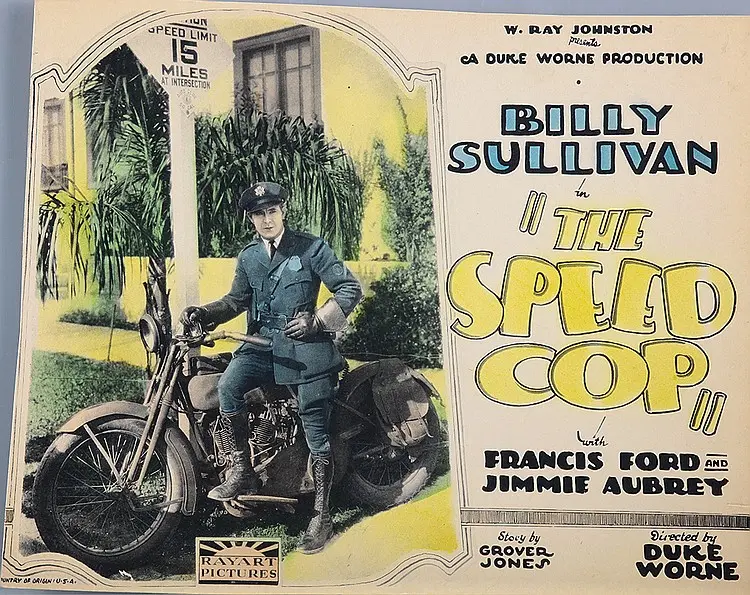
Is "Speed Cop" worth watching today? Short answer: yes, but with significant caveats. This silent-era relic is a fascinating glimpse into early filmmaking and storytelling, offering a quirky blend of romance, comedy, and an unexpected dash of crime procedural.
It’s a film for cinephiles, historians, and those with a genuine curiosity for the origins of cinematic narrative, particularly silent film buffs eager to explore its more obscure corners. However, it is decidedly NOT for viewers seeking modern pacing, sophisticated character development, or high production values. If you struggle with the conventions of silent cinema – the exaggerated acting, the intertitles, the often simplistic plots – then "Speed Cop" will likely test your patience.
"Speed Cop", a title that immediately conjures images of slapstick and chase sequences, delivers something far more nuanced and, frankly, stranger than its name suggests. Penned by Grover Jones, whose knack for weaving simple premises into engaging, if sometimes outlandish, narratives is evident, the film takes a straightforward premise – a cop, a ticket, a girl – and twists it into a delightful, if dramatically uneven, confection. It’s a testament to the era’s willingness to experiment with genre blending, even if the results occasionally feel like two different films stapled together.
The film’s central conceit, a romantic spark ignited by a speeding ticket, is a classic meet-cute elevated by its peculiar progression. Billy Sullivan, as the titular speed cop, embodies the earnest, somewhat rigid authority figure, a type familiar even in modern cinema. Rose Blossom, his romantic foil, brings a vivacious energy that cuts through his stern exterior, setting the stage for a charming, if predictable, courtship. What truly sets "Speed Cop" apart, however, is its audacious pivot from lighthearted romance to crime drama, a move that, while jarring, is undeniably bold for its time.
"Speed Cop" is a charming anachronism, a silent film that dares to blend genres in a way that feels both quaintly old-fashioned and surprisingly modern in its narrative ambition. It’s a film that asks its audience to embrace its quirks.
This film works because its central premise, however simple, is inherently engaging. The idea of love blossoming from a minor legal infraction, compounded by a well-meaning but ill-conceived prank, provides a rich vein for both comedy and romance. The unexpected introduction of a genuine crime element, far from detracting, adds a layer of unpredictable excitement that elevates it beyond a mere romantic comedy. It’s a delightful narrative surprise, albeit one that strains credulity, which only adds to its unique charm.
This film fails because its genre shifts are not always gracefully executed. The transition from a lighthearted romantic comedy, built around a social prank, to a serious crime apprehension feels abrupt. While audacious, this tonal whiplash can leave modern viewers, accustomed to more seamless storytelling, feeling disoriented. Furthermore, the character development, while sufficient for the era, doesn't delve deeply enough to make the emotional stakes truly resonate beyond surface-level charm.
You should watch it if you appreciate the historical context of silent cinema, enjoy quirky, unconventional narratives, and have a soft spot for films that don’t quite fit neatly into a single genre box. It’s a testament to the ingenuity of early screenwriters and the captivating presence of silent film stars, even in a seemingly minor production.
The plot of "Speed Cop" is a masterclass in elegant simplicity, a characteristic often found in the most effective silent films. It begins with the archetypal encounter: a stern officer, Billy Sullivan, upholding the law, and a spirited young woman, Rose Blossom, inadvertently challenging it. The initial interaction, a speeding ticket, serves not as a barrier, but as the unlikely catalyst for attraction. Sullivan's initial stoicism, contrasted with Blossom's playful indignation, sets up a dynamic that is both humorous and genuinely endearing.
The narrative then pivots with Blossom's ingenious, if slightly mischievous, plan. Enlisting her uncle, a judge, to host a dinner party under false pretenses, she aims to gently poke fun at the rigid officer. This setup is pure romantic comedy gold, promising delightful situational humor and the slow burn of burgeoning affection. The audience is invited to anticipate the awkwardness, the subtle digs, and the eventual, inevitable softening of the cop's resolve as he falls for his tormentor.
However, Grover Jones's script takes a sharp, unexpected turn. Just as the prank is unfolding, with all its comedic potential, a genuine criminal element is introduced. Billy, far from being the butt of the joke, instead transforms into an unlikely hero, recognizing and arresting a silk thief, Francis Ford, among the unsuspecting guests. This twist is the film's most distinctive feature, transforming a lighthearted romance into an impromptu crime drama.
Thematic resonance here is surprisingly rich. Beyond the obvious romantic comedy tropes, the film subtly explores themes of perception versus reality. Blossom perceives Sullivan as a humorless authority figure, only to discover his human side. The dinner party, intended as a fabrication, inadvertently reveals Sullivan's true character as a dedicated officer of the law. It’s a clever, if perhaps accidental, exploration of how circumstances can reveal hidden depths, shattering initial judgments.
Furthermore, the film champions a certain brand of understated heroism. Sullivan isn't a cape-wearing vigilante; he's a diligent cop doing his job, even off-duty. His arrest of the thief is not a grand, theatrical gesture but a quiet, competent act of policing. This grounded heroism, juxtaposed against the more whimsical romantic plot, gives the film a unique texture that differentiates it from many of its contemporaries.
In silent cinema, the burden of conveying character, emotion, and narrative falls squarely on the actors' physicality and facial expressions. "Speed Cop" benefits immensely from its lead performers, William T. Hayes (often credited as Billy Sullivan in the plot description, suggesting a stage name or character name overlap, but the cast list clarifies his actual name) and Rose Blossom, who navigate this challenge with commendable skill.
Billy Sullivan, as the motorcycle cop, embodies the stoic, duty-bound figure with a subtle underlying warmth. His initial interactions with Rose Blossom would have been characterized by a stern, unwavering gaze, perhaps a slight furrow of the brow, communicating his adherence to the law. As the romance develops, we can imagine a gradual softening around the eyes, a tentative smile, or a chivalrous gesture that speaks volumes without a single word. His performance is key to making the audience believe in his transformation from rigid enforcer to smitten suitor, a common but effective arc in romantic comedies of the era.
Rose Blossom, on the other hand, brings a necessary vivacity to her role. Her character requires a blend of charm, wit, and a touch of mischievousness to orchestrate the dinner party prank. Her expressions would likely shift from playful indignation at receiving the ticket to conspiratorial glee when planning the joke, and finally to genuine affection as she realizes her feelings for Sullivan. Her ability to convey these nuanced emotional shifts, often through exaggerated but understandable gestures, would have been crucial for the film's comedic and romantic success. She is the engine of the plot's romantic side, and her energy must have been infectious.
Even Francis Ford, as the silk thief, plays a vital role, albeit a brief one. His presence, though unassuming at first, must carry the weight of his criminal identity. A subtle shifty glance, a nervous habit, or a sudden change in posture when confronted by Sullivan would be the silent signals informing the audience of his guilt. His role, while secondary, provides the dramatic payoff that elevates the film beyond simple romance. The supporting cast, including Donal Blossom and Howard Truesdale, would have contributed to the convivial atmosphere of the dinner party, each playing their part in the setup of the prank and the ensuing dramatic reveal.
Given the limited information on the director, we must analyze "Speed Cop" through the lens of typical silent film production practices. The visual storytelling of the era was paramount, relying heavily on clear composition, expressive acting, and the judicious use of intertitles to convey plot and dialogue. In "Speed Cop", the emphasis would have been on establishing clear character motivations and actions through visual cues.
The initial motorcycle chase and ticket scene would have demanded dynamic camera work (for the time), perhaps tracking shots or quick cuts to convey speed and urgency. The contrast between the open road and the intimate setting of the dinner party would offer distinct visual opportunities. The dinner scene, in particular, would have relied on careful staging to highlight the comedic tension of the prank, with subtle glances and knowing smiles exchanged between Blossom and her uncle, the judge, played by Donal Blossom, while Sullivan remains oblivious.
Cinematography, even in early films, played a crucial role in setting the tone. Bright, clear lighting would emphasize the comedic and romantic aspects, while perhaps a slightly more dramatic, shadow-infused shot could have been used to highlight Francis Ford's eventual apprehension. The use of close-ups would be vital for capturing the subtle emotional shifts of the actors, particularly during the romantic moments or the climactic arrest.
The film's visual language would also have been shaped by its locations. The open road for the cop, the comfortable, respectable home of the judge for the dinner party – these settings would have visually reinforced the characters' worlds and the collision between them. The choice of costume, from Sullivan's uniform to Blossom's attire, would also have been carefully considered to convey social standing and character traits, an essential detail in the absence of dialogue.
One of the most intriguing aspects of "Speed Cop" is its audacious blend of genres. It begins as a straightforward romantic comedy, steeped in the conventions of the silent era. The meet-cute, the initial antagonism, the playful prank – these elements create a light, humorous tone. The pacing in this section would likely be brisk, driven by the comedic timing of the interactions and the anticipation of the prank's execution.
However, the film then swerves sharply into a crime drama. This tonal shift, while surprising, is also the film's most distinctive, if unpolished, stroke. The sudden revelation of a silk thief among the guests, and Sullivan's immediate, professional response, introduces a layer of tension and seriousness that contrasts starkly with the preceding frivolity. This shift in tone demands a corresponding adjustment in pacing, potentially slowing down for the dramatic confrontation and arrest.
The genre-bending in "Speed Cop" is a bold gamble. It doesn't always land perfectly, but its sheer audacity makes it memorable. It’s a film that refuses to be pigeonholed, for better or worse.
This genre mash-up is both the film's strength and its potential weakness. For viewers accustomed to clear genre boundaries, the abrupt transition might feel jarring. Yet, for those willing to embrace its eccentricities, it offers a refreshing unpredictability. It suggests a nascent cinematic language still exploring its boundaries, unafraid to mix elements in pursuit of a compelling story, however unconventional. The film's short runtime, typical for silent features of its type, would necessitate a fairly rapid progression through these different narrative beats, making the shifts feel even more pronounced.
Yes, "Speed Cop" is absolutely worth watching for specific audiences. It offers a unique window into early 20th-century filmmaking, showcasing how silent narratives could blend comedy, romance, and even crime in unexpected ways. It's a charming, if dramatically uneven, piece of cinematic history.
For silent film enthusiasts, it provides an interesting case study in genre experimentation. For those interested in film history, it's a valuable example of early narrative construction and character portrayal without dialogue. It's a quirky, lighthearted viewing experience that, despite its age, still manages to entertain with its simple charms and surprising plot twist.
However, if you're new to silent films or prefer modern, fast-paced storytelling, it might be a challenging watch. Its conventions are very much of its time, and a certain level of patience and appreciation for historical context is required to fully enjoy it.
"Speed Cop" is a delightful, if imperfect, relic from the silent era that deserves more than a passing glance. It works. But it’s flawed. Its true appeal lies not in its polished execution, but in its charming narrative audacity and its glimpse into a period of cinematic experimentation. The film's ability to pivot from a lighthearted romantic comedy, built on a social prank, to a genuine crime procedural is nothing short of fascinating. It’s a testament to the imaginative screenwriting of Grover Jones and the expressive power of silent film actors like Billy Sullivan and Rose Blossom.
While it won't appeal to everyone, particularly those unaccustomed to the unique rhythm of silent cinema, for film aficionados and history buffs, it's a rewarding experience. It reminds us that even in the earliest days of cinema, storytellers were eager to push boundaries and surprise their audiences. It’s a small, quirky film that leaves a surprisingly memorable impression, proving that sometimes, the most unexpected detours lead to the most interesting discoveries. Consider giving this charming antique a watch; you might just find yourself unexpectedly smitten, much like our titular speed cop.
IMDb —
1928
Community
Log in to comment.