DbcultAccessing Vault...
Cult Review
Senior Film Conservator
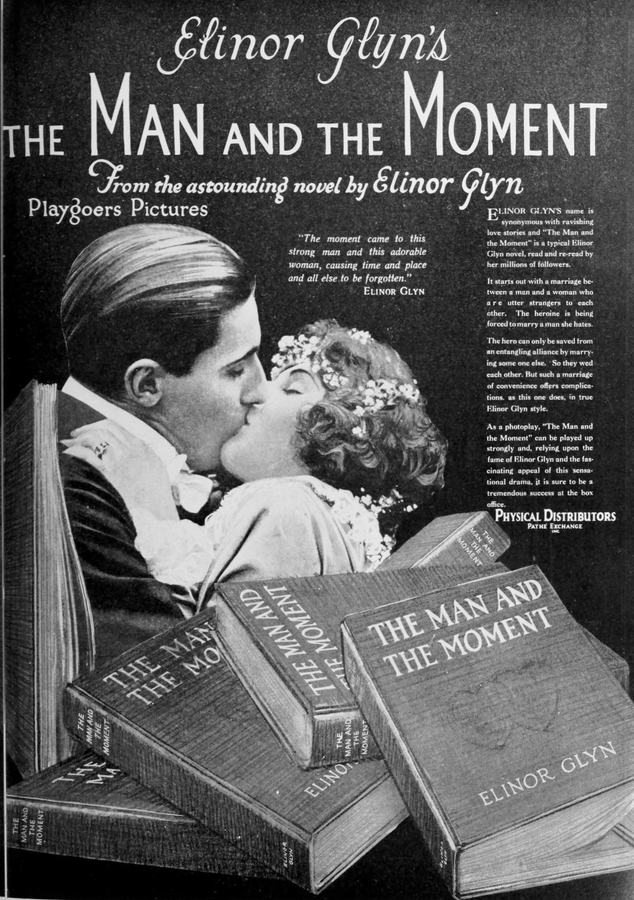
The Man and the Moment is a cinematic relic that pulses with the same paradoxical energy as its heroine—a woman bound by the gilded chains of inheritance and the shadow of her own choices. Directed with aching restraint, this 1926 British drama unfolds like a watercolor painting, its emotional hues bleeding into one another without the sharp edges of overt melodrama. The film’s opening sequence, set in a Manhattan drawing room where the heiress, Evelyn (Maud Cressall), signs the marriage contract to Laird Angus MacAlister (Jeff Barlow), is a masterclass in visual storytelling. The clatter of fountain pens and the stiff posture of the solicitor (Kenelm Foss) frame the transactional nature of the union, a theme that reverberates throughout the film.
Elinor Glyn, whose name is synonymous with the 'It' girl novels of the 1920s, co-wrote the screenplay with a scalpel’s precision, dissecting the social mores of the interwar period. The marriage, dictated by a will left by Evelyn’s eccentric aunt—a woman who believed that the MacAlister bloodline must be preserved—serves as both a narrative contrivance and a metaphor for the suffocating expectations placed on women of privilege. Glyn’s influence is evident in the way the film juxtaposes Evelyn’s American pragmatism with Angus’s Scottish stoicism; the two are like oil and water, their union a collision of cultures and ideals.
The film’s true brilliance lies in its pacing. Unlike the more frenetic narratives of The Shielding Shadow or The Triumph of Venus, The Man and the Moment unfolds at a glacial pace, allowing the viewer to linger in the emotional voids between scenes. The transition from the bustling New York of the first act to the desolate Scottish highlands of the second is rendered with a melancholic beauty, the cinematography capturing the stark contrast between urban artificiality and natural austerity. When Evelyn flees to Italy—her temporary escape from the marital coldness—the film adopts a warmer palette, the golden light of the Tuscan countryside clashing with the icy tones of her emotional state.
Maud Cressall’s performance is a quiet revelation. Unlike the more overtly emotive style of Peggy Carlisle in The Faded Flower, Cressall embodies Evelyn through subtle gestures: the tightening of a jaw when confronted by her husband’s indifference, the way her fingers trace the edges of a locket containing her deceased child’s portrait. Her chemistry with Barlow is understated yet electric, a silent dialogue of longing and resentment that transcends the limitations of the era’s soundless medium. Barlow, in turn, channels the brooding intensity of a man trapped between duty and desire, his portrayal of Angus a study in repressed emotion.
The film’s most controversial decision—its refusal to offer a romantic resolution—echoes the anti-climactic closures of As Ye Sow and Les amours de la reine Élisabeth, both of which subvert traditional narrative arcs. When Evelyn returns to Scotland after the death of her child, the film does not grant her a cathartic confrontation with Angus. Instead, it ends with a lingering shot of the two protagonists seated in the manor’s parlor, the camera slowly panning to a family portrait that hangs askew on the wall—a visual metaphor for the fractured legacy they both inhabit. This ambiguity is jarring for modern audiences accustomed to tidy resolutions, but it is precisely this unresolved tension that gives the film its haunting power.
Technically, The Man and the Moment is a marvel of early film craft. The use of chiaroscuro in the Scottish interiors—particularly the scenes set in the manor’s candlelit library—predates the golden age of film noir by a decade, creating a mood of claustrophobic dread. The Italian sequences, by contrast, are bathed in a soft, diffused light, the landscapes rendered with a painterly attention to detail that harkens back to the Impressionist masters. The score, though minimal, is hauntingly effective, with a single piano motif recurring at key emotional beats to underscore the film’s tragic core.
Critics at the time dismissed the film as 'a melodrama for the masses,' a judgment rooted in the era’s snobbery toward women-led narratives. Yet, viewed through a modern lens, The Man and the Moment reveals itself as a proto-feminist text, interrogating the ways in which women are both empowered and constrained by patriarchal structures. Evelyn’s marriage is a transactional arrangement, a means to an end dictated by the will of a dead woman. Her subsequent flight to Italy is not a romantic adventure but a desperate attempt to reclaim autonomy in a world that denies her agency. Even her return to Scotland is tinged with irony—it is the child’s death that brings her back, not love for Angus but a sense of responsibility to the MacAlister lineage she was forced to inherit.
Comparisons to The Money Mill are inevitable, as both films explore the intersection of wealth and emotional disconnection. However, The Man and the Moment distinguishes itself through its focus on the personal rather than the societal. While The Battle of Hearts leans into the spectacle of wartime romance, this film is grounded in the intimate, the mundane. The tragedy is not one of grand betrayals or heroic sacrifices but of quiet, everyday disillusionments—a mother’s failure to connect with her child, a husband’s inability to express grief.
The film’s final act is its most audacious. After Evelyn’s return, the narrative shifts into a slow-motion unraveling. The couple’s interactions are devoid of dialogue, their emotions conveyed through glances and gestures. In one particularly striking sequence, Evelyn walks through the manor’s overgrown gardens, the camera following her as she pauses to touch a withered rose bush. The shot is held for an agonizingly long moment, the silence broken only by the distant sound of wind. It is a masterstroke of visual storytelling, a meditation on loss and the passage of time.
In conclusion, The Man and the Moment is a film that rewards patience. Its slow pacing and lack of overt drama may alienate some viewers, but for those willing to engage with its subtleties, it offers a profound exploration of grief, identity, and the fragile illusions of power. It stands as a testament to the early days of cinema when filmmakers like Glyn and Foss were experimenting with the medium’s potential to convey complex human emotions without the crutch of dialogue. In an age where film often prioritizes spectacle over substance, this quiet masterpiece serves as a reminder of the art form’s capacity for emotional resonance.
IMDb —
1929
Community
Log in to comment.