DbcultAccessing Vault...
Cult Review
Senior Film Conservator
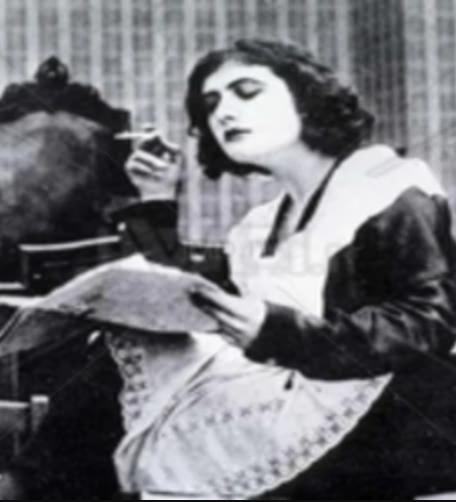
Victor Sardou’s theatrical blueprint, transmuted onto celluloid by a troupe of early‑20th‑century visionaries, offers a study in contrition and illusion that feels eerily contemporary. Francesca Bertini, embodying Elena, oscillates between the palpable desperation of a woman who has fled her vows and the ethereal poise required to masquerade as a phantom. Her performance is a chiaroscuro of yearning, each glance a silent confession, each whispered breath a thread pulling Antonio (Romano Calò) deeper into the labyrinth of grief.
The narrative thrust hinges on a paradoxical premise: a living soul adopting the guise of death to elicit absolution. This conceit, while melodramatic, is rendered with a subtlety that transcends the era’s typical melodrama. The train accident, a recurring motif in silent cinema symbolizing fate’s capricious hand, serves not merely as a plot device but as a visual metaphor for the derailment of Elena’s moral compass.
The film’s mise‑mise is suffused with chiaroscuro lighting, a technique that predates German Expressionism yet anticipates its aesthetic. Shadows cling to the cobblestone streets where Elena first encounters Marco (Camillo De Riso), while the interior of Antonio’s modest home is bathed in a pallid, almost reverent glow, emphasizing his isolation. The director’s choice to frame the ghostly apparitions against stark, black‑ened backdrops amplifies the uncanny, allowing the audience to feel the thin veil between reality and the supernatural.
A recurring visual motif—an overturned railway lantern—appears whenever Elena’s spectral ruse intensifies. The lantern’s amber flame flickers in a hue reminiscent of dark orange #C2410C, casting a warm yet unsettling light on the characters’ faces. This color palette, when juxtaposed with the sea‑blue #0E7490 of the night sky, creates a tension that mirrors the internal conflict of the protagonists.
At its heart, Spiritismo interrogates the elasticity of forgiveness. Antonio’s grief is not a static tableau; it evolves from raw anguish to a tentative openness as the ghostly encounters compel him to confront his own mortality. Elena’s deception, far from being a mere ploy, becomes an act of sacrificial love—she willingly subjects herself to the stigma of haunting, a role traditionally reserved for male antagonists in early cinema.
The film also engages with the concept of performance within performance. Elena’s adoption of a ghostly persona mirrors the actress’s own craft: both require a suspension of identity to evoke belief. This meta‑theatrical layer invites comparisons to The Feud, where characters grapple with the masks they wear in society.
Bertini’s portrayal is a masterclass in silent‑film expressiveness. Without dialogue, she conveys Elena’s internal turmoil through nuanced gestures: a trembling hand that brushes a cracked mirror, a lingering stare at the empty railway platform, a fleeting smile that betrays both guilt and hope. Her spectral transformation is not achieved through elaborate special effects but through a deliberate shift in posture—shoulders hunched, eyes widened, as if peering from beyond the veil.
The seducer, Marco, is rendered with a roguish charm that borders on caricature, yet his presence is essential as the catalyst for Elena’s exile. His brief interludes, though limited in screen time, underscore the theme of temptation and the irrevocable consequences of surrendering to it.
When juxtaposed with Who Was the Other Man?, Spiritismo’s exploration of infidelity takes on a more spectral, almost mythic dimension. While the former leans heavily on courtroom drama, Spiritismo opts for the ethereal, employing ghostly imagery to externalize inner remorse.
The film’s treatment of supernatural elements also anticipates the psychological horror of The Sons of Satan, albeit with a softer, more romanticized lens. Where the latter uses darkness to evoke dread, Spiritismo utilizes it to illuminate the path toward redemption.
Cinematographer Ugo Piperno employs a series of long, uninterrupted takes that allow the audience to linger in the emotional spaces between characters. The camera often tracks slowly along the train tracks, the rhythmic clatter of wheels serving as an auditory metaphor for the inexorable march of fate.
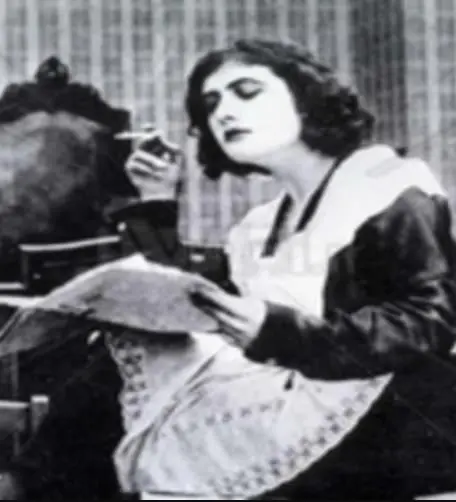
Alfredo Infusini’s set design is meticulous; the railway station is rendered with such authenticity that the viewer can almost smell the coal smoke. The use of practical lighting—oil lamps and gaslights—creates a naturalistic ambience that grounds the film’s more fantastical moments.
Although a silent film, the accompanying score—reconstructed from period-appropriate compositions—infuses the narrative with a haunting melancholy. The recurring motif, a plaintive violin line in a minor key, mirrors Elena’s lament, while occasional brass interjections signal moments of revelation.
Spiritismo arrived at a time when Italian cinema was grappling with the tension between neorealism’s emerging grit and the lingering allure of melodramatic spectacle. Its willingness to blend supernatural folklore with domestic drama positions it as a bridge between these divergent currents.
The film’s influence can be traced in later Italian works that explore the intersection of the uncanny and the quotidian, such as The Light. Moreover, its thematic preoccupation with redemption through self‑sacrifice resonates in contemporary narratives like A Man in the Open.
Romano Calò’s Antonio is a study in restrained anguish. His eyes, often cast downward, convey a depth of sorrow that words could never articulate. The supporting cast—Ugo Piperno as the compassionate priest, Amleto Novelli as the skeptical detective—provide narrative scaffolding, each delivering a performance that feels both grounded and integral to the film’s emotional architecture.
The film’s pacing, while deliberate, never lapses into stagnation. Each scene propels the narrative forward, whether through a whispered confession in a dimly lit chapel or a frantic chase along the railway’s edge.
The recurring image of a cracked mirror serves as a visual metaphor for Elena’s fractured identity. When she first confronts her reflection after the train accident, the mirror shatters, symbolizing both her literal death and the psychological rupture she experiences.
Similarly, the spectral lantern that Elena wields as a ghost is rendered in a luminous yellow #EAB308, casting an otherworldly glow that juxtaposes the surrounding darkness. This luminescence suggests that even in death—or the pretense of it—there exists a flicker of hope capable of guiding the lost.
The climax arrives when Antonio, having been haunted by Elena’s apparitions, finally confronts the truth. In a poignant tableau, the ghostly figure dissolves into the mist, revealing Elena’s mortal form. The revelation is not a melodramatic unmasking but a quiet surrender; Antonio’s acceptance is conveyed through a single, lingering touch that bridges the chasm between grief and forgiveness.
The film refuses to offer a tidy moral verdict. Elena’s deception, though driven by love, remains ethically ambiguous. The audience is left to ponder whether the ends truly justify the means, a question that lingers long after the final frame fades to black.
Spiritismo endures as a testament to the power of visual storytelling, where silence speaks louder than dialogue. Its intricate blend of romance, spectral intrigue, and moral complexity invites repeated viewings, each revealing new layers of meaning. For aficionados of early cinema, the film offers a rich tapestry of performance, direction, and thematic depth that stands shoulder‑to‑shoulder with the era’s most celebrated works.
In an age where supernatural thrillers dominate the box office, Spiritismo reminds us that the most haunting stories are those rooted in human frailty and the desperate yearning for redemption.
IMDb —
1930
Community
Log in to comment.