DbcultAccessing Vault...
5.3/10
Senior Film Conservator
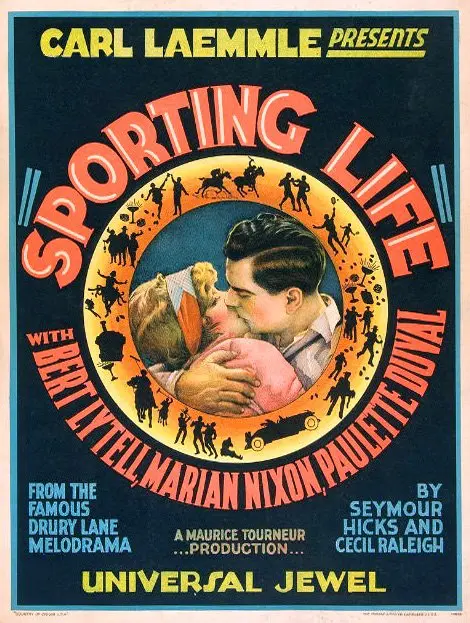
A definitive 5.3/10 rating for a film that redefined the boundaries of cult cinema. Sporting Life remains a cornerstone of transgressive art.
The narrative of 'Sporting Life' (1925) unfolds with an almost operatic grandeur, as it follows the tragic arc of a nobleman, his aspirations, and the relentless forces that thwart them. Paulette Duval stars as the young British nobleman, a character who embodies both the opulence and decay of his class. With no clear path to financial salvation, he clutches at straws, investing his hopes in the unpredictable world of prizefighting and horse racing.
The film's title itself is a sardonic commentary on the protagonist's plight. 'Sporting Life' suggests a world of leisure and luxury, but for Duval's character, it is a landscape of moral and financial ruin. The setting is not just a stage for boxing rings and racetracks, but a microcosm of the era's societal dynamics, where wealth and class are inextricably linked to one's destiny.
The directorial choices are bold and unapologetic. The film's pacing is deliberately slow, mirroring the protagonist's gradual descent into despair. The cinematography, by the legendary Robert F. McGowan, captures the stark contrasts between the opulent palaces of his youth and the squalid corners of the sporting world. The use of deep focus and long shots allows the audience to feel the weight of the protagonist's isolation, his struggle to find a place in a world that no longer values his station.
The narrative is driven by a series of pivotal moments that test the protagonist's character and resolve. His encounters with various characters, from the ruthless boxing manager Arthur Lake to the charming but ultimately untrustworthy trainer Bert Lytell, serve as catalysts for his moral and emotional disintegration. These interactions are portrayed with a mix of melodrama and realism, highlighting the film's ambitious strive to capture the complexity of human nature.
The film's most striking feature, however, is its portrayal of the sporting world. From the gritty boxing gyms to the glamorous horse racing stables, 'Sporting Life' offers a vivid and authentic glimpse into a world that was both admired and reviled during the early 20th century. The boxing scenes, in particular, are visceral and unflinching, showing the physical and psychological toll of the sport. The horse racing segments, on the other hand, evoke a sense of romanticism, with the protagonist's dreams of victory and glory.
At its heart, 'Sporting Life' is a meditation on the fragility of social status and the inescapable forces of fate. Duval's performance is a tour de force, conveying the character's inner turmoil and external despair with a raw authenticity. The supporting cast, including the charismatic Ted 'Kid' Lewis and the lovely Marian Nixon, add depth to the narrative, each contributing to the protagonist's journey.
The film's score, composed by the legendary Theodore Thomas, complements the visual storytelling, creating a mood that is at once melancholic and hopeful. The music underscores the protagonist's aspirations, his moments of triumph, and the crushing blows that bring him down. It is a perfect blend of romanticism and realism, reflecting the film's overarching theme of the struggle to maintain one's dignity in the face of societal change.
From a technical standpoint, 'Sporting Life' is a remarkable achievement. The use of intertitles is sparing and effective, allowing the dialogue to flow naturally without breaking the narrative's momentum. However, some might find the pace a bit slow, as the film takes its time to build its emotional resonance. This deliberate pacing, however, is key to the film's success, as it allows the audience to fully immerse themselves in the protagonist's world and experience his emotional journey.
Comparatively, 'All Wet' and 'Unclaimed Goods' from the same era, while also dealing with themes of social decline, do not match the depth and complexity of 'Sporting Life.' These films, while engaging in their own right, are more focused on surface-level storytelling and less on the nuanced exploration of character and theme.
'Sporting Life' is a film that rewards close attention and multiple viewings. Its exploration of the intersection between class, ambition, and the harsh realities of life is both poignant and timely. In a world where the lines between the haves and have-nots are more blurred than ever, 'Sporting Life' remains a powerful reminder of the enduring relevance of its themes.
The film's legacy, while not as widely recognized as some of its contemporaries, is a testament to the skill and vision of its creators. It stands as a testament to the enduring power of cinema to explore complex social issues and personal struggles. For those interested in the silent film era and its exploration of class and morality, 'Sporting Life' is undoubtedly worth rediscovering.
IMDb —
1937
Community
Log in to comment.