DbcultAccessing Vault...
Cult Review
Senior Film Conservator
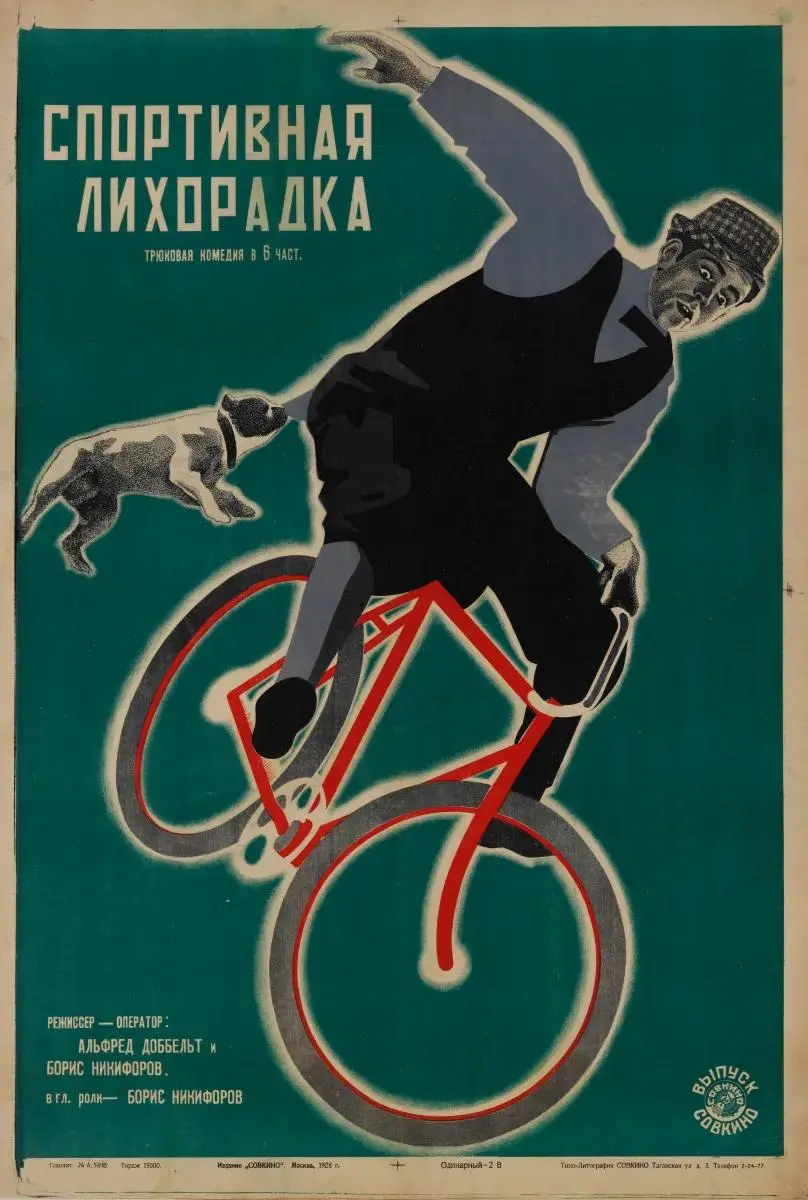
Is Sportivnaya likhoradka worth your time in the modern era? Short answer: yes, but only if you view it as a frantic time capsule of a world about to disappear.
This film is specifically for students of silent cinema and those who enjoy the raw, unedited energy of early physical comedy. It is decidedly not for viewers who require high-definition polish or a narrative that follows traditional three-act structures.
1) This film works because of the sheer, unbridled physicality of Boris Nikiforov, whose performance transcends the lack of dialogue through pure kinetic desperation.
2) This film fails because its pacing is erratic, often lingering on a gag long after the punchline has landed, a common trait of 1917-era productions.
3) You should watch it if you want to understand how early Russian filmmakers used comedy to process the rapid social changes of the pre-Revolutionary period.
Sportivnaya likhoradka is a fascinating specimen. It arrived in 1917, a year defined by political upheaval, yet it chooses to focus on the absurdity of athletic obsession. There is a strange irony in watching a man obsess over his personal fitness while the very foundation of his society was being rebuilt. It captures a moment where the individual's body became a site of both comedy and control.
The direction by Alfred Dobbelt is rudimentary by today's standards, but it possesses a certain 'anything goes' spirit. Unlike the more structured narratives found in The Eternal Grind, this film feels like a series of sketches stitched together by a shared delirium. It is fast. It is messy. It is 1917.
Boris Nikiforov doesn't just act; he flails. There is a specific scene where he attempts to turn a simple breakfast into a high-stakes athletic event. The way he handles a spoon as if it were a discus is genuinely funny, even a century later. It’s a performance that relies on the audience's understanding of the 'fever' mentioned in the title. He is a man possessed by the new religion of sport.
E. Leshkovskaya provides the necessary grounding. While Nikiforov is the whirlwind, she is the house that refuses to be blown down. Her reactions are often more nuanced than the slapstick surrounding her. She reminds me of the subtle emotional weight found in Angel Child, where the domestic sphere is treated with a surprising amount of dignity despite the absurdity of the plot.
Yes, Sportivnaya likhoradka is worth watching for its historical value and its raw comedic energy. It provides a rare look at the lighter side of Russian life during a period of intense transition. It is a short, sharp shock of silent era creativity that rewards the patient viewer.
The camera remains largely static, a silent observer to the madness. However, the framing is surprisingly effective. Dobbelt uses the depth of the room to create a sense of claustrophobia. As Nikiforov runs laps around his dining table, the viewer feels the walls closing in. This use of space is far more advanced than the flat staging seen in A Broadway Saint.
There is a brutal simplicity to the editing. The cuts are functional, intended only to move the action forward. Yet, there is a rhythm to it. It mimics the heartbeat of an athlete. The film doesn't need the melodrama of The Sawdust Doll because its stakes are entirely physical. If he stops moving, the movie ends. It is a cinema of pure momentum.
Pros:
- Unique historical context from 1917 Russia.
- Genuine physical comedy that transcends language barriers.
- Short runtime makes it an easy watch for completionists.
- Interesting use of domestic space as a comedic arena.
Cons:
- Primitive camera work compared to Western contemporaries like Scratch My Back.
- Some jokes require a deep understanding of early 20th-century social norms.
- The print quality of surviving versions is often poor.
Most critics view this as a simple comedy. I disagree. I think it’s a horror film disguised as a farce. The protagonist isn't just a fan; he is an addict. The way he ignores his family and his health in pursuit of 'the score' is chilling. It predates the modern obsession with quantified self-tracking by over a hundred years. He is the original fitness tracker user, lost in the data of his own movement.
This obsession mirrors the themes of internal struggle seen in Blind Love, but instead of emotional blindness, we see a physical blindness. He sees only the hurdle, never the person holding it. It’s a dehumanizing look at how hobbies can swallow a personality whole.
The lighting is largely natural, which gives the film a gritty, realistic texture despite the over-the-top acting. This contrasts sharply with the more stylized lighting of The Shuttle. Here, the world looks real, which makes the protagonist’s behavior seem even more unhinged. If the world were a cartoon, his actions would be normal. In this realistic setting, he looks like a madman.
The pacing is where the film shows its age. Modern audiences are used to the rapid-fire editing of contemporary comedy. Sportivnaya likhoradka asks you to sit with the silence. It asks you to watch the setup, the execution, and the aftermath in a single shot. It requires a different type of attention, similar to the patience needed for Her Lord and Master.
When compared to American films of the same year, such as Orchids and Ermine, the Russian approach is far more cynical. American comedy of the time often had a 'pull yourself up by your bootstraps' optimism. Sportivnaya likhoradka suggests that even if you pull yourself up, you’ll probably just use the bootstraps to jump rope until you collapse.
It lacks the sophisticated social commentary of A Self-Made Widow, but it makes up for it with raw vitality. There is no moral lesson here. There is only the fever. The film doesn't care if you learn anything; it only cares if you keep watching the man run.
Sportivnaya likhoradka is a fascinating, if flawed, piece of cinematic history. It isn't a 'masterpiece' in the traditional sense, but it is an essential watch for anyone interested in the evolution of comedy. It captures the spirit of an era that was about to be swept away by the tide of history. It is loud, proud, and completely absurd.
"A manic, unpolished sprint through the domestic madness of 1917. It’s not just a comedy; it’s a document of a world losing its mind to the rhythm of the game."
While it lacks the narrative depth of The Square Deal or the moral weight of The Bishop of the Ozarks, it stands alone as a testament to the power of physical performance. It’s a film that proves you don't need a massive budget or a complex script to capture the human condition. You just need a man, a camera, and a very strange obsession with sports.
In the end, Sportivnaya likhoradka reminds us that while governments fall and borders change, our capacity to act like idiots over a game remains eternal. It is as relevant today as it was in the dusty streets of 1917 Petrograd. Go watch it, but don't be surprised if you feel the urge to start doing jumping jacks in your living room afterward.
IMDb —
1926
Community
Log in to comment.