DbcultAccessing Vault...
Cult Review
Senior Film Conservator
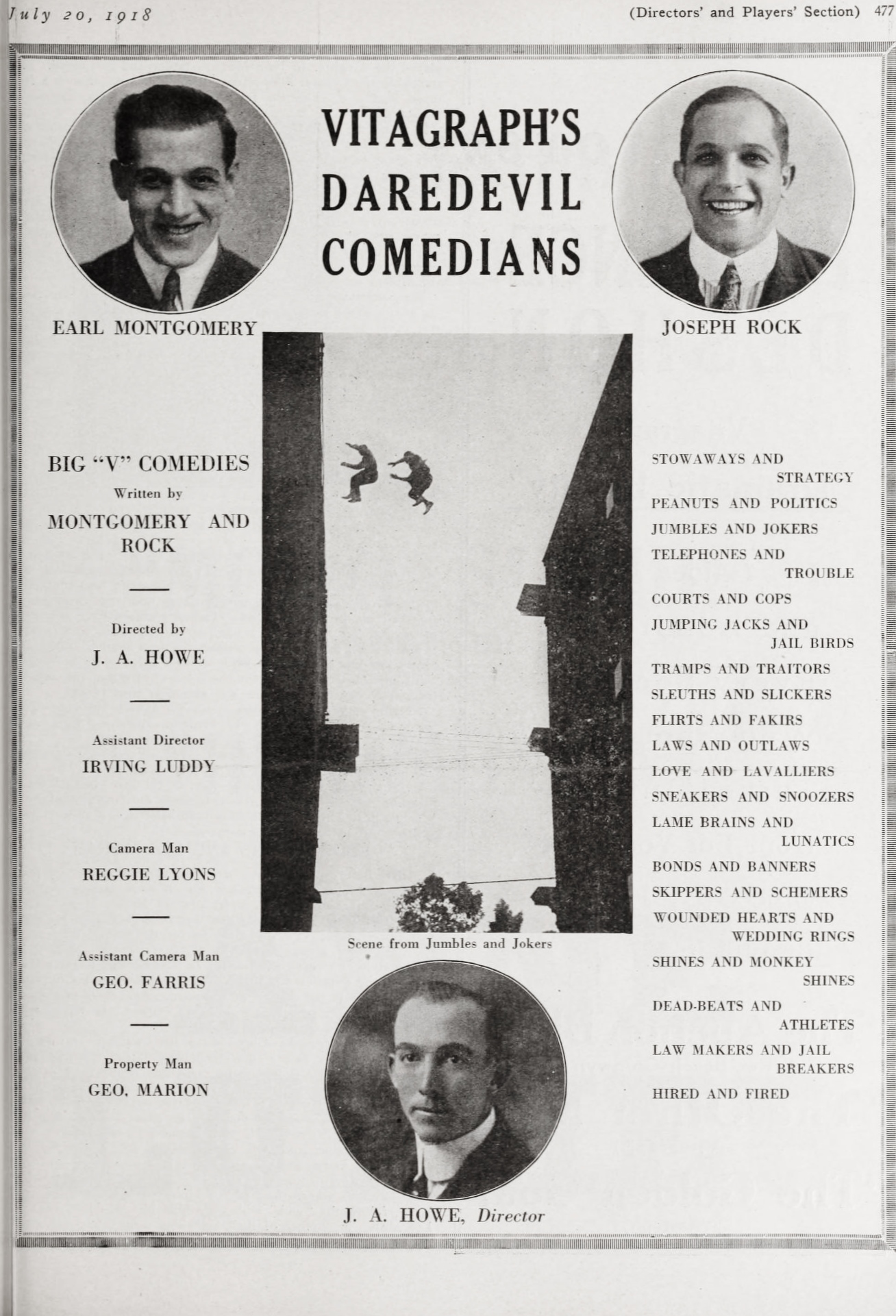
Ah, the sweet symphony of marital bliss! Or, in the case of Jumbles and Jokers, the cacophonous, yet utterly delightful, symphony of marital mayhem. This film, a testament to the timeless appeal of domestic farce, plunges headfirst into the tumultuous world of newlyweds, demonstrating with exuberant clarity that the most profound 'fun' can indeed be self-generated, often with the most innocent of intentions. In an era where cinematic storytelling was still finding its footing, Earl Montgomery and Joe Rock, both as writers and performers, carved out a niche for themselves in the realm of comedic chaos, and this particular outing stands as a prime example of their collaborative genius.
Farce, as a genre, thrives on exaggeration, on characters caught in increasingly ludicrous situations, often of their own making. Jumbles and Jokers epitomizes this to perfection. The plot, deceptively simple – 'a farce in which newlyweds create most of the fun' – belies the intricate comedic architecture at play. It’s not merely about things going wrong; it’s about the escalating domino effect of minor missteps leading to grand, theatrical catastrophes. Imagine a newlywed couple, brimming with optimism and perhaps a touch of naivety, attempting to set up their first home. Every task, from hanging a picture to preparing a meal, becomes a potential minefield of slapstick and misunderstanding. The humor isn't cruel; it's born from relatability, from the universal awkwardness of starting anew, amplified to an uproarious degree.
The brilliance lies in the characters' earnestness. They aren't malicious pranksters; they are simply a pair of individuals whose attempts at domestic harmony consistently veer into unforeseen chaos. A misplaced item leads to a frantic search, which in turn leads to a broken vase, a spilled drink, and perhaps even an accidental dousing of a well-meaning neighbor. The 'fun' they create is a joyous explosion of physical comedy and situational irony. It's the kind of humor that transcends language barriers and cultural nuances, tapping into a primal understanding of human fallibility and the inherent absurdity of everyday life.
The dynamic duo of Earl Montgomery and Joe Rock are the beating heart of this comedic enterprise. As both writers and principal actors, they possess an intimate understanding of the material, allowing them to imbue their performances with a natural rhythm and impeccable timing. Montgomery, often the more bewildered and put-upon of the pair, embodies the everyman caught in the whirlwind, his expressions ranging from wide-eyed confusion to exasperated resignation. Rock, on the other hand, might play the slightly more impetuous or the catalyst for many of the predicaments, his physicality a masterclass in controlled chaos. Their interplay is reminiscent of other great comedic duos, where the contrast in their personalities amplifies the comedic effect.
What makes their collaborative effort particularly noteworthy is their ability to write roles that perfectly complement their individual strengths. They understood the nuances of physical comedy, the power of a well-timed glance, and the escalating tension that precedes a grand farcical payoff. Their partnership here isn't just about individual performances; it's about the synergistic energy they bring to the screen, creating a believable (within the confines of farce) and endlessly entertaining marital unit.
Their work in Jumbles and Jokers showcases a refined sense of comedic pacing. Each gag isn't merely thrown in for effect; it builds upon the last, creating a crescendo of confusion and laughter. This meticulous construction is a hallmark of truly effective farce, distinguishing it from mere slapstick. It's not just about falling down; it's about *why* they fall down, and what further complications arise from that fall. The subtle facial expressions, the exaggerated gestures, the exasperated sighs – every element is honed to extract maximum comedic value.
To understand the impact of Jumbles and Jokers, one must place it within the context of early cinematic comedy. The nascent film industry was a fertile ground for experimentation, and farce, with its inherent visual appeal and reliance on physical gags, was a natural fit. Films like In Again, Out Again, while different in specific narrative, shared this common thread of protagonists entangled in a web of increasingly convoluted circumstances. The silent era, in particular, elevated physical comedy to an art form, demanding that performers communicate humor through gesture, expression, and expertly choreographed movements. Montgomery and Rock were adept practitioners of this craft.
While many early films focused on grand narratives or dramatic spectacles, there was a consistent appetite for the lighter, more escapist fare that farce provided. It offered audiences a chance to laugh at the relatable absurdities of life, without demanding deep emotional investment. This made films like Jumbles and Jokers immensely popular, serving as a much-needed antidote to the more serious melodramas or historical epics of the time, such as perhaps the gravitas of a Othello or the biographical sincerity of Florence Nightingale.
While primarily a vehicle for laughter, Jumbles and Jokers subtly touches upon universal themes. The transition into married life, the merging of two distinct personalities, and the often-hilarious learning curve of cohabitation are all implicitly explored. The 'fun' created by the newlyweds isn't just random; it's a comedic representation of the trials and tribulations inherent in building a life together. Every broken dish or misplaced item can be seen as a metaphor for the minor frictions and adjustments that every couple faces, albeit blown up to an epic scale for comedic effect.
This ability to resonate on a deeper, albeit subconscious, level is what elevates true farce beyond mere silliness. It holds a mirror up to our own lives, reflecting our minor foibles and domestic dramas in an exaggerated, yet comforting, way. We laugh, not just at the characters, but with a recognition of the shared human experience. It's a gentle reminder that even in the most chaotic moments of life, especially in the early stages of a significant relationship, there's always room for humor, for finding the absurd joy in the everyday.
The technical aspects of Jumbles and Jokers, while perhaps rudimentary by today's standards, were perfectly suited for its purpose. The camera work, likely static for much of the action, would have allowed the performers ample space to command the frame with their physical comedy. The editing, crucial for comedic timing, would have been sharp, cutting between reactions and actions to maximize the punchline. One can envision wide shots that capture the full scope of a domestic disaster, followed by close-ups that highlight the bewildered expressions of Montgomery or the mischievous glint in Rock's eye.
The absence of dialogue in silent film farces like this one forces a reliance on visual storytelling that is often more potent than spoken words. Every prop, every piece of furniture, every costume choice becomes part of the comedic arsenal. A grand piano might become an obstacle course, a simple hat rack could lead to a tangle of coats, or a seemingly innocuous rug could become a slippery trap. The visual gags are the primary language, and Montgomery and Rock were fluent in this dialect of hilarity. They crafted scenarios where the environment itself conspired against their characters, turning mundane objects into instruments of comedic chaos.
What is the enduring legacy of a film like Jumbles and Jokers? It's a testament to the power of simple, well-executed comedy. It reminds us that laughter doesn't always require complex narratives or profound philosophical inquiries. Sometimes, it just needs two talented individuals, a relatable premise, and a commitment to escalating absurdity. The film stands as a charming relic from a bygone era, yet its comedic DNA can be traced through countless subsequent comedies that explore the trials and tribulations of married life, from classic sitcoms to modern romantic farces.
It’s a foundational piece, demonstrating how early filmmakers, with limited technical resources, could still conjure up pure, unadulterated entertainment. While not as widely discussed today as, say, the more dramatic The Hater of Men or the adventurous God's Country and the Woman, Jumbles and Jokers holds its own as a delightful example of early comedic craft. It proves that the universal language of laughter, particularly when derived from the sweet, silly, and utterly chaotic beginnings of a marriage, is truly timeless.
In a world that often overcomplicates, Jumbles and Jokers offers a refreshing dive into the sheer joy of domestic pandemonium. It's a gentle, uproarious reminder that sometimes, the best entertainment, the most genuine 'fun,' is created not by external forces, but by the wonderfully human tendency to stumble, bungle, and ultimately, laugh at ourselves, especially when navigating the exhilarating, bewildering adventure of being newlyweds.
The brilliance of Jumbles and Jokers lies in its unpretentious commitment to pure, unadulterated fun. It doesn't aspire to grand statements or profound revelations. Instead, it revels in the simple, yet potent, pleasure of watching two individuals, bound by a fresh oath, inadvertently turn their domestic haven into a playground of delightful disaster. Montgomery and Rock, with their shared vision and impeccable comedic instincts, crafted a film that, despite its age, continues to elicit genuine chuckles. It's a vibrant, chaotic celebration of the early days of marriage, where every attempt at order begets an even greater jumble, and every serious moment is punctuated by an unexpected joker. A true gem for anyone who appreciates the foundational artistry of cinematic comedy.
IMDb 5.9
1936
Community
Log in to comment.