DbcultAccessing Vault...
Cult Review
Senior Film Conservator
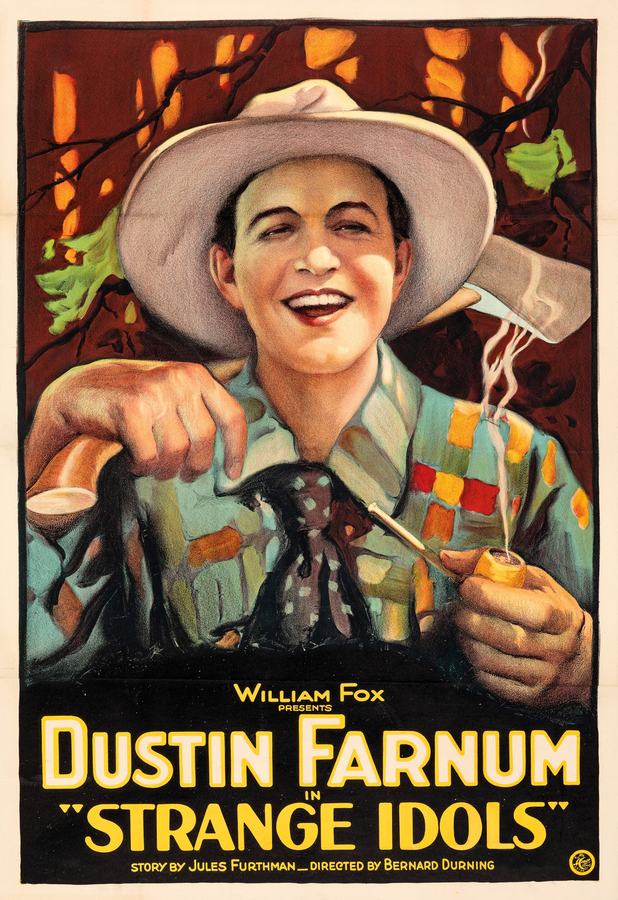
The cinematic landscape of the 1920s was a vibrant tapestry, woven from the threads of drama, romance, and social commentary. Amidst this rich cultural backdrop, Strange Idols emerges as a poignant and deeply human tale, one that probes the complexities of love, loss, and reconciliation with unflinching candor. Directed with a deft hand, this film navigates the intricate dance of relationships, where the boundaries between love and sacrifice are constantly blurred, much like the Time Locks and Diamonds, where the allure of wealth and status often obscures the true value of human connection.

At the heart of Strange Idols lies the tumultuous relationship between Angus MacDonald, a rugged and principled lumberman, and Ruth Mayo, a captivating cabaret dancer with a penchant for the finer things in life. Their romance, ignited by chance in the vibrant city of New York, is a whirlwind of passion and excitement, a Chicken in the Case scenario where the unpredictability of life is the only constant. As they navigate the challenges of their divergent backgrounds and desires, the couple must confront the ultimate question: can their love endure the tests of time, distance, and the allure of other temptations, much like the historical drama Anna Boleyn, where the stakes of love and power are elevated to a matter of state and royalty?

The film's portrayal of Ruth, played with depth and nuance by Vonda Phelps, is particularly noteworthy, as she embodies the spirit of a woman torn between her love for her family and her own aspirations, a dilemma echoed in films like Mary Jane's Pa, where the pursuit of happiness often leads to unexpected consequences. Her character's journey, from the dazzling stages of New York to the more subdued landscapes of the Northwest, serves as a powerful metaphor for the choices women face in balancing their personal and familial responsibilities, a theme that resonates deeply with the Price of Happiness, where the true cost of one's desires is laid bare.

The cinematography of Strange Idols is also deserving of praise, as it masterfully captures the contrasting environments of the urban and natural worlds, much like the visually stunning Are All Men Alike?, where the city's kaleidoscope of faces and stories is a character in its own right. From the soft, golden light of the Northwest's forests to the vibrant, pulsating rhythms of the New York nightlife, each frame is a testament to the director's keen eye for detail and atmosphere, evoking the sense of place found in One Touch of Nature, where the beauty of the natural world has the power to transform and redeem.

In addition to its technical merits, Strange Idols boasts a strong narrative that explores themes of love, loss, and redemption, all set against the backdrop of a rapidly changing world. The story, penned by Emil Forst and Jules Furthman, is a nuanced exploration of human relationships, where the complexities of the heart are laid bare, much like the Rustlers of the Night, where the lines between right and wrong are constantly blurred. Through the characters of Angus and Ruth, the film poses profound questions about the nature of love and commitment, and whether these can endure the trials of time and circumstance, a query that echoes in the May Day Parade, where the joy of celebration is tinged with the melancholy of passing time.

The acting in Strange Idols is also noteworthy, with Richard Tucker delivering a compelling performance as Angus MacDonald, a man torn between his love for his family and his duty to provide for them, a conflict that resonates with the En vinternat, where the harsh realities of life are tempered by the warmth of human connection. Vonda Phelps, as mentioned, shines as Ruth Mayo, bringing depth and vulnerability to a character that could have easily been reduced to a mere stereotype, much like the Greater Sinner, where the complexity of human nature is revealed through the lens of morality and choice.
In conclusion, Strange Idols is a film that lingers in the memory long after the credits have rolled, its themes of love, loss, and reconciliation continuing to resonate with audiences today, much like the Jungle Princess, where the exotic and the familiar blend in a captivating dance of discovery. It is a testament to the enduring power of cinema to capture the human experience in all its complexity and beauty, a quality shared by films like According to the Code, where the rules of society are tested by the unpredictable nature of the human heart. For those who appreciate a rich, character-driven drama with a strong narrative and compelling performances, Strange Idols is a must-see, a cinematic gem that shines brightly alongside other classics like El beso de la muerte and The Barbarian, each a unique and captivating world that awaits the viewer's discovery.

IMDb —
1926
Community
Log in to comment.