DbcultAccessing Vault...
Cult Review
Senior Film Conservator
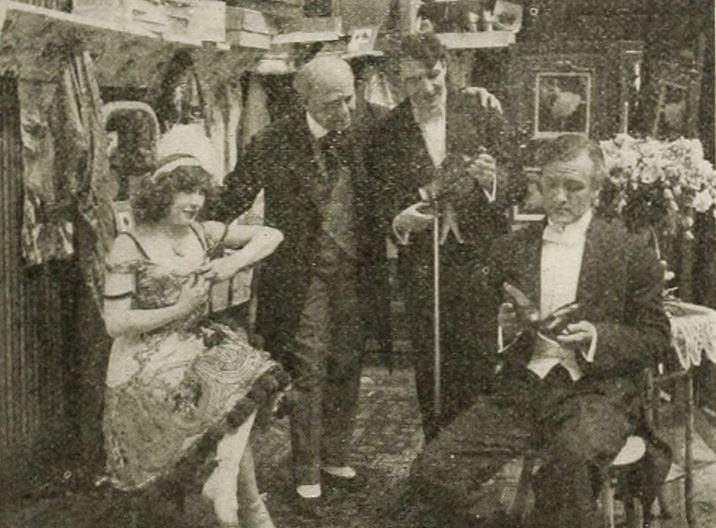
If celluloid could blush, The Dancer and the King would glow vermilion. Shot in the last blush of the silent era—before sync sound clamped shackles on international markets—this 1922 curio luxuriates in its own muteness, letting orchestral swells and iris-masked close-ups do the talking. What emerges is a political bodice-ripper that anticipates both Bismarck’s realpolitik and Der Hund von Baskerville’s gothic menace, yet pirouettes away from both into something closer to revolutionary reverie.
Director Edwin Carewe, a Chickasaw showman who understood spectacle as both colonizer’s weapon and indigenous protest, frames Bavarre as a fever dream of onion-domed spires and snow-globe boulevards. The palace interiors—clearly shot on borrowed Manhattan soundstages—reek of Expressionist cardboard, yet the camera glides past them with such confident dollying that Versailles itself seems to breathe. Compare this to the cramped poverty-row sets of De levende ladder; Carewe’s kingdom may wobble, but it never topples.
Into this diorama steps Marquita Dwight’s Lola, first seen at twelve—played by an uncredited spitfire—spinning like a cork in a rain barrel. Her transition from street urchin to celestial danseuse is elided by a single fade: a dirt-smudged face dissolves into a kohl-rimmed gaze that could slice paté. It’s the kind of shorthand only silent cinema dares; sound would have demanded explanatory dialogue, but here myth outruns logic, as in The Student of Prague or the ghostly doubles of A Study in Scarlet.
Arthur Evans’s King—never dignified with a royal name—has the soft jawline of a boy emperor and the restless eyes of someone who’s read Rousseau but skipped the footnotes. His infatuation with Lola is less erotic than aesthetic: he covets her as living poetry, a trophy that can recite his own benevolence back to him. Their courtship plays out in a montage of gloves dropped, fountains switched on, and bread loaves multiplied like gospel. It’s welfare by way of voyeurism, and Carewe shoots it with a skeptic’s eye, keeping the camera at calf-level so that every almsgiving feels like a boot hovering above a neck.
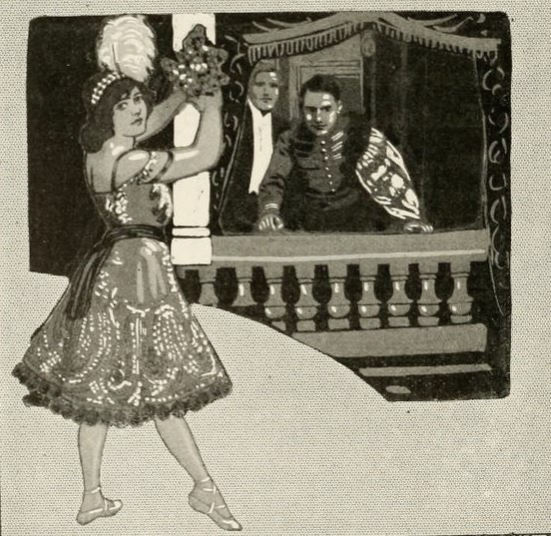
The nobility—powdered vultures led by Howard Lang’s serpentine Prime Minister—react as if the king had handed the scepter to a performing seal. Their grievances are economic but voiced in moral panic: “The throne is become a cabaret!” one baron spits, a line that arrives in a title card lettered with such ornate curlicues you half expect it to curtsey. The film relishes their apoplexy; Carewe cuts from a gravy-drenched banquet to Lola ladling thin soup at a poorhouse, the same orchestral motif ironically bridging both spaces. It’s class warfare via montage, predating Eisenstein’s Potemkin by three years yet feeling hipper, more carnivalesque.
The third act pivots from romance to conspiracy thriller. Shadowed corridors, daggers reflected in goblets, a clandestine militia drilling by torchlight—visual grammar lifted wholesale from Julius Caesar yet turbocharged by Carewe’s indigenous modernism: the rebels wear tricornes over long hair, blending colonial militia with Cossack furor. When Lola overhears the plot, the film stages her escape as a literal dance: she bourrées past sentries, each tip-toe landing timed to the flicker of an overhead strobe (achieved by on-set dimmers, a primitive but breathtaking effect).
This sequence crystallizes the film’s thesis: art as sabotage. Lola’s body—commodified by monarch and masses alike—becomes the semaphore that saves a crown yet endangers its wearer. The politics are messy, almost Situationist; she preserves the monarchy only to hijack it for welfare, a paradox the film neither resolves nor apologizes for. Try finding that in What the Gods Decree, where destiny is a court order stamped by Olympus.
The climactic duel between Lola and the Prime Minister is fought not with rapiers but with a single torch and a velvet curtain—an elemental showdown that would make The Heroine from Derna nod in approval. Dwight’s movements toggle between ballet and boxing; she jetés to avoid a thrust, then smashes a candelabrum across Lang’s cheekbone. The death blow comes when she yanks a tapestry, sending a wrought-iron curtain rod spearing through his coat—an accident that feels like fate. Carewe holds the image: the minister pinned like a moth, mouth opening and closing in silent curses, the torch rolling to set fire to the very documents that would have signed the king’s death warrant. It’s poetic justice staged as baroque accident, the sort of macabre whimsy you’d expect from Das rosa Pantöffelchen had it been directed by a saboteur.
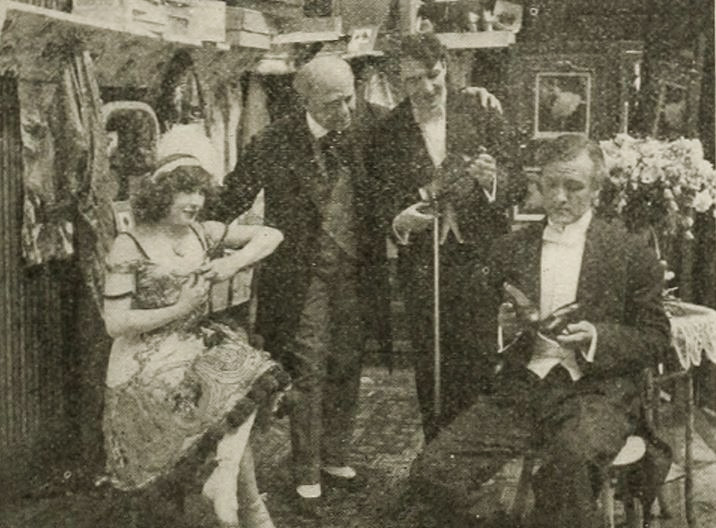
The ensuing popular uprising is rendered in superimpositions—faces upon faces, fists upon flags—until the screen fragments into a mosaic of jubilation. When the king finally places a peasant-woven garland on Lola’s head rather than a diamond diadem, the gesture lands as both romantic capitulation and radical rebranding: monarchy surviving by rebranding itself as the people’s courtship ritual. The final kiss, silhouetted against a sunrise that looks suspiciously like a rising loaf of bread, is less erotic than Eucharistic: body and blood of the state, shared among spectators who moments earlier were cannon-fodder.
Marquita Dwight, unjustly forgotten, gives a masterclass in kinetic acting. Watch her shoulders in the early street scenes: they rise and fall like a sparrow’s wings, telegraphing ribs poking through skin. By the time she executes a pas de bourrée across the palace’s parquet, those same shoulders have acquired the implacability of marble. She ages not via latex but via posture—spine elongating, chin tilting from supplication to sovereignty. It’s a performance you could screenshot and still feel the motion blur.
Arthur Evans walks the tightrope between feckless and visionary; his king’s worst crimes are laziness and daydreaming, making his redemption plausible. In the balcony scene where he signs the decree that will empty debtors’ prisons, Evans lets the quill tremble—not from guilt but from the dawning realization that generosity is addictive. Howard Lang, saddled with a villain role that could have twirled mustaches, instead plays the Prime Minister as a weary technocrat whose realpolitik has calcified into misanthropy. You glimpse the idealist he once was in the way he fingers a child’s tin soldier on the war council table—then crushes it.
Cinematographer Al Liguori (imported from Italy’s Assisi unit) bathes Bavarre in tapers and moonshine. Notice the sequence where Lola rehearses alone: the camera circles her like a moth, each revolution shaving more light until only her face floats in blackness—an effect achieved by a technician slowly closing the iris diaphragm while the operator cranked. The result is a proto-vignette that predates digital grading by nearly a century. Elsewhere, double exposures render the city’s poor as translucent overlays upon palace walls, literally projecting their existence onto noble space.
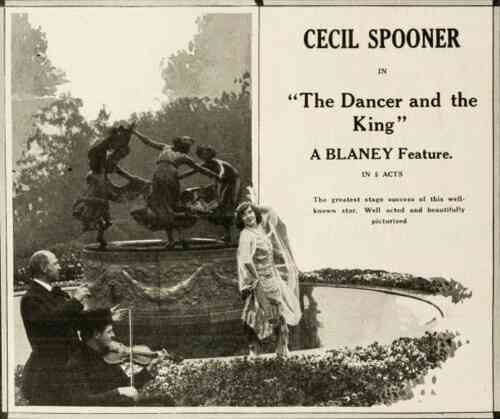
Compare this to the stolid tableaux of Bjørnetæmmeren, where camera movement is a heresy. Carewe’s camera glides, rears, swoons—sometimes visibly bumping over track seams, but the tremor only heightens the sense of a world unbalanced by desire.
Surviving prints retain the original cue sheets—calls for Wagner, Offenbach, and, during the uprising, the Marseillaise played at half-tempo until it curdles into a funeral dirge. Modern festivals often commission new scores, but the boldest option remains a single piano pounding out a habanera rhythm that stops whenever Lola stops dancing. The silence then feels like breath held between heartbeats, a negative space more eloquent than any violin swell.
Stream it today and you’ll spot DNA in everything from La La Land’s traffic-jam pirouettes to the anti-austerity ballet of V for Vendetta. Yet mainstream discourse has sidelined the film, partly because prints languished in a Moldavian monastery vault until a 2018 restoration, partly because its politics—monarchy co-opting revolution—feel paradoxical in an era demanding cleaner slogans. But ambiguity is the lifeblood of art. The film dares to suggest that power can be seduced, not merely toppled, and that grace is sharper than guillotines.
Women’s studies syllabi have begun to claim Lola as a proto-feminist, yet the character’s complexities resist hashtag reduction. She weaponizes femininity without ever quite owning it; she saves a king only to become his queen, a title that simultaneously liberates and incarcerates. In that paradox lies the film’s modern sting—an echo of every activist who wins a seat at the table then wonders if the menu was pre-set.
So seek it out, whether in 4K restoration at an archive or a grainy rip on a cinephile forum. Let its contradictions needle you. Let its torch-lit duels and bread-sunrise finales remind you that revolutions, like ballets, are choreographed one misstep at a time. And when the final title card—“And the people rejoiced”—flickers, ask yourself: are they cheering the marriage, or the mere fact that the curtain hasn’t yet fallen on them?
Verdict: A ravishing, rambunctious fever dream where tutus tangle with treason, and every plié threatens to pull the rug from under an empire. Imperfect, intoxicating, indispensable.
IMDb —
1930
Community
Log in to comment.