DbcultAccessing Vault...
Cult Review
Senior Film Conservator
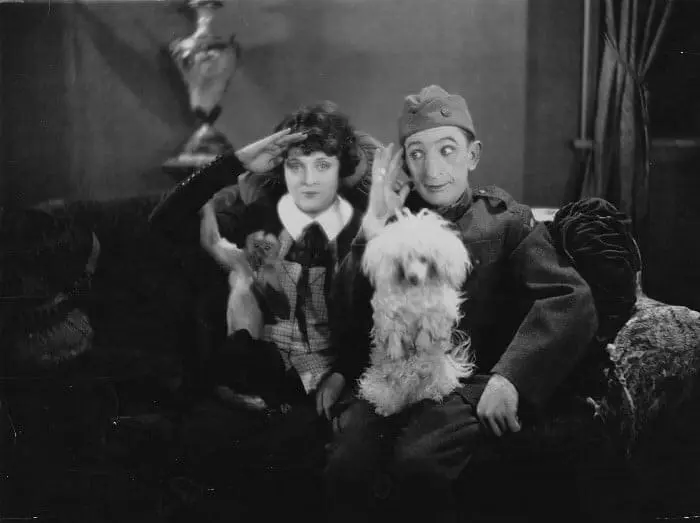
Is Spuds (1927) worth your time in the modern era of high-octane blockbusters? Short answer: yes, but only if you possess a genuine affection for the frantic, unpolished energy of late silent-era physical comedy.
This film is specifically for historians of the slapstick genre and those who find joy in the mechanical ingenuity of 1920s stunt work; it is certainly not for viewers who require narrative complexity or nuanced character arcs to remain engaged.
Before we dive into the mud of the trenches, let's establish the baseline for this 1927 curiosity. It occupies a strange space between a war movie and a circus act.
The premise of Spuds is deceptively simple. We are introduced to our protagonist not through an act of bravery, but through a mountain of starch. Edward Hearn plays the titular character with a wide-eyed sincerity that differentiates him from the more cynical comedians of his day. Unlike the calculated grace of Buster Keaton or the balletic pathos of Chaplin, Hearn’s Spuds is a man of pure reaction. He doesn't solve problems; he survives them.
The inciting incident—the theft of $250,000—is a classic MacGuffin. In 1927, that amount of money was an astronomical sum, equivalent to millions today. By placing this fortune in a car and sending it into the hands of German spies, director Edward Ludwig sets up a ticking clock that justifies every subsequent reckless decision. The stakes are personal: Spuds isn't trying to win the war; he's trying to save his captain from a court-martial. This localized motivation makes the film feel more intimate than the sweeping epics like Allies' Official War Review, No. 7.
The film’s portrayal of the German spies is, predictably, a caricature of the era. However, the way Spuds infiltrates their lines provides some of the film's most inventive moments. There is a sequence involving a disguise and a series of near-misses with German patrols that perfectly encapsulates the 'silent comedy logic' where being invisible is less about stealth and more about the timing of the camera's frame. It works. But it’s flawed.
While Edward Hearn is the lead, the DNA of the film is heavily influenced by the presence of Larry Semon and Kewpie Morgan. Semon was known for his 'more is more' approach to comedy—bigger explosions, faster chases, and more chaotic crowd scenes. You can see this influence in the way the payroll car is handled. It isn't just a vehicle; it's a character that undergoes as much physical abuse as the actors.
The cinematography, handled by the uncredited but capable crew of the era, utilizes the flat, bright lighting typical of 1920s comedies. This lack of shadow keeps the tone light, even when the characters are technically in a life-or-death situation. Contrast this with the more somber tones found in Die Flucht in die Nacht, and you see how Spuds intentionally avoids the 'horror' of war to maintain its status as an entertainment piece.
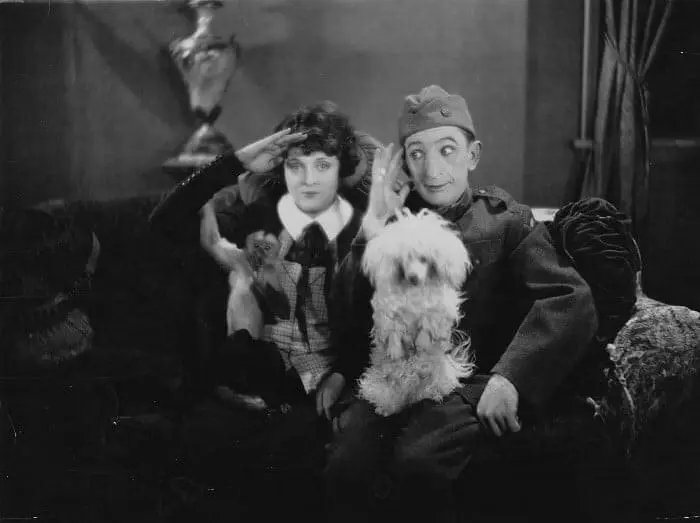
One specific scene that stands out is the high-speed pursuit through the French countryside. The cameras were likely hand-cranked, and the slight variations in speed give the chase a jittery, nervous energy that feels more 'real' than the smoothed-out motion of modern digital film. When the car bounces over a ditch, you feel the lack of suspension. The danger to the actors is palpable, adding a layer of tension that compensates for the thinness of the script.
Edward Hearn delivers a performance that is remarkably grounded for a slapstick lead. He lacks the 'mask' of Semon’s white-face makeup, allowing for more expressive, human reactions to the absurdity surrounding him. Hazel Howell and Dorothy Dwan provide the necessary emotional anchors, though, like many female roles in 1920s action-comedies, they are often relegated to being the reason for the hero's journey rather than active participants in it.
The chemistry between Hearn and Hugh Fay is where the film finds its rhythm. Fay serves as a perfect foil, his more cynical demeanor clashing with Spuds’s earnestness. This dynamic is reminiscent of the buddy-comedies that would dominate the talkie era just a few years later. It is a precursor to films like The Rag Man, where the heart of the story lies in the unlikely partnership between two marginalized characters.
"Spuds represents a specific moment in cinematic history where the trauma of the Great War was still fresh enough to be recognizable, but distant enough to be used as a playground for a potato-peeling hero."
Yes, Spuds is worth watching for anyone interested in the evolution of the action-comedy. While it lacks the philosophical depth of modern war films, it offers a raw, unadulterated look at 1920s stunt work and physical humor. It serves as a vital link between the short-form slapstick of the early 1910s and the feature-length narratives that would define the Golden Age of Hollywood.
The film is a testament to the era's obsession with machines—cars, planes, and industrial kitchens. If you can look past the dated ethnic stereotypes and the simplistic 'good vs. evil' narrative, you will find a film that is surprisingly modern in its pacing and its commitment to the 'big set piece.' It is a loud movie for a silent film.
Looking back at Spuds from the 21st century, it’s easy to dismiss it as a relic. However, that would be a mistake. The film captures a transition in cinema—the moment when the 'gag' started to evolve into the 'scene.' In films like Oh, Johnny! or Mile-a-Minute Romeo, we see similar attempts to blend genre, but Spuds does it with a grit that only a war setting can provide.
The true brilliance of the film lies in its title character. Spuds is the ultimate underdog. In a war of millions, he is the man assigned to the most menial task imaginable. By turning that man into the savior of $250,000, the film offers a populist fantasy that must have resonated deeply with a 1927 audience still recovering from the economic and social upheavals of the decade. It suggests that even the man peeling potatoes has the potential to be a hero, provided the car is fast enough and the stakes are high enough.
Spuds (1927) is a chaotic, charming, and occasionally brilliant piece of silent cinema. It doesn't ask for your intellectual engagement; it demands your attention through sheer movement. While it won't replace the masterpieces of the era in the history books, it remains a fascinating example of how Hollywood turned the greatest conflict of its time into a playground for a man with a potato knife. It is flawed, fast, and ultimately fun. Final Rating: A high-energy relic that deserves a look.
IMDb 5.3
1924
Community
Log in to comment.