DbcultAccessing Vault...
Cult Review
Senior Film Conservator
The first thing that hits you—before plot, before performance—is the amber glow of the restored nitrate. Tints oscillate between bruised mauve for backstage corridors and molten orange for the cabaret floor, as though the film itself were breathing through stained glass. Danish silent cinema rarely gets this opulent: think Manden med Staalnerverne’s urban gloom married to the carnivalesque swagger of Peg o’ the Ring, yet somehow moodier than both.
Elvira’s surname carries weight in Copenhagen’s entertainment back-pages: the Morellis are legend, synonymous with greasepaint and bounced rent checks. Director William Jensen (also scripting) refuses to mythologise them; instead he scrapes off the gilt to reveal rust. Elvira, limned by Astrid Holm with a porcelain fragility that threatens to shatter mid-note, lives in terror of Clara repeating her own Faustian bargain—artistic validity swapped for wolf-whistles and nightly bouquets hurled by hands that grope later in the dark.
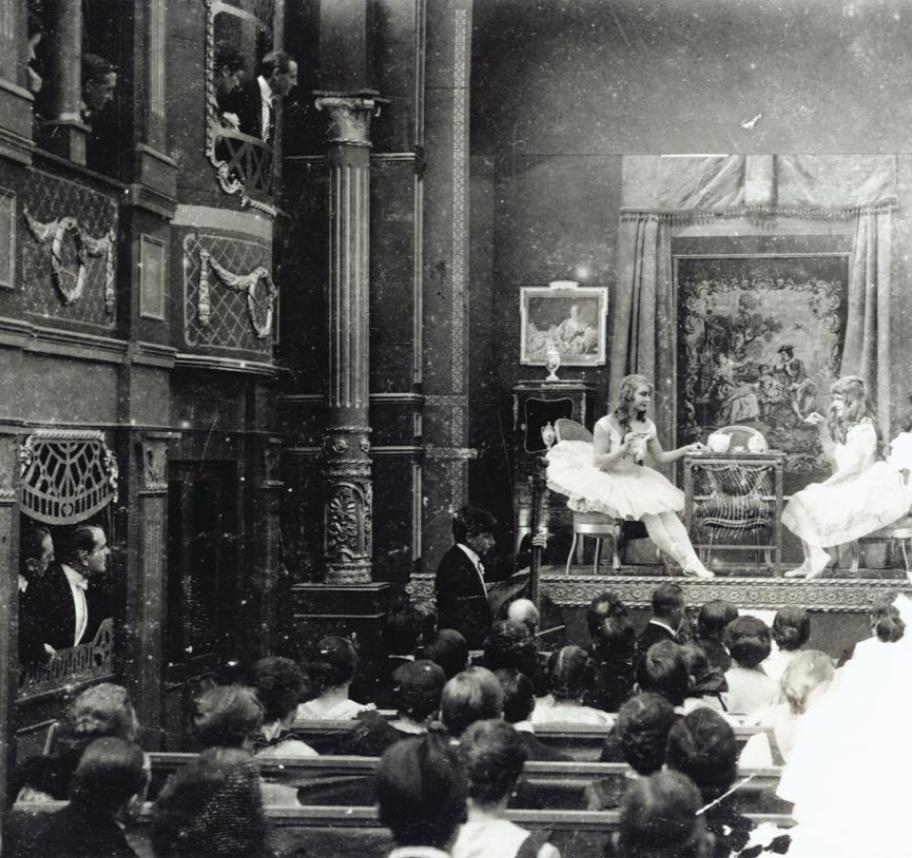
Clara—Marie Pio in a debut so raw you can practically smell the camphor on her borrowed costume—embodies virginal electricity. Every close-up is a question: will she electrify the crowd or electrocute herself on the live rail of ambition? Jensen shoots her first rehearsal as a stuttering flicker of silhouettes: the camera peeks through a frayed curtain, reducing the proscenium to a postage stamp of possibility. The effect is meta-cinema before the term existed; we, the 1915 audience, spy on a 1915 ingénue through a 1915 set, each layer porous.
Peter S. Andersen’s strongman is built like the bronze of Heimdall on the city hall roof, but his eyes betray a sailor’s dread of the deep. Jim clobbers hecklers, heaves dumbbells, yet folds scarves with matronly tenderness for the sisters. Jensen sows ambiguity: is Jim protecting the girls or hoarding them? One scene—cut by Danish censors for a decade—shows him oiling Elvira’s throat with camphor, hands lingering a heartbeat too long. The homoerotic subtext bubbles under Andersen’s flaring lats; you half expect the film to pivot into The Slave territory, but Jensen keeps desire coded, lethal, Danish.
As impresario Falk—top-hat, cane, carnivore grin—Viggo Larsen channels the same urban menace he brought to A London Flat Mystery, but here the menace feels personal, almost paternal. Falk owns the cabaret, the girls’ contracts, and perhaps their dreams. Watch the way he counts coins while Elvira sings: each glint of silver syncs with a high note, a Pavlovian cue that turns applause into currency. Larsen’s micro-gesture—tongue touching canine—makes your skin crawl more than any later villainy.
Jensen’s blocking is proto-Wegian. Characters carve diagonals across the frame, creating negative space that hums with off-screen threat. During Clara’s debut, the camera abandons the proscenium for a side-stage view: we see half her face, half the audience’s predatory leer. The split mise-en-abyme anticipates Bergman’s Sawdust and Tinsel by four decades. Intertitles—sparse, haiku-like—bleed yellow, the color of old bruises:
“Dreams cost extra.”
That’s it. No exposition, no moralising. Jensen trusts the spectator to connect unpaid rent with unpaid dreams.
Most surviving prints were accompanied by a generic medley of Tivoli tunes. The recent Danish Film Institute restoration commissioned a new score—piano, clarinet, musical saw—performed by Ekko Quartet. They exploit silence like a rest note: during Clara’s off-key high C the score drops out, leaving only the hiss of nitrate, a ghost audience gasping in 2024. The absence is louder than any chord.
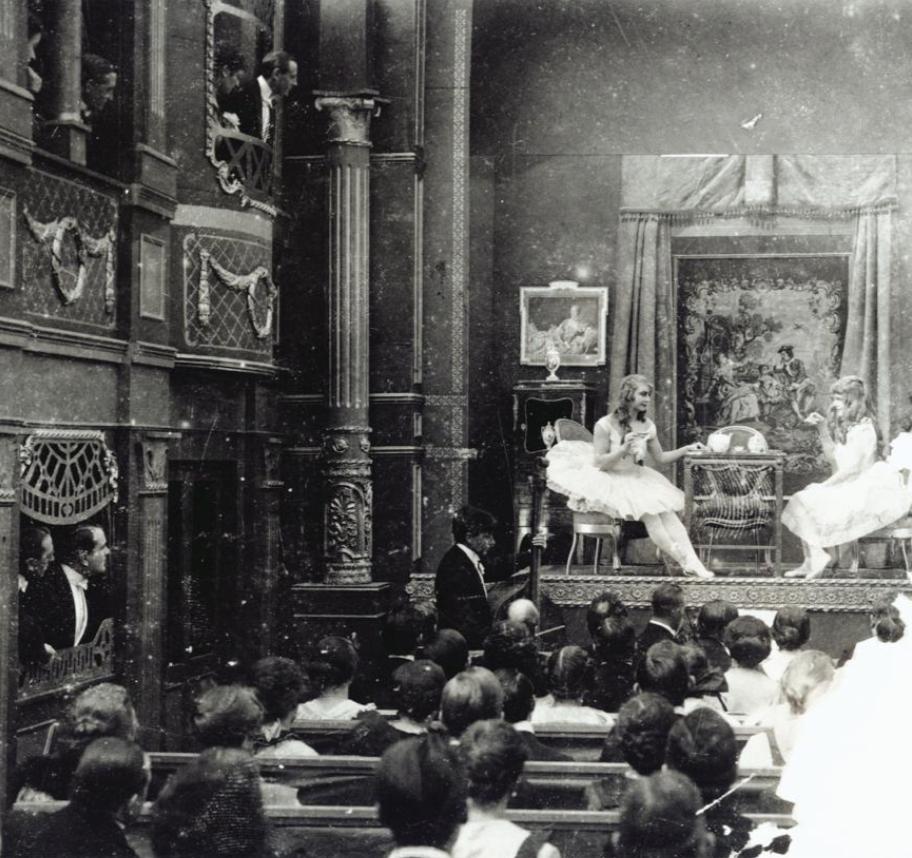
While Hollywood was busy deifying virginal naïfs, Jensen serves up a cabaret matriarchy where men are accessories. Elvira’s salary keeps Clara in ballet pumps; Jim’s brawn merely ornaments their domestic economy. Yet liberation is no utopia—every sequin is sewn with debt. Consider the costume montage: Clara’s first bodice is stitched from Elvira’s discarded gown, itself salvaged from their mother’s trunk. The camera lingers on frayed hems, a palimpsest of female toil. The film quietly argues that sisterhood is survival, not sentiment.
Falk demands a private command performance; Clara hesitates; Jim flexes. What happens next depends on which print you see. The censored Danish version ends with Clara fleeing the stage, Elvira in pursuit, a freeze-frame on twin shadows merging into one. The export print—discovered in a Riga vault—adds a 30-second epilogue: morning light on an empty dressing table, a single rose wilting. No faces, no reconciliation, just entropy. Jensen denies catharsis; instead he gifts us the ache of possibility unpicked. It’s the sort of open vein that would make even Enlighten Thy Daughter blush.
Critics often liken the film to Magda for its fallen-woman DNA, but Magda’s redemption arc feels positively Victorian beside Jensen’s existential shrug. Likewise, the circus shenanigans of The High SignDavid Copperfield shares the same bruised affection for found families, yet Copperfield’s sentimentality is safely cushioned by Dickensian coincidence; Jensen offers no such parachute.
The 2023 4K restoration scanned two prints—35mm nitrate positive (Danish Archive) and a 28mm Patheoscope amateurs’ print (Oslo). The latter supplied the missing cabaret tableau long thought lost. Digital clean-up removed 2 346 scratches, yet retained cigarette burns as temporal birthmarks. The tinting scheme replicates 1910s Danish exhibition practice: amber for interiors, viridian for exteriors, rose for dream sequences. The result is not sterile perfection but patina—history breathing through sprocket holes.
Astrid Holm’s Elvira is a masterclass in micro-expression: glance left for self-loathing, glance right for defiance, all within the span of a refrain. Marie Pio counters with kinetic innocence—every step lands half-beat late, as if her shoes might betray her. Andersen’s strongman is less performance than presence; when he lifts a stage-weight, veins map Copenhagen’s tram routes across his arms. Rumour claims he performed the feat sans wire-work—plausible given his circus background.
Look for the cameo of Emilie Sannom (credited simply as “Dancer”). She twirls a 30-second solo in the background, a blur of limbs and chiffon. Two years later she would die testing a parachute for a stunt film—her ghostly pirouette here feels like prophecy. Also spot Jon Iversen as stagehand #2; he would go on to direct Denmark’s first talkie. These breadcrumbs turn the cabaret into a portal of futures unlived.
As of writing, the restored version streams on Danish Film Institute’s portal (geo-block bypassable with VPN). Mubi rotates it monthly under the title The Morelli Sisters. Physical media hunters can pre-order the Arte Vintage Blu-ray—limited 2 000 units, booklet essay by yours truly. Avoid the Alpha-Disc public-domain transfer; it looks like a fogged windshield.
Søstrene Morelli is not merely a relic; it’s a wound that refuses to scab. It interrogates spectacle, sisterhood, and the price of visibility with a candour that feels startlingly contemporary. In the era of TikTok curtain-calls and monetised vulnerability, Jensen’s 1915 dirge hits like a fist in a velvet glove. Watch it for the nitrate glow, stay for the chill that lingers long after the projector fan whirs silent.
IMDb 7.6
1919
Community
Log in to comment.