DbcultAccessing Vault...
Cult Review
Senior Film Conservator
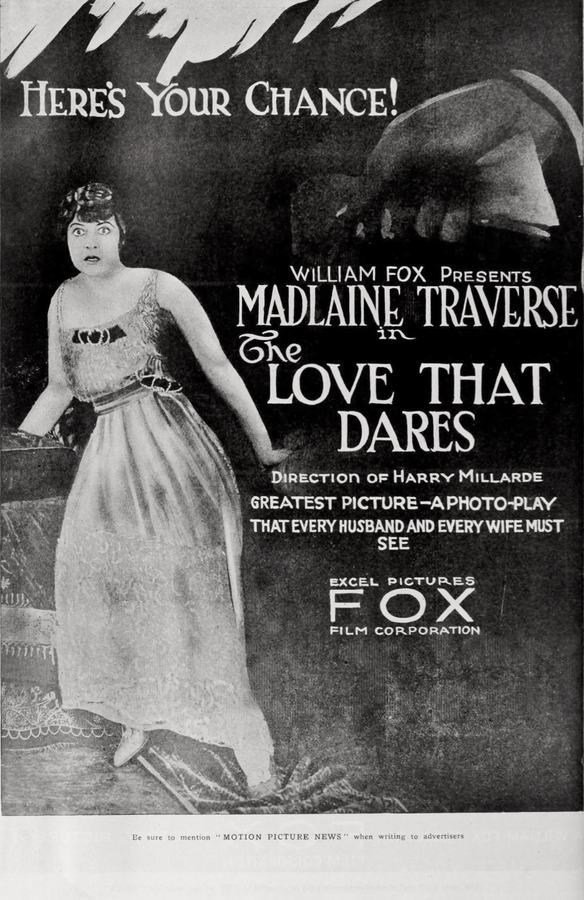
The cinematic landscape of 1919 was a crucible of evolving morality and aesthetic experimentation. Amidst this backdrop, The Love That Dares emerges not merely as a relic of silent melodrama, but as a searing indictment of the friction between the burgeoning industrial class and the domestic expectations of the era. Directed with a keen eye for the psychological weight of fiscal debt, the film navigates the treacherous waters of a marriage drowning in the disparity between production and consumption.
Frank Elliott delivers a performance of stoic desperation as Perry Risdon. His portrayal of the iron manufacturer is grounded in a palpable sense of duty—a man whose identity is forged in the fires of his foundry, yet whose foundation is crumbling at home. Contrast this with Mae Gaston’s Olive, whose character arc serves as a cautionary tale of the Gilded Age's lingering shadows. The misunderstanding at the heart of the film is a classic trope, yet here it is elevated by the stark reality of the 'iron' metaphor. Perry is hard, unyielding, and focused on the structural integrity of his life, while Olive seeks the fluid, ephemeral joy of high society. This collision of values mirrors the social anxieties found in other contemporary works like Male and Female, where the hierarchy of needs is constantly reshuffled by circumstance.
The screenplay by Denison Clift and Elmer Harris avoids the simplistic morality often found in early silent shorts. Instead, it posits that Olive’s extravagance is not born of malice, but of a systemic lack of communication—a theme that resonates even in modern domestic dramas. The film suggests that the 'neglect' Olive feels is a byproduct of the very labor required to sustain her lifestyle, creating a tragic feedback loop of dissatisfaction and debt.
Tom Santschi’s Ned Beckwith is a villain for the ages, a millionaire whose wealth is used as a blunt force instrument. In a sequence that feels remarkably modern in its depiction of financial warfare, Beckwith’s manipulation of the bank to call in Perry’s $80,000 loan highlights the vulnerability of the industrialist to the whims of the financier. This dynamic adds a layer of class conflict to the personal vendetta. Beckwith doesn't just want Olive; he wants to dismantle Perry’s legacy. The audacity of his offer—money for a divorce—is met with a satisfyingly visceral physical rebuttal, a moment where the 'iron' manufacturer finally breaks his stoicism to defend his honor with his fists.
This predatory behavior can be compared to the darker undercurrents of the criminal underworld seen in Les Vampires, though here the villainy is cloaked in the respectability of a tuxedo rather than a bodysuit. Beckwith represents the parasitic nature of old money seeking to feast upon the labor of the new industrial class.
The middle act of the film shifts the visual palette from the grey, oppressive industrial city to the luminous, airy vistas of Pasadena. This transition is not merely aesthetic but symbolic of Olive’s attempts to find clarity. Her realization of Perry’s plight and her subsequent decision to sell her jewelry is a pivotal moment of growth. In silent cinema, jewelry often serves as a metaphor for a woman's shackled status; by selling it, Olive is effectively buying her own agency back into the marriage. It is a desperate, noble gesture that complicates her character, moving her away from the frivolous archetype seen in A Perfect Lady and toward a more nuanced, sacrificial figure.
However, the $30,000 raised is insufficient, leading to the film's most harrowing sequence. The desperation that drives a woman to a predator’s lair is a recurring motif in early 20th-century art, reflecting the limited avenues for female financial intervention. The tension during Olive’s visit to Beckwith’s apartment is masterfully sustained, utilizing the shadows and the spatial geometry of the set to emphasize her entrapment.
While the Risdons are the protagonists, the emotional weight of the finale rests on the shoulders of Marta Holmes, played with haunting intensity by Madlaine Traverse. Marta is the 'other woman,' the discarded mistress who exists in the periphery of Beckwith’s life. Her intervention is the film’s greatest subversion of expectations. It is not the husband who 'saves' the wife in the traditional sense, but the mistress who facilitates the husband’s arrival and then executes the final judgment. Marta’s decision to kill Beckwith and then take her own life is a staggering display of nihilistic justice. It echoes the tragic, almost operatic endings found in The Soul of Buddha, where personal sacrifice is the only currency left for those marginalized by society.
The double death at the end of the film—the murder-suicide of the 'corrupt' elements—cleanses the narrative landscape, allowing the Risdons to reconcile over the literal and figurative corpses of their past mistakes. It is a dark, heavy resolution that avoids the saccharine endings of many of its contemporaries, such as We Should Worry or Some Liar.
Visually, The Love That Dares utilizes a sophisticated grammar of close-ups and cross-cutting to build suspense. The editing during the climax, alternating between Perry’s frantic journey to the apartment and the escalating tension within, is a precursor to the modern thriller. The use of lighting to distinguish between the 'honest' grime of the ironworks and the 'sinister' luxury of Beckwith’s apartment is subtle but effective. This film lacks the fantastical elements of Mortmain or the kinetic energy of Maciste turista, yet it finds a deeper, more resonant power in its grounded realism.
The performances are remarkably restrained for the period. Frank Elliott avoids the over-the-top gesticulation that often mars silent dramas, opting instead for a performance of internalised pressure. Tom Santschi, conversely, uses his physicality to dominate the frame, making Beckwith an almost inescapable presence. The chemistry between Elliott and Gaston is brittle, perfectly capturing a marriage that has become a series of transactions rather than an emotional union.
At its core, the film asks what 'dares' to be called love. Is it the extravagant gifts of a wife? The relentless labor of a husband? Or the ultimate sacrifice of a mistress? By weaving these threads together, the film transcends its melodramatic roots to become a study of the human condition under the pressure of capitalism. It shares a thematic DNA with Public Opinion, exploring how societal expectations and financial standing dictate the boundaries of personal morality.
The reconciliation of the Risdons is not a simple 'happily ever after.' It is a sober acknowledgment of the cost of their survival. They are left standing, but the world around them—the world of Beckwith and Marta—has been incinerated. This sense of a pyrrhic victory is what gives the film its lasting impact. It doesn't shy away from the ugliness of the 'honesty' required to maintain a life, a sentiment mirrored in An Honest Man.
In conclusion, The Love That Dares is a vital entry in the canon of early American cinema. It manages to be both a product of its time and a timeless exploration of greed, jealousy, and the messy, often violent path to redemption. For those interested in the evolution of the domestic thriller, or for fans of the gritty realism found in The Sleeping Lion and The Heart of Midlothian, this film is an essential watch. It serves as a reminder that even in the silent era, the stories being told were loud with the clamor of human conflict and the silent screams of the heart.
Final Rating: A haunting 8.5/10 for its psychological depth and daring narrative structure.
IMDb —
1921
Community
Log in to comment.