DbcultAccessing Vault...
Cult Review
Senior Film Conservator
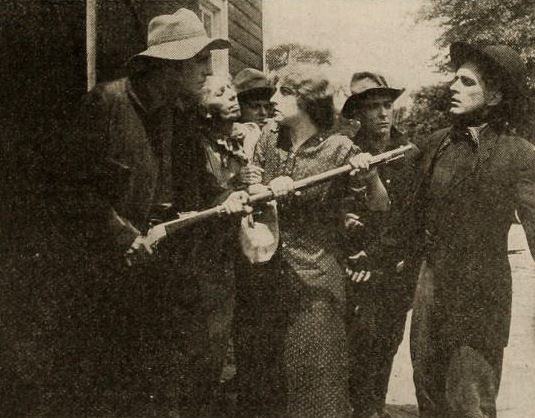
Marion Leonard’s eyes are the first storm. Even before the Seine swallows the ring, even before Paul’s violin drips its premonitory trill, her gaze—caught in a freeze-frame of silver nitrate—warns us that promises are merely brittle ice over darker currents. The Vow is not a melodrama; it is an autopsy of promise itself.
The film opens inside Lucille’s atelier, a cathedral of dust where half-limned torsos stand like jurors. Cinematographer John W. Brown (unheralded, as was custom) sculpts the studio with chiaroscuro so tactile you taste plaster on your tongue. Shafts of skylight slice the gloom, landing on a bust whose blank eyes mirror Lucille’s own terror of vacancy. When she later caresses the marble cheek of Paul’s likeness, the gesture is necrophiliac: she is romancing an unfinished future while shackled to a finished contract.
Compare this to the oppressive parlors in Scandal, where wallpaper seems to perspire gossip. Here the stone is silent, accusatory, a more honest jailer than society’s whispers.
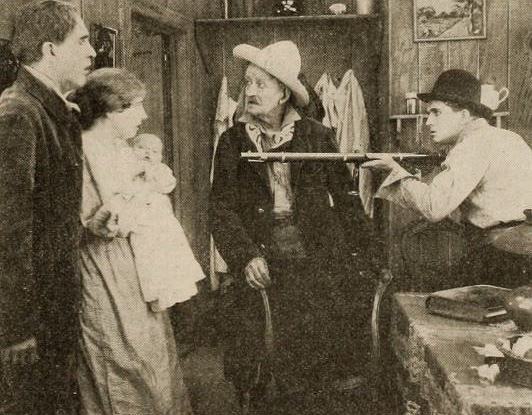
When the ring tumbles into the river, Brown’s camera tilts downward, following its descent past swirling litter and the ghostly reflection of Notre-Dame. The cut is abrupt: we are now inside the water, witnessing the band spin like a tiny planet. Silent cinema rarely dared such POV audacity; audiences gasped, some swore they felt cold spray. The Seine becomes a character—memory keeper, grave robber, confessor. Later, when the skeleton wearing an identical wedding band is revealed, the river’s cyclical cruelty is complete: every vow is pre-lost.
Think of The Doom of Darkness where fog erases footprints; here water erases footprints and fingerprints alike.
Leonard, only twenty-three yet already a veteran of forty shorts, understood that the camera magnifies micro-tremors. Watch her in the carriage as rain pelts the windows: she folds her gloved hands, then unfurls one finger—just one—like a petal testing frost. The gesture lasts maybe eight frames, yet it conveys an atlas of hesitation. Intertitles? Superfluous. Her body is the intertitle.
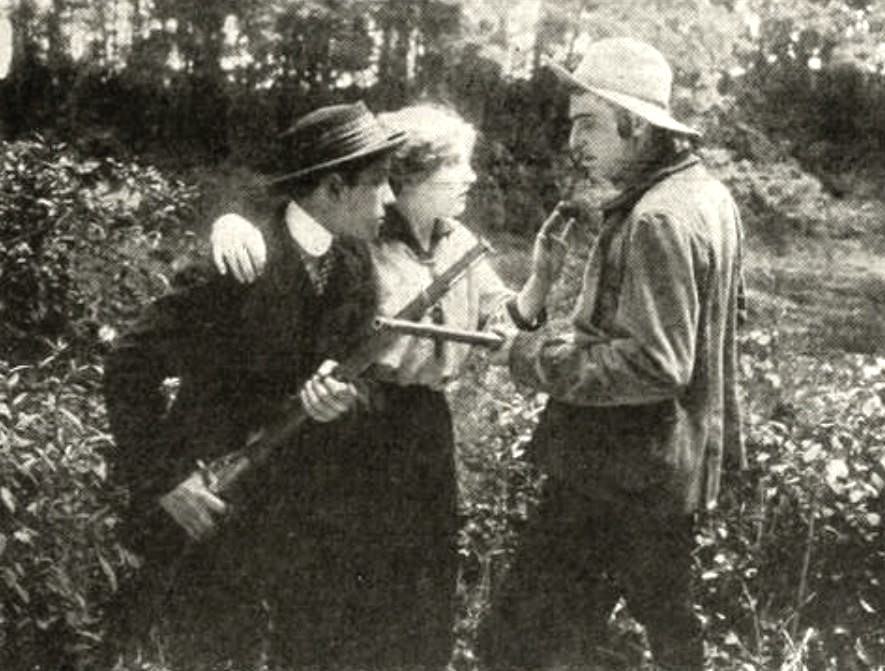
In the climactic opera-house sequence, Brown pushes in until her face fills the frame. The grain of the 35mm dances across her cheekbones like static electricity; her dilated pupils drink the darkness. No eyeliner, no greasepaint—just mortal dread. When Paul’s bow releases that final, broken note, a single tear slides to the corner of her mouth. She does not wipe it; the tear becomes a lens through which we behold our own shabby pledges.
Played by Arthur Johnson (a name lost to trivia), Paul is less a lover than a symptom. His violin score—performed live on set and later transcribed for theater orchestras—threads the film with a tremolo that anticipates Bernard Herrmann’s slashing strings. Each time he appears, the soundtrack drops an octave, as if the orchestra itself is sinking into the Seine. His red hair, a copper flame against monochrome Paris, marks him as the city’s id, the part that burns contracts.
Yet Johnson never romanticizes him. Paul is selfish: he wants Lucille not as partner but as muse, a flesh tuning-fork for his art. When he bleeds onto her mask at the masquerade, the blood is both offering and brand. The film refuses us the comfort of condemning John alone.
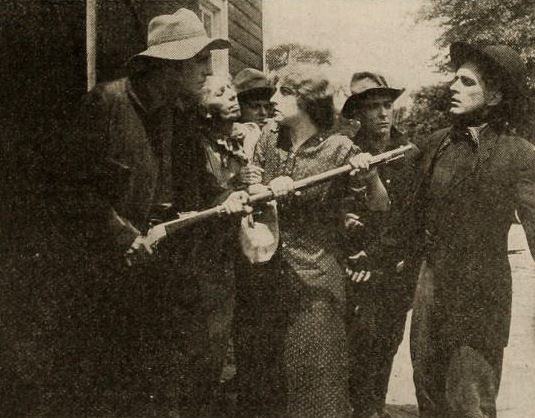
John, essayed by Charles Clary, is that most insidious villain: the sensible man. He speaks of pensions, of diplomatic posts in Saigon, of “our duty to the future.” His wardrobe is a ledger: starched collars, waistcoat buttons aligned like balanced books. When he challenges Paul to the duel, he does so with the same clipped courtesy he would extend to a trade agreement. The duel, of course, is farce: dawn fog swallows their silhouettes until Lucille’s intervention transforms it into existential tableau.
Clary’s genius lies in subtlety: watch how his gloved hand tightens imperceptibly around the pistol grip, the only crack in a porcelain façade. He is not evil; he is efficient. That is the true horror.
Shot over three freezing nights in December 1914, the masquerade is a fever dream. Extras wore rented commedia costumes reeking of mothballs; the camera, hand-cranked, varied between 14 and 22 fps to create a jerky danse macabre. When Paul’s bow snaps, the violin string whiplashes across Lucille’s mask, slicing a paper cheek and drawing real blood from Johnson’s lip—an accident kept for its savage authenticity.
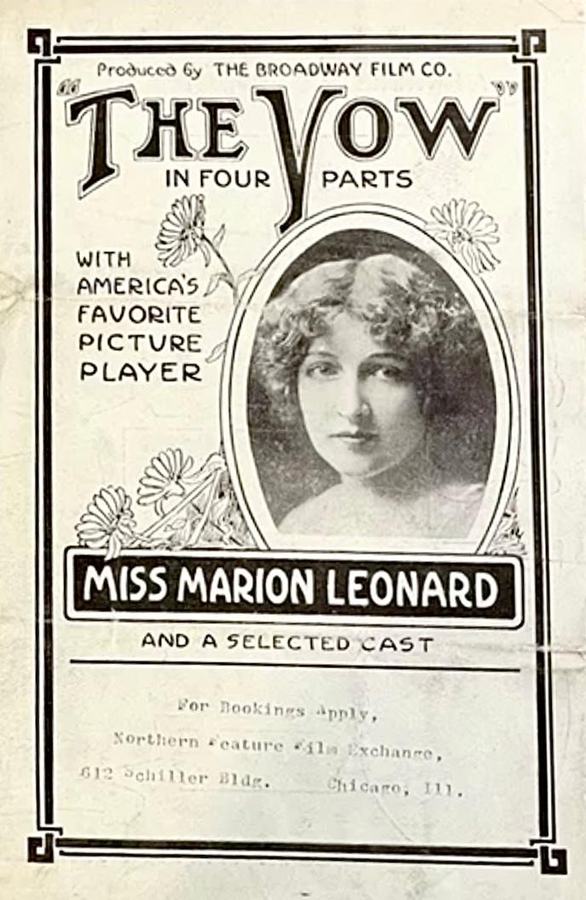
Look for the harlequin in the background who keeps licking a paper cut: he is the film’s unconscious, tasting the violence that polite society denies.
This sequence anticipates the masked orgy in The Painted Soul but with less decadent languor and more surgical dread. Identity is a costume one rents by the hour; underneath, the flesh is already scarred.
Director Joe De Grasse was a former physician; he edits like a surgeon stitching without anesthetic. The ring’s loss is followed by a smash-cut to a close-up of Lucille’s tooth biting her lip; the duel’s challenge jumps to a pigeon flapping skyward, its wings echoing pistol hammers. Rhythmic discontinuity keeps the viewer off-balance, as though morality itself suffers arrhythmia.
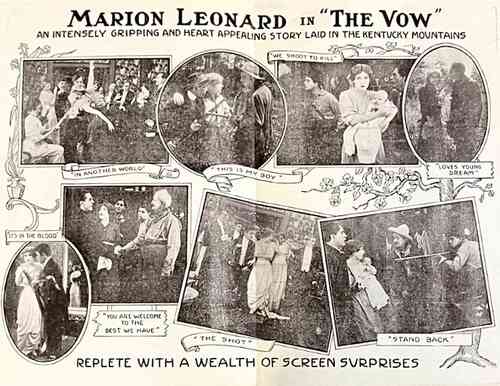
Compare this to the languid cross-fades in Helene of the North where time drips like honey; here it splinters like glass.
Few silent films dared such metaphysical audacity. The skeleton wearing an identical wedding band is never explained. Is it Lucille from a future life? A past victim of the same vow? The ambiguity detonates the linear narrative, turning the film into Möbius strip. Censors in Chicago demanded the shot excised; prints shipped to South America kept it, hence surviving restorations derive from Buenos Aires vaults. The frame—only twelve seconds—haunts longer than entire epics.
Original scores for silent films were often improvised by house pianists, but The Vow circulated with a prescribed score by Olga von Türk, a student of Liszt. The main theme is a twelve-bar motif that inverts upon itself whenever Lucille hesitates. In the opera-house finale, the orchestra is instructed to slow to 60 bpm, then detune by a quarter-step, creating an aural equivalent of breath failing. Modern screenings with live ensembles report audiences weeping at the sensory overlap: we are hearing the precise decay of promise.
Moving Picture World called it “a dagger of truth in silk scabbard.” The New York Herald fretted that married women might “take notions.” Ticket sales in Boston were halted after a clergyman condemned the film for “glorifying indecision”—ironic, since the film crucifies indecision. Yet in St. Louis, a society hostess rented a print for a charity ball, projecting it onto a bedsheet while guests in powdered wigs sipped champagne. Art, after all, loves contradictions.
The 2018 4K restoration by Cinémathèque Française scanned the Argentine print at 8K, revealing hairline cracks in every frame—physical scars that mirror thematic ones. HDR grading intensified the candlelit oranges without drowning the blacks. The result: a film that looks like it was carved from obsidian and candle smoke. Streaming platforms compress the grain; see it in cinema if you crave the full wound.
The last shot: snow drifts through the shattered dome onto Lucille’s upturned face. The camera lingers until the whiteout nearly erases her. Is she dead? Transfigured? The ambiguity is not a gimmick but a generosity: we are handed our own ring to lose. I left the theater tasting iron, as though my own blood had been drawn by a violin string I never touched.
Some films you watch; The Vow watches you, then quietly pockets your promises.
IMDb —
1920
Community
Log in to comment.