DbcultAccessing Vault...
Cult Review
Senior Film Conservator
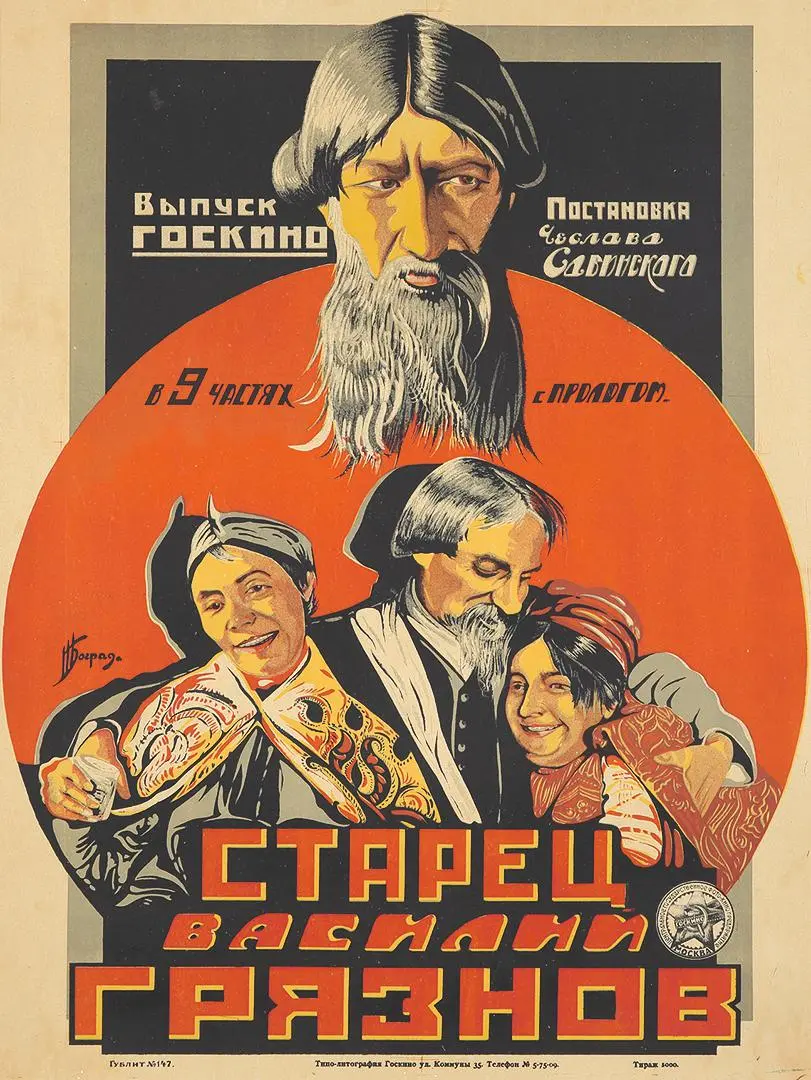
The 1920s stood as a crucible for the moving image, a decade where the celluloid strip was not merely an entertainment medium but a weapon of ideological transformation. In the heart of this fervor, Starets Vasiliy Gryaznov emerged as a fascinating, if polarizing, artifact of the Soviet 'Godless' movement. It is a film that refuses to blink, staring directly into the eyes of tradition and demanding an accounting. Unlike the escapist fantasies found in contemporary Western productions like A Prisoner in the Harem, which sought to enchant through exoticism, this film seeks to disenchant through a relentless, almost surgical realism.
The portrayal of Vasiliy Gryaznov by Pyotr Starkovsky is a masterclass in subtlety and suppressed intensity. Starkovsky does not play the elder as a cartoonish villain; instead, he imbues the character with a gravity that makes the peasants’ devotion entirely believable. This is where the film’s power lies. It acknowledges the magnetism of the 'starets'—that uniquely Russian figure of spiritual authority—while simultaneously dismantling the structures that sustain him. We see the merchant’s background, the calculated shift from the marketplace to the monastery, suggesting that the trade of souls is not so different from the trade of textiles. The film draws a sharp line between genuine human suffering and the organized exploitation of that suffering.
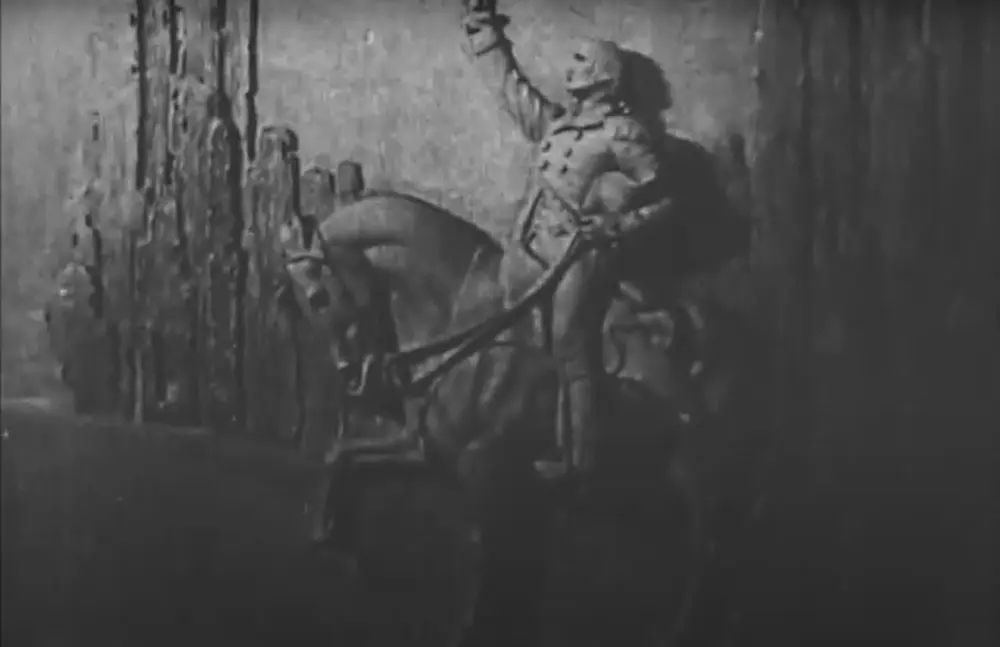
While The Little Church Around the Corner might lean into the sentimental comforts of faith, Starets Vasiliy Gryaznov views the church as a fortress of the old guard. The cinematography utilizes heavy shadows and cramped interiors to create a sense of spiritual claustrophobia. Every frame is thick with the weight of the past. The way the light catches the icons, turning them into shimmering walls that separate the people from their own agency, is a visual motif that recurs with haunting frequency. It is a direct contrast to the open-air clarity of the proletarian scenes, where the lighting becomes flatter, more democratic, and less prone to the deceptive play of shadows.
A significant portion of the film’s emotional resonance rests on the shoulders of Mariya Babanova. Her presence on screen is electric, a precursor to the great dramatic turns of the sound era. She represents the innocent seeker, the soul caught between the dying whispers of the old gods and the shouting demands of the new state. Her performance provides the necessary human counterpoint to the film's more didactic elements. In scenes where she seeks a miracle, the camera lingers on her face, capturing a vulnerability that transcends propaganda. It reminds us that even in a film designed to critique, the human element cannot be fully suppressed.
Comparing her trajectory to the characters in Miss Peasant reveals the gulf between the playful romanticism of pre-revolutionary tropes and the grim seriousness of the 1924 landscape. In the former, the peasant identity is a costume; in Starets Vasiliy Gryaznov, it is a condition of existence, marked by toil and the desperate need for meaning. The film’s refusal to provide a traditional 'happy ending' in the spiritual sense is its most radical act. The resolution is not found in a divine intervention but in the awakening of the collective mind.
The editing of the film reflects the burgeoning Soviet montage theory, though it is more restrained than the works of Eisenstein or Vertov. There is a rhythmic quality to the way the film cuts between the opulent, incense-filled rituals of the church and the dusty, grinding reality of peasant life. This dialectical approach forces the viewer to synthesize a new understanding of the world. It is a technique that mirrors the deceptions explored in Trompe-la-Mort, where appearances are used to mask a more complex, often darker reality. Here, the 'trompe-l'oeil' is the sanctity of Gryaznov himself.
The writers and directors of this period were tasked with creating a new mythology. They had to take the existing archetypes of Russian culture—the holy fool, the wise elder, the suffering mother—and repurpose them for a secular age. This film is a primary example of that repurposing. It takes the life of a man who was intended to be a pillar of the church and turns him into a cautionary tale about the dangers of blind faith. It is as much a psychological thriller as it is a political statement, delving into the mechanics of belief and the ease with which charisma can be weaponized.
When we look at other films of the era, such as National Red Cross Pageant, we see cinema being used for institutional promotion, albeit in a much more benign and Western context. Starets Vasiliy Gryaznov is far more aggressive. It does not just promote a cause; it attempts to eradicate a worldview. The film’s focus on the 'hidden' life of the elder—the moments of doubt, the tactical decisions, the interactions with church hierarchy—serves to demystify the sacred. It suggests that the 'door' between the holy and the profane is not a mystical portal, but a carefully constructed barrier, much like the thematic divisions in The Door Between.
Even in its more didactic moments, the film maintains a high level of technical proficiency. The use of close-ups on the hands of the starets—counting beads, blessing the faithful, taking coins—creates a tactile sense of his presence. We feel the texture of the world he inhabits. This attention to detail is something we also see in international works like Miyama no otome or Le nabab, where the environment is used to reflect the internal state of the characters. In Gryaznov’s case, the environment is one of decaying grandeur, a gilded cage that is slowly losing its luster.
Viewing Starets Vasiliy Gryaznov today requires a leap of historical imagination. We must place ourselves in a world where the very foundations of reality were being rewritten. The film is a document of that upheaval. It lacks the lightheartedness of Playmates or the domestic drama of His House in Order. Instead, it possesses a fierce, uncompromising energy. It is a film that wants to start a fire, to burn away the cobwebs of the 19th century and clear the ground for the 20th.
The performances of Y. Kaverina and Max Tereshkovich provide the necessary grounding in the 'new' world. They represent the youth, the future, the ones who are no longer susceptible to the old spells. Their interactions with the starets are marked by a curiosity that quickly turns to disdain. This generational shift is a common theme in silent cinema, seen in films like Youthful Cheaters, though here the stakes are much higher than mere social rebellion. It is a fight for the soul of a nation.
Ultimately, the film succeeds because it understands its enemy. It doesn't just mock the church; it analyzes it. It looks at the social conditions—the poverty, the lack of education, the fear of the unknown—that make a figure like Vasiliy Gryaznov possible. By addressing these root causes, the film moves beyond simple propaganda and into the realm of social critique. It asks the audience to look past the 'princess of patches'—the romanticized view of poverty found in The Princess of Patches—and see the systemic injustice that faith often fails to address.
In the grand tapestry of 1920s cinema, this film is a dark, intricate thread. It may not have the universal appeal of a comedy like Taxi Please or the straightforward heroism of An Overall Hero, but its impact is undeniable. It challenges us to think about the stories we are told and the reasons why we choose to believe them. Even as the specific political context of the Soviet Union has faded, the film’s questions about power, belief, and truth remain as relevant as ever. It is a stark reminder that every 'saint' has a history, and every 'miracle' has a witness with an agenda. In a world still searching for answers, Starets Vasiliy Gryaznov stands as a testament to the power of the camera to strip away the veil and show us the world as it truly is—unvarnished, complicated, and entirely human.
Note: For those seeking a different kind of miracle, perhaps one involving the complexities of family and social expectation, Wanted: A Baby offers a fascinating contrast in tone and objective from the same era.
IMDb —
1919
Community
Log in to comment.