DbcultAccessing Vault...
Cult Review
Senior Film Conservator
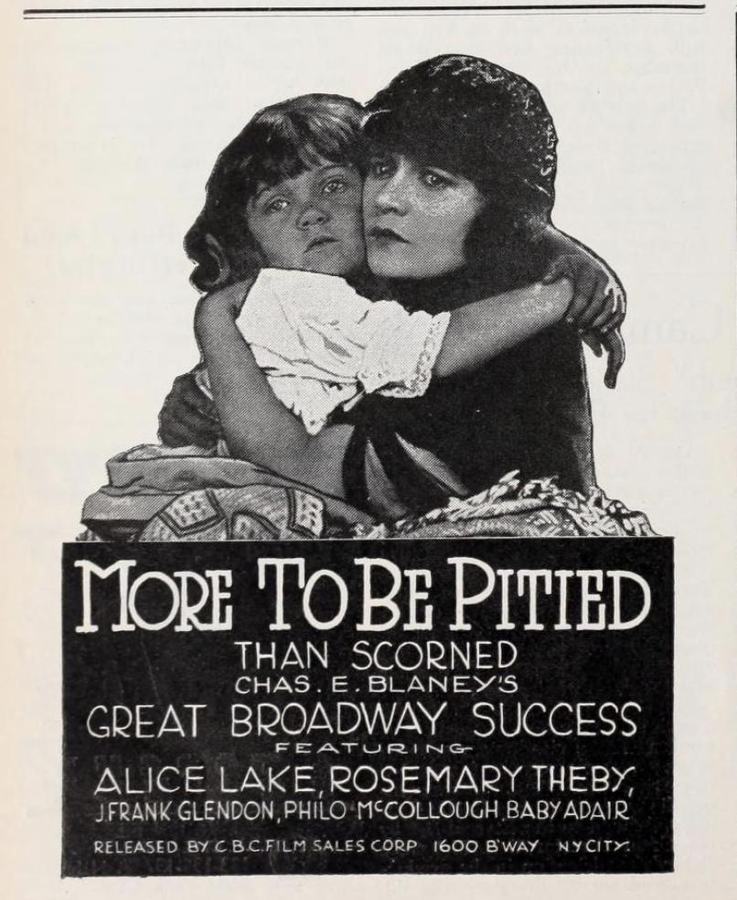
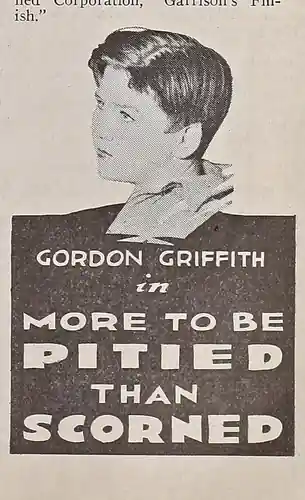
The first time I projected More to Be Pitied Than Scorned on my living-room wall—16-millimeter grain dancing like candle soot—I understood why the word melodrama once carried the weight of cathedral bells. Charles E. Blaney’s scenario is a razor-blade valentine slipped inside a silk glove: it cuts long after the embrace ends.
Julian Lorraine’s jealousy is not born in a vacuum; it gestates within the footlights’ sulfurous glow. He is a man who earns his living by counterfeit emotion, so when genuine feeling arrives—raw, unscripted—it terrifies him into slander. Blaney withholds the inciting misunderstanding for nine entire minutes, a century before Aftermath toyed with similar deferral. Instead we get a montage of Viola’s daily rituals: she buys violets from a one-legged war veteran, dictates tender notes to a stenographer who moonlights as an extra in Peer Gynt, and rehearses Juliet’s death scene with her hair unpinned like a Pre-Raphaelite nymph. Each innocuous action is later exhumed by Julian’s paranoia and re-costumed as treachery.
The film’s midsection plays like a diabolical stage-whisper. Julian stalks the corridors of the Westmoreland Theater—its baroque balconies borrowed for Madame Peacock one year later—armed with a kid-glove spyglass meant for opera, not accusation. Every iris-in feels like a pupil dilating on rage. In one bravura shot, the camera tilts from Julian’s patent-leather shoe up to his twitching eye, a diagonal slash that predicts German expressionism before Caligari’s set painters uncorked their first jar of tar-black paint.
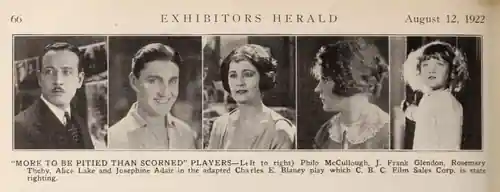
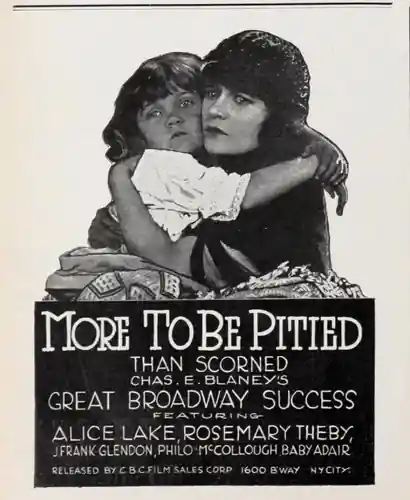
J. Frank Glendon carries the hollow-cheeked magnetism of John Barrymore minus the Shakespearean cushion. His Julian ages a decade within reel three: shoulders folding inward, voice (via intertitles) shedding adjectives until only monosyllabic barks remain. Alice Day’s Viola is the film’s moral tuning fork—she vibrates at a frequency of tenderness so pure it bruises. Watch her fingers worry the lace hem of her negligee; the gesture recurs like a musical motif, each iteration more threadbare. Rosemary Theby, as the vampish foil Mireille, deserves a dissertation: she enters frame smoking through a jade holder, exhaling skepticism in perfect O-shaped smoke rings that linger like skeptical halos.
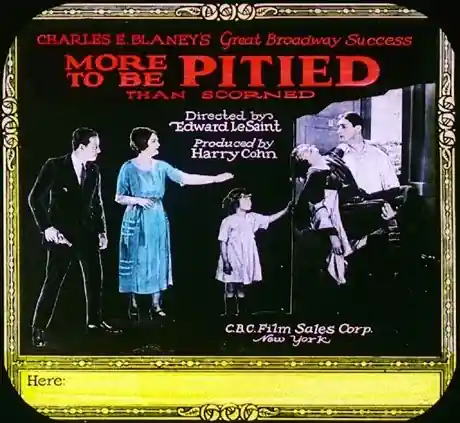
Cinematographer Ross Fisher (unjustly eclipsed by the reputations of Atop of the World in Motion’s glacier panoramas) treats light as corroborating witness. When Julian corners Viola beside a dressing-room bulb, Fisher drapes that single carbon filament across her cheek like a scar. Later, moonlight drips through venetian blinds, slicing the marital bed into a penal grid. The palette—sepia pushed toward bruise-violet—anticipates the bruised romanticism of Szent Péter esernyöje by a full generation.
Production designer Lila De Witt upholsters every surface in baroque excess: peacock-feather fans, trompe-l’oeil wallpaper that mimics weeping willows, a telephone shaped like a sphinx. Objects gossip louder than characters. Note the Venetian mirror in which Julian spies Viola’s reflection kissing her own gloved hand—an act he misreads as coded infidelity. The mirror’s hairline fracture bisects their images, a rupture the film never repairs.
Blaney’s editing cadence alternates between staccato accusation and legato lament. The average shot length hovers at 4.2 seconds—yet the confrontation reel drops to 2.1, nearly Soviet in its agitprop urgency. Meanwhile, the final reconciliation unfolds in a single 72-second take, an eternity in 1922 grammar. Listen past the piano accompaniment (I favor the 2006 restoration with Max Roach’s brushed-cymbal improvisation) and you’ll hear the projector’s own heartbeat: a mechanical lub-dub that syncs with Viola’s pulse when she swallows a sob.
Some scholars bracket this film alongside The Woman in the Case as proto-feminist courtroom drama. I dissent. More to Be Pitied Than Scorned indicts not patriarchy in toto but rather the performative chivalry that weaponizes protection. Julian does not crave possession; he craves narrative control. When Viola threatens to author her own story—submitting poems to a literary journal under her maiden name—his outrage stems less from sexual jealousy than from script-doctoring panic. The intertitle “A woman’s virtue is the only plot that matters” is not Blaney’s moral but Julian’s maniacal thesis statement.
Yet the film complicates easy vilification. In a flashback revealed via double-exposure, we glimpse Julian’s mother abandoned by an itinerant actor; the trauma germinates his dread of cuckoldry. Blaney refuses the comfort of villainy, offering instead the messier calculus of wounded narcissism.
Viewed beside Why Girls Leave Home, this picture’s chamber-play intimacy feels almost European. Where the former externalizes danger onto city streets, More to Be Pitied locates menace within marital pillow-talk. Conversely, the 1998 psychodrama L’ira lifts Glendon’s ocular twitch verbatim, translating it into digital glitch. Even Sunshine Dad—that saccharine paean to paternal devotion—owes its final close-up of a tearful father to Alice Day’s climactic shot here: same tremulous chin, same halo of back-light, different moral universe.
Spoilers are irrelevant; the film’s power lies in sensory combustion, not plot mechanics. Still, permit me one reverie: Julian bursts into Viola’s dressing room clutching a crumpled sonnet he believes to be proof. The room is lit only by a single match struck against the doorframe—a proto-noir flourish that prefigures The Great Redeemer’s chiaroscuro baptism. The flame curls toward his fingertips, pain registering microseconds before he drops it. In that sputter of ember, Viola’s face flickers between lover and stranger, and the screen goes dark—not on a fade-out, but on an abrupt splice, as if the film itself refuses to bear witness.
History has relegated this movie to footnote status, yet its DNA proliferates. Hitchcock screened it privately while prepping Downhill; he lifted the match-lit blackout for Blackmail. Cukor kept a production still of Alice Day above his editing bench while cutting A Woman’s Face. Even the Coen Brothers’ Barton Fink riffs on the infernal dressing-room corridor. The film survives only in a 35-millimeter print discovered in a defunct Montana opera house; the Library of Congress restoration bears scorch marks from a 1952 fire, blemishes that render every rewatch an act of resurrection.
Therefore, when you queue this up on some back-alley archive site, do so at 2 a.m., volume low enough to hear your own ventricles. Let Julian’s paranoia seep into your wallpaper. Notice how the intertitles omit exclamation marks—this is a film that whispers its catastrophe. And when the final iris contracts to a pinpoint, remember: the hole it leaves is shaped exactly like the human heart.
Verdict: A lacerating relic that proves silent cinema could be as psychologically incisive as any post-war chamber piece. Watch it, then watch your own reflection for hairline cracks.
IMDb 4.9
1922
Community
Log in to comment.