DbcultAccessing Vault...
Cult Review
Senior Film Conservator
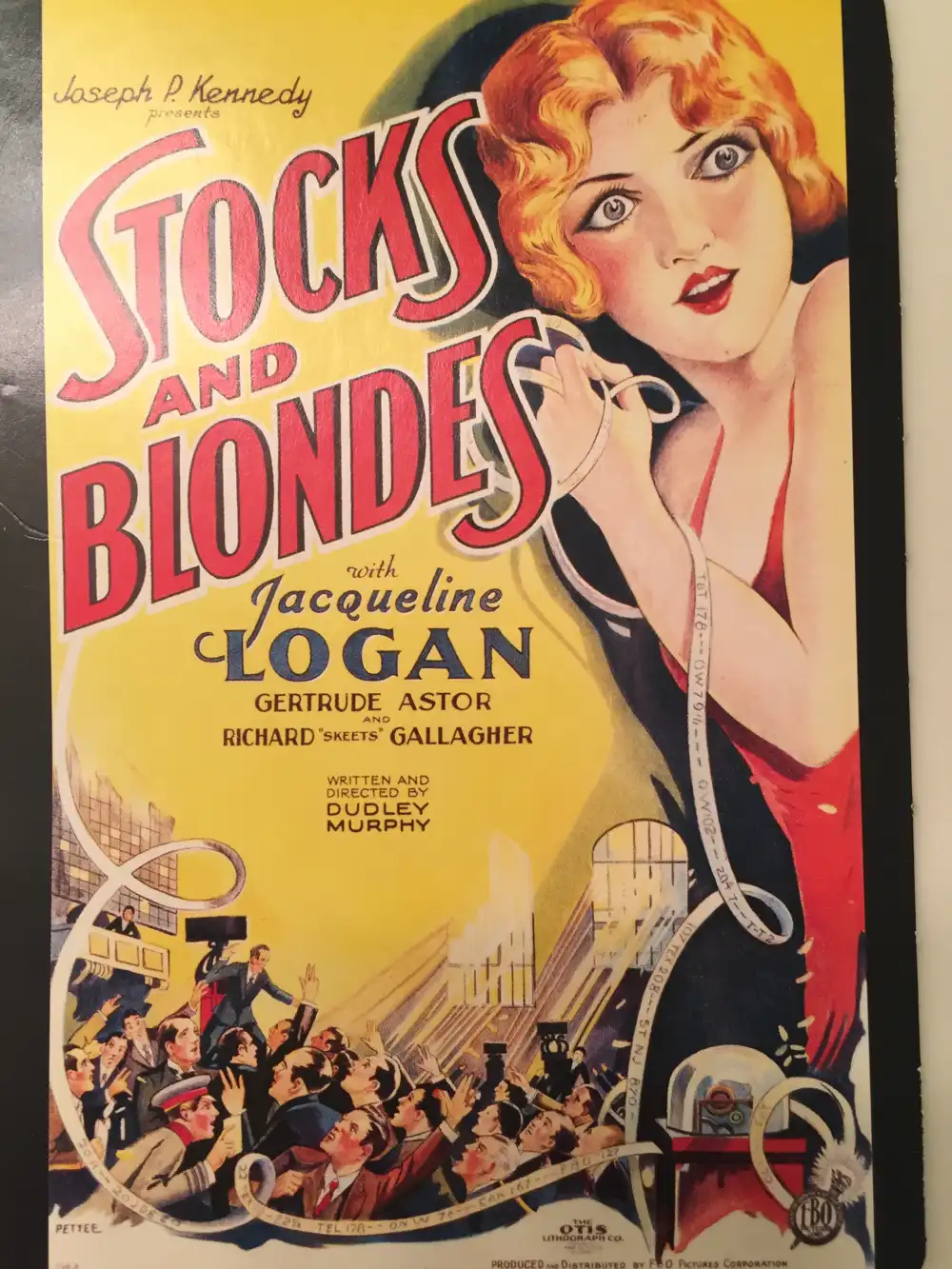
Alright, let's talk about 1928's Stocks and Blondes. Is it worth watching today? Probably not for most people. If you're a serious silent film completist, or maybe you have a very niche interest in early cinematic depictions of the stock market, then sure, give it a shot. Otherwise, you'll likely find it a bit of a slog. It’s certainly not going to convert anyone to the joys of pre-talkie cinema. Think of it as a historical artifact with a few fleeting moments of charm, rather than a gripping narrative.
The premise is simple enough: a young stockbroker, played by Richard 'Skeets' Gallagher, loses his job and his girl, Jacqueline Logan. She works in a nightclub and somehow, through a convoluted bit of plotting, gets her hands on some hot stock tips. She then passes them to him, hoping to make him rich again and win him back. It’s a classic rags-to-riches, boy-meets-girl, boy-loses-girl, boy-gets-rich-maybe-gets-girl-back kind of setup. The kind you saw a million times.
Skeets Gallagher, as the lead, has this sort of gangly, slightly bewildered energy. He’s not exactly a dashing leading man, which is fine, but it means the romantic stakes never quite feel… weighty. When he’s supposed to be heartbroken, he just looks mildly inconvenienced. There’s a scene early on where he’s fired, and his reaction is less 'my life is over' and more 'did I leave the stove on?'
Jacqueline Logan, on the other hand, tries to inject some life into her role as the nightclub dancer. She’s got a certain spunk, you can see her trying to convey emotion through exaggerated gestures, which is standard for the era. But the chemistry between her and Gallagher is just… not there. It feels like they're in two different movies. When they’re supposed to be in love, it’s like two polite acquaintances having a slightly awkward conversation about the weather.
The pacing is a real issue. There are stretches, especially in the middle, where the film just meanders. We spend a lot of time watching characters walk into rooms, sit down, and then just… exist. One particular scene in an office, where a character is trying to get information, goes on for what feels like an eternity. You can almost feel the film trying to fill time, waiting for the next plot beat to arrive. The intertitles, when they do appear, often feel like they’re stating the obvious, rather than advancing the story or adding depth. Like, 'He was sad.' Okay, we gathered that from his slightly downturned mouth.
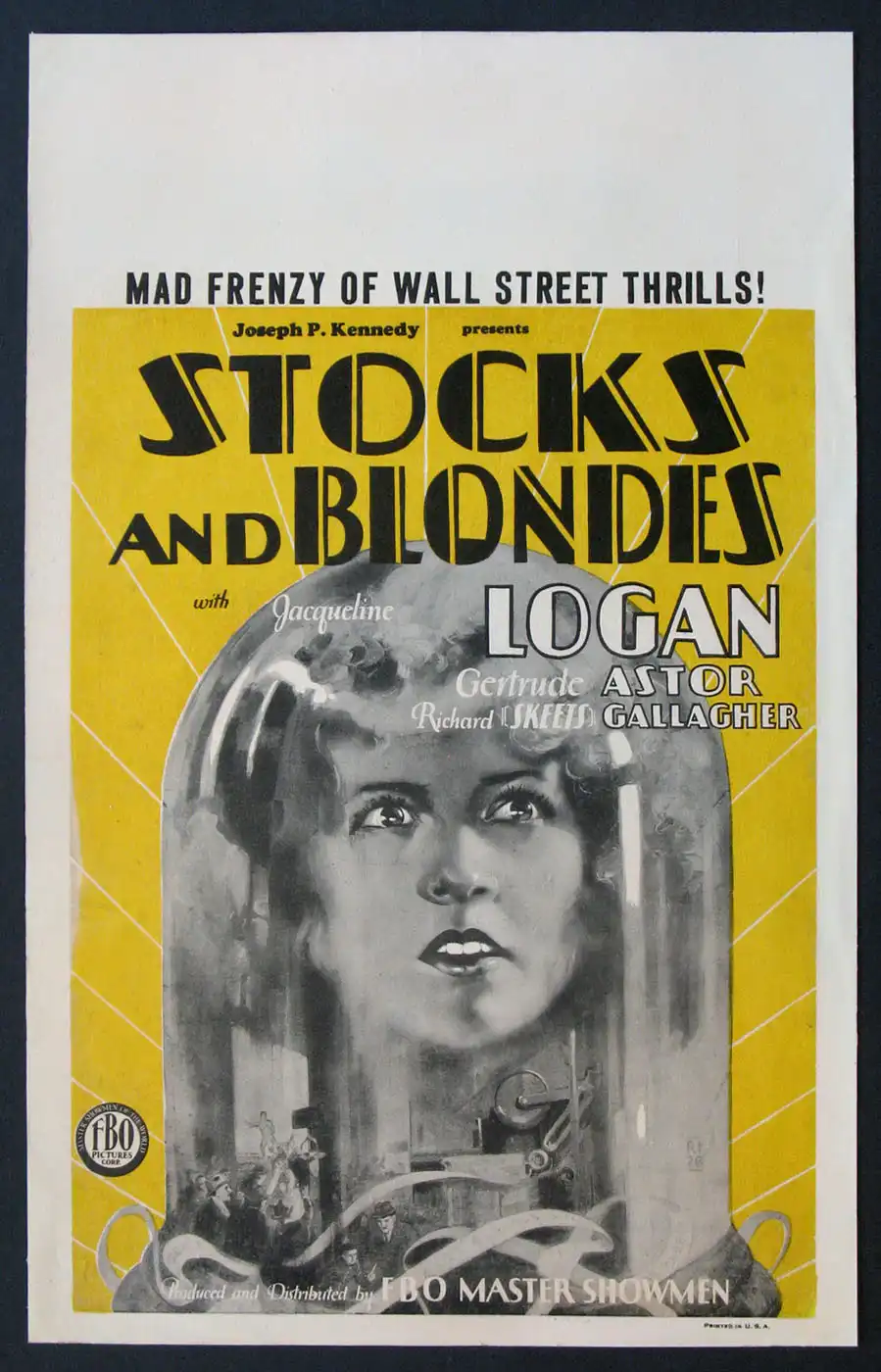
The stock market sequences are surprisingly dull. For a movie called Stocks and Blondes, you’d expect a bit more energy, some visual flair. Instead, it’s mostly guys in suits looking at papers. The 'money making stocks' information transfer is particularly anticlimactic. It’s a whispered conversation, almost a throwaway moment, considering it's the entire engine of the plot. You'd think they'd build it up more, make it feel like a pivotal, dangerous exchange. Nope. Just a quick chat.
There are a few moments that stand out, mostly for their unintentional oddness. There’s a villain, or at least an antagonist, played by Albert Conti, who has this incredibly slicked-back hair and a perpetually sneering expression. He’s so over-the-top that he almost becomes cartoonish, which actually provides a bit of much-needed energy. He’s the only one who seems to realize he’s in a movie. And Gertrude Astor as another socialite character just kind of floats through scenes, looking elegant and slightly bored, which is probably how most of us feel watching this.
The film picks up a little toward the end, when the consequences of the stock tips start to unfold. There’s a moment of actual tension, a brief flicker, as Gallagher’s character faces a potential downfall. But it’s quickly resolved, almost too easily. The whole thing wraps up so neatly it feels a little unearned after all the slow build-up. It's like the writers realized they were running out of reel and just stapled a happy ending on.
Visually, it's pretty standard for a lower-budget silent from '28. The sets are functional, the costumes are period-appropriate, nothing really pops. There aren't any particularly memorable shots or creative camera angles. It's all very workmanlike. Even the nightclub scenes, which should be vibrant, feel a little flat, like the energy of the performers never quite made it past the camera lens.
Ultimately, Stocks and Blondes feels like a film that exists. It’s not offensively bad, it’s just… there. It’s a testament to how many movies were churned out in that era, most of them destined to be forgotten. If you stumble upon it, you might get a chuckle or two from its quaintness, but don't go out of your way. There are far more interesting silent films out there that deserve your time, like maybe something from the same year that really pushed the boundaries. This one plays it very, very safe.
IMDb —
1918
Community
Log in to comment.