DbcultAccessing Vault...
Cult Review
Senior Film Conservator
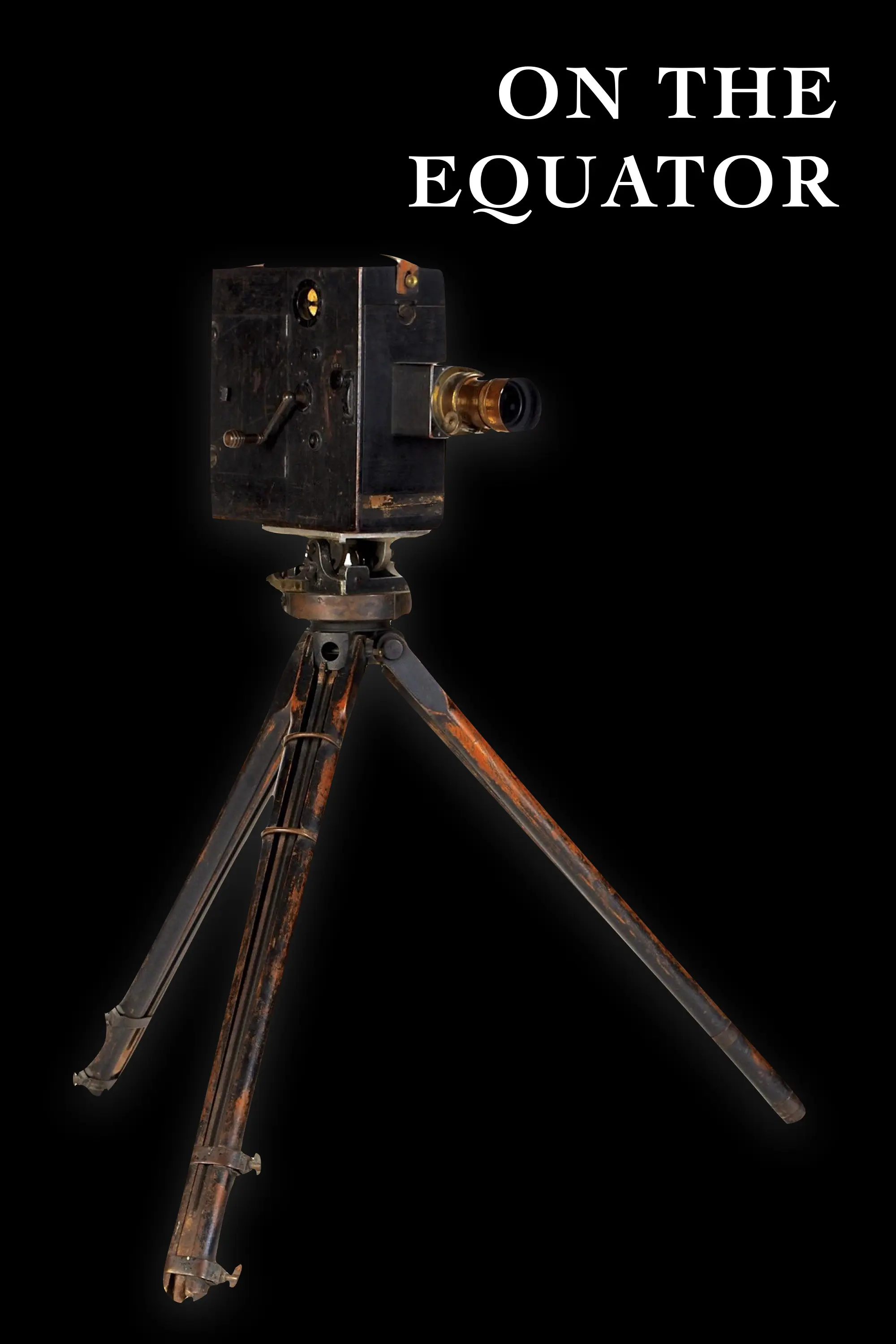
In the annals of early cinema, where the lines between documentary, exploration, and spectacle often blurred, Cherry Kearton’s ‘On the Equator’ stands as a towering, almost mythical achievement. Released in an era when moving pictures were still finding their voice, and the world remained an expanse of tantalizing, uncharted territories for many, Kearton, a man of formidable courage and keen observational prowess, offered audiences an unprecedented window into the heart of Africa. This wasn't a manufactured drama, nor a meticulously staged reenactment; it was, by all accounts, a raw, unfiltered expedition into the wilds of Uganda, specifically the ecologically rich and visually stunning region surrounding the Semliki River. Its very existence is a testament to an indomitable spirit, a relentless pursuit of capturing reality, a quality that elevates it far beyond a mere curiosity.
Kearton, both the film's singular writer and its intrepid star, embarked on a cinematic journey that would challenge the very limits of early photographic technology and human endurance. Imagine the logistical nightmare: transporting bulky, fragile cameras, rolls of volatile film stock, and the myriad necessities for survival through dense jungles and across unforgiving landscapes, all under the relentless equatorial sun. This wasn't the controlled environment of a studio set, a la The Double Standard, nor the carefully constructed melodrama of The Little American, which relied on the dramatic interplay of human emotions. Instead, Kearton’s stage was the vast, unpredictable expanse of nature itself, where every shot was a battle against the elements, a race against fading light, and often, a perilous encounter with the wild. The film, therefore, is not just a visual record; it’s an implicit narrative of human perseverance against nature's grandeur.
The Semliki River, a vital artery connecting Lake Edward and Lake Albert, serves as the pulsating heart of Kearton's narrative. Its banks, a crucible of biodiversity, offer a spectacular array of flora and fauna, which Kearton's lens endeavors to document with a naturalist's precision and an artist's eye. We are treated to glimpses of wildlife in their natural habitat – the languid grace of hippopotami submerged in the river's murky embrace, the swift, predatory movements of crocodiles, and the myriad of avian life that punctuates the dense canopy. These are not just animals; they are characters in an ongoing drama, their lives unfolding with an authenticity that modern nature documentaries, despite their technological sophistication, often strive to replicate. The film’s power lies in its unadorned presentation, allowing the inherent majesty and brutality of nature to speak for itself, a stark contrast to the often-exaggerated heroics seen in adventure serials like Stamina.
What makes 'On the Equator' particularly compelling is its position as a foundational text in the nascent genre of wildlife and travel filmmaking. Kearton was not merely recording; he was pioneering techniques, understanding the nuances of light and shadow in an environment utterly alien to conventional studio settings. His approach to capturing animals, often requiring immense patience and ingenious camouflage, laid groundwork for generations of documentarians. One can almost feel the sweat, the anticipation, the sheer physical exertion behind each frame. This isn't the slick, polished product of a modern crew with telephoto lenses and drones; this is raw, visceral observation, a testament to the singular vision of one man and his camera. The occasional imperfections, the slight tremors, the focus shifts – they don't detract; rather, they imbue the footage with an almost tactile sense of authenticity, a direct connection to the moment of capture.
Beyond the captivating wildlife, the film also offers invaluable, albeit often colonial-tinged, insights into the human communities inhabiting these regions. While the primary focus is on the natural world, the presence of local guides and porters, their interactions with Kearton, and glimpses of their daily lives, add a layer of anthropological significance. These interactions, viewed through a contemporary lens, reveal the complex dynamics of early 20th-century exploration, yet they also underscore the indispensable role of indigenous knowledge in navigating and understanding such formidable environments. Unlike the fictionalized social commentaries of At the Mercy of Men or A Sister to Carmen, Kearton’s film, however unintentionally, provides a rare, if limited, snapshot of human existence intertwined with the African landscape, offering a glimpse into cultures that were, at the time, largely unknown to Western audiences.
The artistry of 'On the Equator' resides not in elaborate plotlines or dramatic character arcs, but in its profound aesthetic appreciation for the natural world. Kearton’s compositions, though perhaps dictated by opportunity and necessity, often possess an inherent beauty. The sweeping vistas of the Semliki Valley, the intricate patterns of sunlight filtering through dense foliage, the stark silhouettes of animals against a vast horizon – these are moments of pure cinematic poetry. It’s a film that demands patience, rewarding the viewer with a contemplative experience, fostering an appreciation for the subtle grandeur of a world largely untouched by industrialization. This approach stands in stark contrast to the rapid-fire narrative beats and emotional manipulations prevalent in many contemporary films, such as the intricate domestic drama of The Morning After or the more direct comedic stylings of Father's Close Shave.
In a world increasingly saturated with digitally enhanced imagery and hyper-real visual effects, there is something profoundly refreshing and enduring about Kearton's work. It is a genuine artifact from a bygone era, a tangible link to a time when the act of simply capturing an image of a distant land was a monumental feat. The film serves as a powerful reminder of the early pioneers who ventured into the unknown, not just with a spirit of conquest, but with a genuine desire to observe, document, and share the wonders of the natural world. It underscores the profound impact cinema had, even in its nascent form, in broadening horizons and fostering a global consciousness. One can only imagine the awe and wonder of audiences in the 1920s, witnessing these exotic landscapes and creatures for the very first time, an experience far removed from the more familiar settings of films like Paddy the Next Best Thing or A Square Deal.
The significance of 'On the Equator' extends beyond its immediate visual appeal. It is a historical document of immense value, preserving not only images of a specific time and place but also reflecting the prevailing scientific and cultural attitudes towards exploration and nature. It invites us to consider the evolution of documentary filmmaking, tracing its lineage back to these foundational works. Kearton’s commitment to capturing authentic, unmediated reality sets a precedent for what would become a cornerstone of cinematic expression. It’s a stark departure from the often fantastical or sensationalized narratives of its time, preferring instead the quiet, profound drama of the natural world. Even in its silent form, the film communicates with a potency that transcends the need for spoken word, relying solely on the power of its imagery and the inherent drama of its subjects.
Considering the technical limitations, the sheer volume of usable footage Kearton managed to acquire and assemble is nothing short of remarkable. Each frame represents a triumph over adversity, a moment painstakingly captured. The editing, while perhaps not conforming to modern conventions, effectively conveys a sense of progression through the journey, highlighting key encounters and scenic marvels. It’s a testament to the early filmmakers' ingenuity in constructing a coherent narrative from disparate fragments of reality. This early form of narrative construction, driven by geographical progression and observational highlights, offers a fascinating contrast to the tightly scripted and character-driven plots of contemporary dramas such as The Darkest Hour or the intricate character studies in Das Mädchen aus der Opiumhöhle.
Kearton’s legacy is not just in the images he captured, but in the inspiration he provided. His work, alongside others like him, ignited a fascination with the natural world and distant cultures that continues to resonate today. 'On the Equator' is more than just a film; it is an expedition, an education, and a profound artistic statement. It reminds us of the power of the moving image to transport, to inform, and to inspire wonder. It’s a silent epic, its grandeur measured not in explosions or romantic entanglements, but in the quiet majesty of a world unfolding before a camera, observed by a man who understood its profound beauty. The film’s unpretentious authenticity makes it a timeless piece, a vital touchstone for anyone interested in the origins of documentary cinema, environmental history, or simply the breathtaking spectacle of nature itself. It stands tall, an enduring monument to a pioneering spirit, a vision unflinching in its gaze upon the vast, untamed splendor of our planet.
The sheer scale of the undertaking by Kearton, traversing the challenging terrain of Uganda, is almost unfathomable in an age of instant global communication and sophisticated equipment. His solitary (or near-solitary) endeavor, armed with a camera and an unwavering resolve, speaks volumes about the dedication required to bring such images to the public. This wasn't merely about entertainment; it was about enlightenment, about dispelling myths and bringing a tangible sense of reality to a distant, often romanticized continent. The narrative, if one can call it that, is one of discovery and observation, a meticulous cataloging of moments that collectively paint a vivid picture of life around the Semliki River. There's a certain purity to this approach, a stark contrast to the often-manufactured emotional journeys found in narratives like Empty Arms or Drugged Waters. Kearton’s film offers genuine, unadulterated awe.
The film’s lasting impact lies in its ability to transcend its historical context and still resonate with contemporary viewers. While the visual quality might not match modern standards, the raw power of its imagery and the authenticity of its subject matter remain undiminished. It forces us to confront the delicate balance of ecosystems, the incredible diversity of life, and the ever-present human impulse to explore and understand our world. Cherry Kearton, through this remarkable cinematic achievement, not only documented a specific corner of the earth but also articulated a profound respect for nature that was ahead of its time. It’s a film that quietly asserts the importance of observation, the value of patience, and the undeniable beauty of the wild, providing a contemplative counterpoint to the more overtly dramatic or socially charged narratives of its era, like Slow and Sure or Birds of a Feather. 'On the Equator' remains a powerful, poignant reminder of cinema's earliest, most ambitious forays into the real world.

IMDb 5.7
1931
Community
Log in to comment.