DbcultAccessing Vault...
Cult Review
Senior Film Conservator

The flickering phantoms of early cinema often leave indelible marks, even when their celluloid existence has long since faded into myth. Such is the case with Robert Wiene’s Irrungen, a film whose very title, translating to 'Errors' or 'Delusions,' hints at the intricate psychological landscapes it endeavors to explore. While Wiene is perhaps most famously enshrined in the annals of film history for the expressionistic nightmare of The Cabinet of Dr. Caligari, his earlier works, like this elusive gem, offer a fascinating glimpse into the nascent stages of a directorial vision that would profoundly shape German cinema. Irrungen, in its eloquent silence, speaks volumes about the societal pressures, class divides, and personal betrayals that defined its era, weaving a tapestry of human frailty and resilience with remarkable depth.
At its core, Irrungen is a melodrama, yet one elevated by its nuanced characterizations and Wiene's burgeoning command of visual storytelling. The narrative centers on Elsa (played with heart-wrenching authenticity by the luminous Henny Porten), a milliner whose artistic sensibility and understated elegance belie her humble origins. Porten, a superstar of the German silent screen, brings a profound inner life to Elsa, her expressive eyes conveying volumes of unspoken emotion. Her world, one of meticulous craftsmanship and quiet dignity, collides with the opulent, yet rigidly structured, universe of the Berlin aristocracy when she captures the attention of Baron von Hardenberg (Harry Liedtke). Liedtke, with his aristocratic bearing and dashing good looks, embodies the charming but ultimately conflicted scion, torn between genuine affection and the suffocating expectations of his lineage.
Their burgeoning romance, a delicate blossom in the harsh winds of societal convention, immediately incurs the wrath of the Baron's formidable Aunt Hedwig (Gerd Bergener). Bergener delivers a chilling portrayal of the matriarchal sentinel, her every gesture radiating an unyielding determination to safeguard the family's 'purity' and social standing. Her presence looms large, a constant, silent antagonist embodying the very strictures that threaten to crush Elsa and the Baron's illicit affections. It is against this backdrop of brewing social conflict that the true 'irrung' begins to take root, germinating from the fertile ground of misunderstanding and malevolent intent.
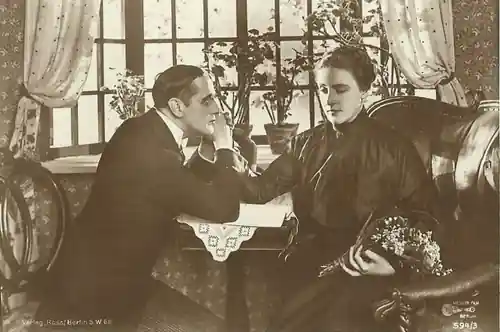
The architect of this grand delusion is Dr. Erich Werner (Ernst Deutsch), a character of unsettling complexity. Deutsch, known for his intense, often brooding performances, injects Werner with a chilling blend of intellectual detachment and simmering resentment. Werner, ostensibly a friend to the Baron, harbors a deep-seated cynicism towards the aristocracy, viewing their gilded lives as a façade over moral decay. He is drawn to Elsa, not with romantic affection, but with a perverse fascination, seeing in her untainted spirit a perfect subject for his cruel social experiment. He believes he can 'prove' his theories about human susceptibility to manipulation and the corrupting influence of class, using Elsa and the Baron as his unwitting pawns. His actions are not born of simple malice, but a more insidious, intellectualized cruelty, making him a far more terrifying villain than any mustache-twirling caricature.
Wiene orchestrates Werner's machinations with a precision that belies the film's early production date. The central 'irrung' is a meticulously constructed web of deceit: a forged letter, crafted to appear as if from Elsa, explicitly rejects the Baron and hints at a mercenary alliance with a wealthier suitor (perhaps the character played by Gustav Czimeg, whose subtle presence adds to the film's atmospheric tension). Simultaneously, Werner ensures the Baron witnesses Elsa in what appears to be a compromising situation, carefully manipulating the optics to confirm his suspicions. The cumulative effect is devastating. The Baron, convinced of Elsa's betrayal and blinded by his own aristocratic pride, withdraws, his family swiftly moving to arrange a more 'suitable' marriage, effectively sealing Elsa's fate.
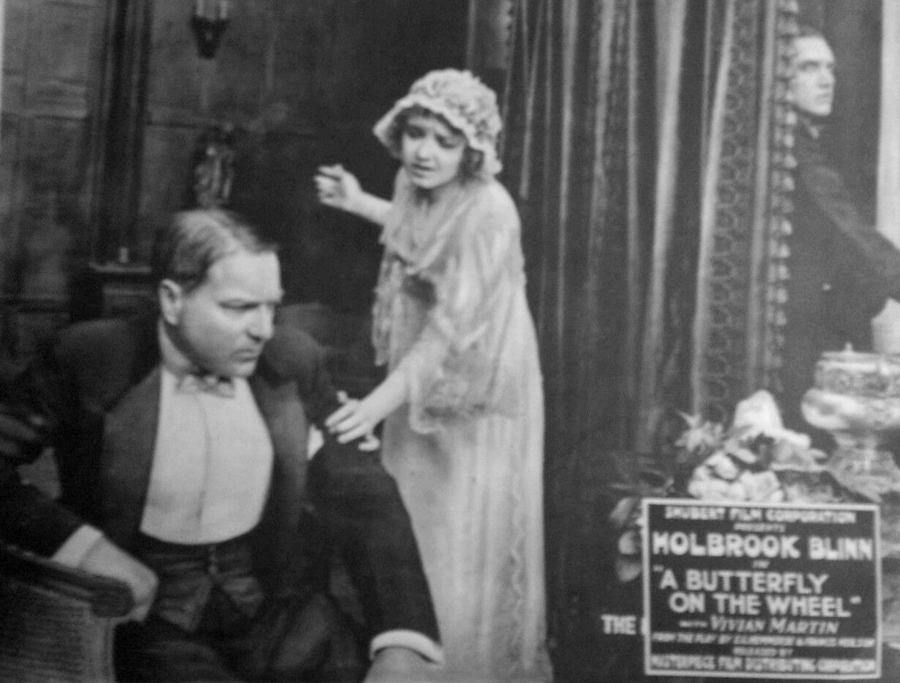
Elsa's descent into public disgrace and personal heartbreak is rendered with exquisite pathos by Porten. Ostracized by a society quick to condemn, she retreats into the quiet sanctuary of her craft, her elegant hats now imbued with a profound melancholy. Wiene's direction here is masterful, using visual metaphors to convey Elsa's inner turmoil without relying on intertitles alone. The close-ups on her hands, meticulously working on delicate fabrics, become a testament to her resilience and her only remaining form of expression. In a narrative parallel, one might consider the plight of characters in films like An Innocent Magdalene, where reputations are similarly shattered by societal judgment, though Irrungen delves deeper into the deliberate orchestration of such ruin.
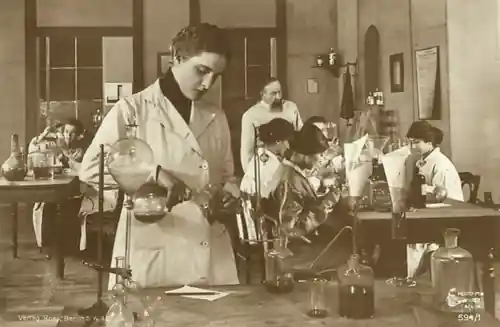
The intellectual detachment of Dr. Werner, initially his strength, becomes his undoing. As he observes the tragic fallout of his experiment, a flicker of remorse ignites within him. Deutsch’s portrayal of this internal conflict is subtly powerful, hinting at the human cost of his cynical worldview. It is this psychological complexity that elevates Irrungen beyond mere melodrama, pushing it into the realm of character study. The film probes the very nature of truth and perception, demonstrating how easily reality can be bent and twisted to serve predetermined narratives, a theme not dissimilar to the intricate deceptions found in works like The Turn of a Card, though Wiene's film infuses it with a more pronounced social critique.
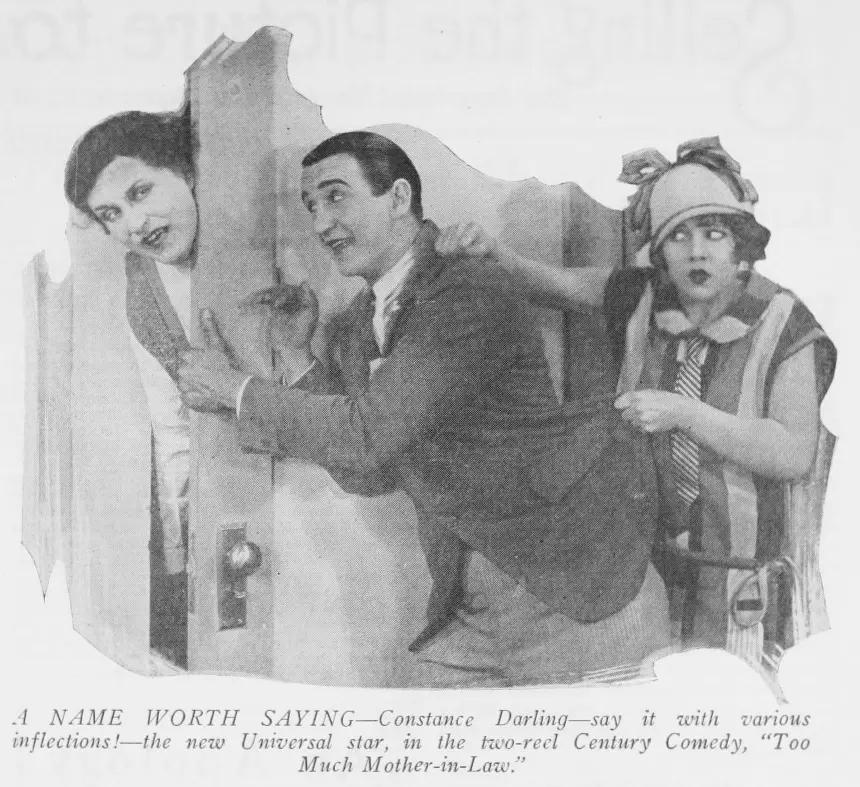
The narrative builds to a tense, almost breathless climax where the truth about Werner's manipulations and the forged letter inevitably comes to light. This revelation, whether through an accidental discovery or a sudden surge of conscience, forces the Baron to confront the depth of his error and the profound injustice inflicted upon Elsa. Liedtke's performance shifts from a bewildered aristocrat to a man consumed by guilt and desperate for redemption. The confrontation with his family, particularly Aunt Hedwig, is a powerful moment, symbolizing a clash between archaic tradition and nascent empathy. This struggle against entrenched societal norms echoes the challenges faced by protagonists in films such as Strictly Confidential, where personal desires often clash with rigid social expectations.
Robert Wiene’s directorial hand is evident throughout, even in the absence of explicit expressionistic flourishes. His use of deep shadows and stark contrasts, while not yet fully embracing the distorted realities of Caligari, nonetheless creates a palpable sense of unease and psychological tension. The mise-en-scène, though perhaps more conventional than his later work, is meticulously crafted, using opulent interiors to highlight the suffocating confinement of aristocratic life and the cramped spaces of Elsa's world to underscore her struggle. The editing maintains a compelling rhythm, allowing the emotional beats to resonate without feeling rushed or overwrought. The performances, guided by Wiene, are uniformly strong, a testament to the talent pool of German silent cinema.
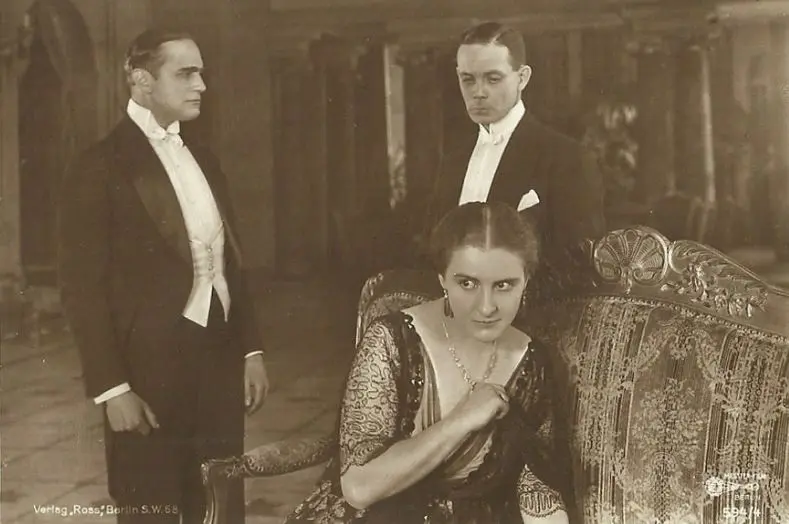
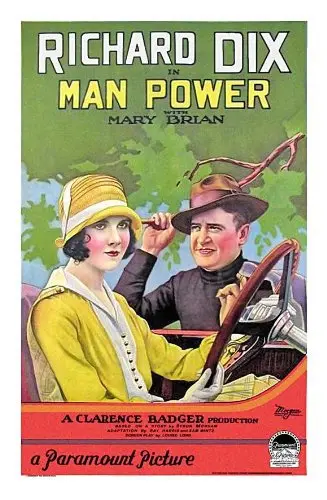
The film's ending is not one of simple resolution. Wiene, ever the astute observer of the human condition, understands that some wounds, once inflicted, leave indelible scars. While the truth may set the characters free from the immediate 'irrungen,' the emotional toll remains. Elsa and the Baron are left to navigate a future that, even if reunited, will forever bear the mark of their suffering and the profound errors that nearly destroyed them. This nuanced, somewhat melancholic conclusion is a hallmark of Wiene's mature approach, refusing easy answers and instead inviting contemplation on the enduring power of societal prejudice and the fragility of trust. It’s a far cry from the more straightforward romantic comedies of the era, such as Bumping Into Broadway, which, while entertaining, often skirted the deeper social commentaries Irrungen fearlessly tackled.
In Irrungen, Wiene and writer Robert Wiene (who also served as the director, a common practice in early cinema, indicating a singular vision) craft a compelling argument for empathy and understanding in a world too often governed by rigid social codes and superficial judgments. The film serves as a potent reminder of the destructive power of rumor, the insidious nature of class snobbery, and the devastating consequences of deliberate deception. It is a work that resonates with timeless themes, exploring the universal human struggle for connection and authenticity amidst a sea of societal expectations and personal failings. The performances, particularly Porten's and Deutsch's, anchor the emotional intensity, providing a magnetic core around which the intricate plot unfolds. Their silent dialogue, conveyed through gesture and gaze, is a masterclass in cinematic acting.
The film's enduring relevance lies in its unflinching examination of how easily individuals can be misled, not just by external forces, but by their own preconceived notions and biases. The 'irrungen' are not merely external events but internal ones, deeply embedded in the characters' perceptions and assumptions. The Baron’s initial belief in Elsa’s betrayal stems not just from Werner’s machinations but from his own ingrained aristocratic worldview, which predisposes him to suspect a woman of her station. Similarly, Werner’s actions are driven by his own intellectual 'irrung,' a delusion that he can control human destiny and prove his cynical hypotheses. This psychological depth places Irrungen firmly within the lineage of German cinema that would later explore the darkest corners of the human psyche, predating the more overt psychological dramas like The Serpent's Tooth, which also delved into moral complexities.
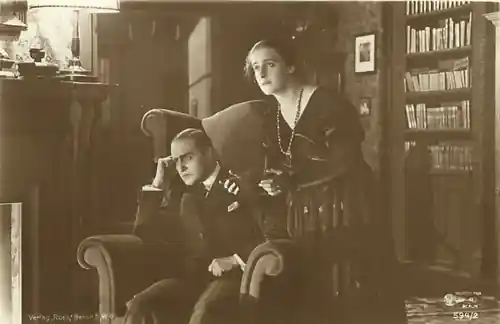
One cannot discuss Irrungen without acknowledging its place within the broader context of silent German cinema. It bridges the gap between the more traditional melodramas of the pre-war era and the burgeoning experimentation that would define the Weimar period. While it may not possess the overt stylization of later expressionistic works, its thematic preoccupations with illusion, reality, and psychological torment clearly foreshadow Wiene's more famous cinematic endeavors. It’s a film that, even in its absence from regular viewing, demands recognition for its sophisticated narrative, powerful performances, and subtle yet potent social commentary. It stands as a testament to the rich artistic landscape of early European filmmaking, a period where narrative innovation and emotional resonance were paramount, much like the compelling social critiques found in What Becomes of the Children?.
The contributions of the supporting cast, including Paul Passarge, further enrich the film’s intricate social tapestry. Each character, no matter how minor, feels integral to the unfolding drama, contributing to the sense of a fully realized world where reputations are fragile and intentions are often opaque. The film’s exploration of class differences, in particular, is handled with an acute awareness of the subtle codes and unspoken rules that governed society. The stark visual contrast between Elsa’s modest atelier and the Baron’s sprawling estate is not merely decorative; it’s a constant visual reminder of the chasm that separates them, a chasm that Dr. Werner so malevolently exploits. This kind of class commentary was a common thread in early cinema, often seen in films that explored social mobility or its lack thereof, though Irrungen gives it a particularly dark twist.
In conclusion, Irrungen is far more than a historical curiosity; it is a compelling piece of cinematic artistry that, even in its lost or rarely seen state, commands respect. It offers a profound meditation on the destructive power of misunderstanding, the corrosive effects of social prejudice, and the enduring strength of the human spirit in the face of adversity. Robert Wiene, with the stellar ensemble led by Henny Porten and Ernst Deutsch, crafts a narrative that is both emotionally resonant and intellectually stimulating, solidifying his place as a visionary filmmaker long before his most famous work. Its themes of deception and the search for truth continue to resonate, making it a film that, if rediscovered, would undoubtedly captivate modern audiences just as it did those of its time. It is a work that reminds us that the 'errors' and 'delusions' of the past are often echoes of our present, making its title eternally relevant to the human condition.
IMDb 6.2
1932
Community
Log in to comment.