DbcultAccessing Vault...
4.1/10
Senior Film Conservator
A definitive 4.1/10 rating for a film that redefined the boundaries of cult cinema. Stop at Nothing remains a cornerstone of transgressive art.
The silent era, often erroneously dismissed as a mere precursor to 'real' cinema, frequently yielded treasures of kinetic energy and raw ambition that modern CGI-laden blockbusters fail to replicate. Stop at Nothing (1924) stands as a testament to this era of fearless filmmaking, a time when the celluloid captured not just a story, but the literal perspiration and peril of its performers.
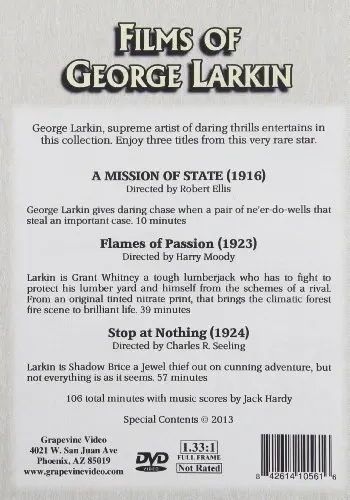
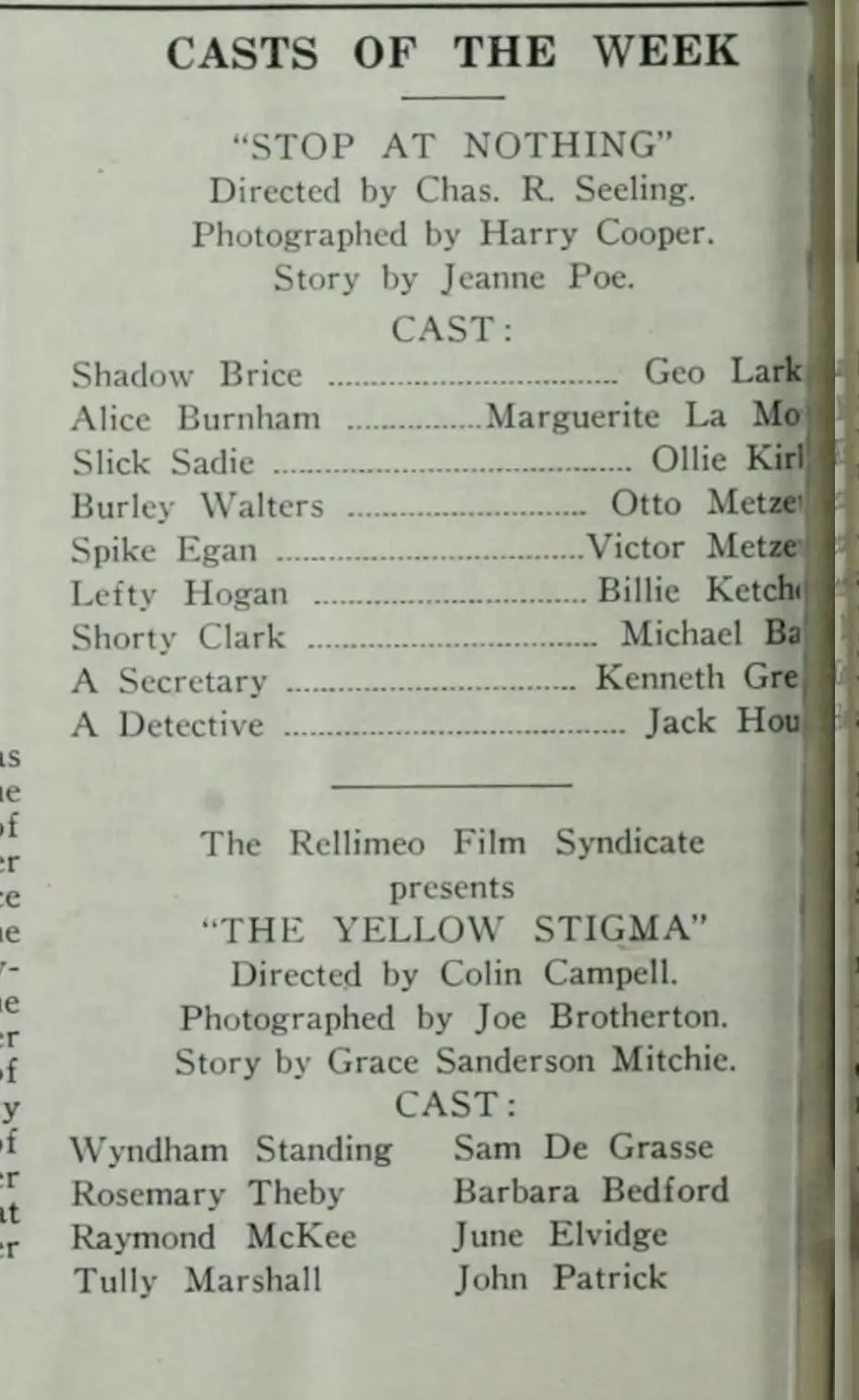
The narrative scaffolding of this film is deceptively simple, yet it functions with the precision of a Swiss timepiece. We are introduced to the dichotomy of the criminal underworld through Burley Walters and 'Shadow' Brice. While many films of the period, such as The Discard, focused on the moral fallout of social ostracization, Stop at Nothing leans heavily into the mechanics of the chase. The Denman diamonds are more than mere MacGuffins; they represent the ultimate prize in a socio-economic struggle played out across the foggy vistas of San Francisco.
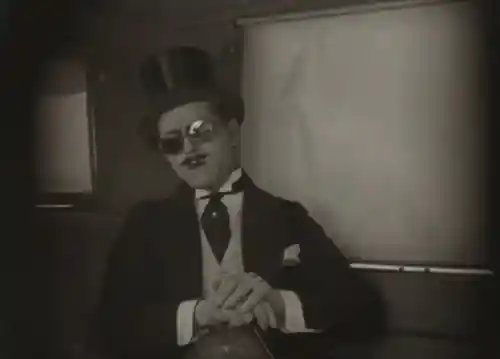
George Larkin, an actor whose physicality was often compared to the likes of Douglas Fairbanks, portrays 'Shadow' Brice with a nuanced blend of menace and magnetism. Unlike the more straightforward heroism found in A Yankee Go-Getter, Larkin’s Brice occupies a liminal space. He wins the confidence of Daphne Denman, played with ethereal vulnerability by Marguerite De La Motte, through a series of interactions that highlight the era’s fascination with the 'gentleman thief' trope—a theme also explored with varying degrees of success in A Flirt There Was.
The centerpiece of the film—and arguably one of the most exhilarating sequences in mid-20s action cinema—is the ferry boat confrontation. As the diamonds are transported across the bay, the film sheds its cloak-and-dagger pretenses and erupts into a symphony of violence. The Metzetti brothers (Otto and Victor) bring a level of acrobatic authenticity that makes modern stunt work look sterile. The geography of the ferry is utilized with surgical precision; every railing, lifebuoy, and engine room hatch becomes a prop in a desperate struggle for dominance.
This visceral approach to action reminds one of the pacing in The Blue Streak, where the momentum is never sacrificed for the sake of exposition. In Stop at Nothing, the fight between Brice and Walters is not merely a brawl; it is a clash of philosophies. Walters represents the brute force of the old-world crook, while Brice represents the calculating, agile new breed of operative. This shift from brawn to brains (and back again) is a hallmark of the transitionary period in silent film aesthetics.
Marguerite De La Motte provides the emotional anchor in a sea of masculine posturing. Her performance avoids the saccharine pitfalls common in the 1920s, offering instead a portrayal of a woman caught in a crossfire of deception. While her role might seem secondary to the action, her presence is the pivot upon which the moral weight of the film turns. One might contrast her role here with the more comedic undertones of Why Smith Left Home, where female agency is often played for laughs. Here, De La Motte’s Daphne is the prize, yes, but she is also the judge before whom the 'Shadow' must eventually reveal his true self.
The revelation that Brice is a Secret Service agent—a trope that would later become a staple of the genre—is handled with a surprising lack of sentimentality. It recontextualizes every preceding action, turning his manipulation of Daphne into a necessary evil of statecraft. This duality is far more complex than the binary morality found in contemporary works like Boots or the more fantastical elements of Iwami Jûtarô.
Visually, the film captures a San Francisco that is both recognizable and hauntingly alien. The use of natural light during the ferry sequences creates a high-contrast environment that mirrors the internal conflicts of the characters. The camera work, though restricted by the technology of the time, exhibits a surprising fluidity during the chase scenes. There is a grit here that is absent from the more polished, studio-bound productions like Up in the Air.
The directors understood the power of the silhouette. 'Shadow' Brice is often introduced through his outline, a visual motif that reinforces his clandestine nature. This use of chiaroscuro anticipates the noir movement that would dominate Hollywood two decades later. The film’s ability to weave these stylistic choices into a fast-paced adventure is what separates it from standard fare like Beach Nuts or the episodic nature of Join the Circus.
In the broader context of 1924, Stop at Nothing was competing with a wide array of genres. From the Western grit of Bucking Broadway to the international intrigue of Les frères corses, the audience's appetite for spectacle was insatiable. Yet, this film managed to carve out a niche by grounding its stunts in a plausible, albeit heightened, reality. It didn't rely on the whimsical absurdity of Jumping Beans or the heavy-handed social realism of Dzhymmi Hihhins. Instead, it focused on the primal thrill of the hunt.
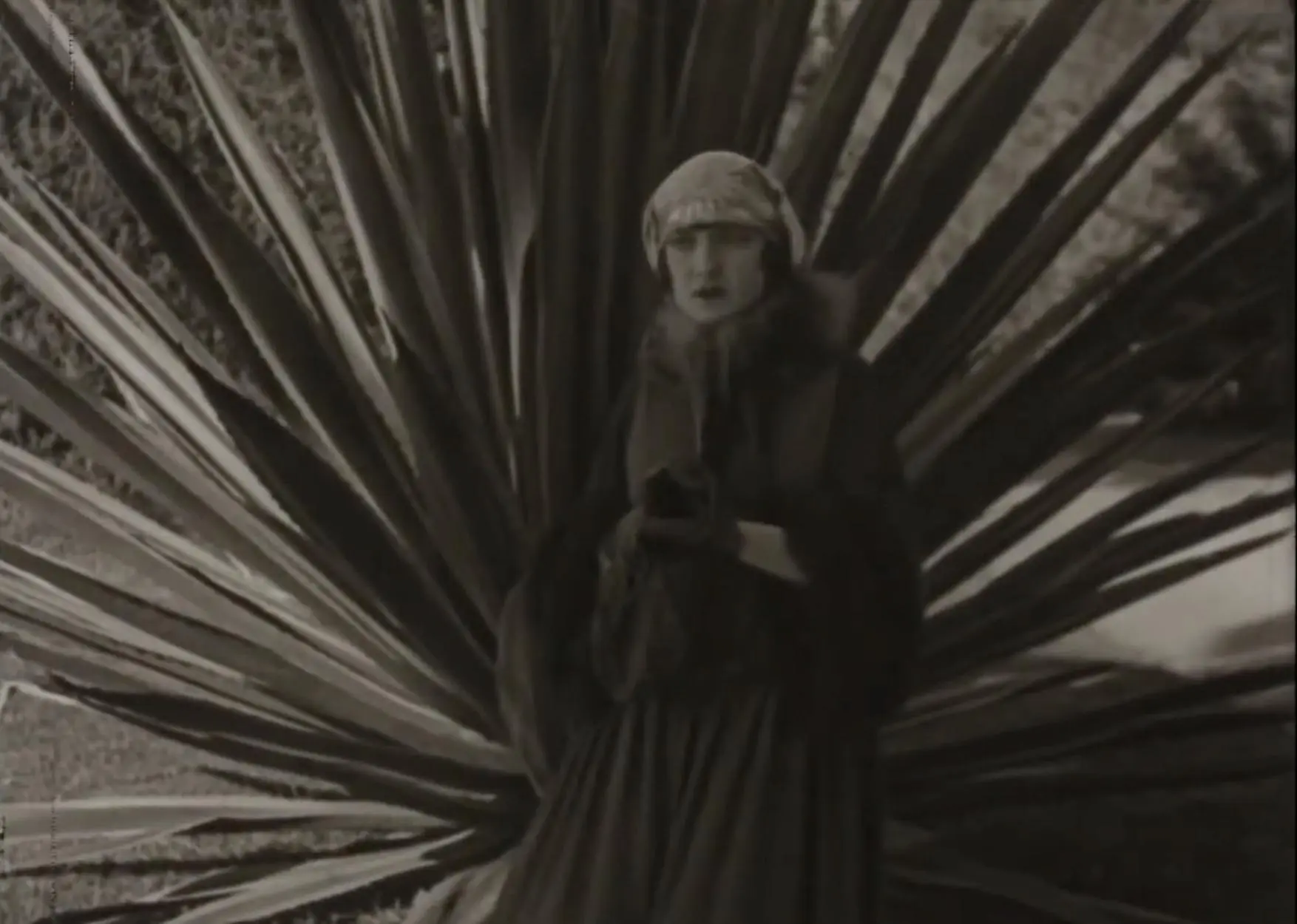
George Larkin’s performance here serves as a bridge between the early serial stars and the modern action hero. His ability to convey both physical prowess and a simmering interiority is remarkable. When he wrests the gems from Walters in the final act, it is a moment of catharsis that feels earned. The fight isn't just about the diamonds; it's about the reclamation of order in a world that seems perpetually on the brink of chaos, much like the thematic undercurrents of The Brute Breaker.
Stop at Nothing is a masterclass in silent-era pacing. It avoids the lethargic middle acts that plague many of its contemporaries, opting instead for a relentless forward momentum. The chemistry between Larkin and De La Motte provides a necessary emotional core, while the Metzetti brothers ensure that the action remains visceral and high-stakes. For the modern viewer, the film offers a fascinating glimpse into a vanished San Francisco and a style of filmmaking that relied on guts, timing, and the sheer audacity of its performers. It is a work of cinematic archaeology that deserves a prominent place in the conversation regarding the evolution of the thriller genre. While it may lack the philosophical depth of the decade's later masterpieces, it more than compensates with its sheer, unadulterated energy. It is a film that, true to its title, stops at nothing to entertain, enthrall, and exhaust its audience in the best possible way.

IMDb 4.3
1931
Community
Log in to comment.