DbcultAccessing Vault...
6.3/10
Senior Film Conservator
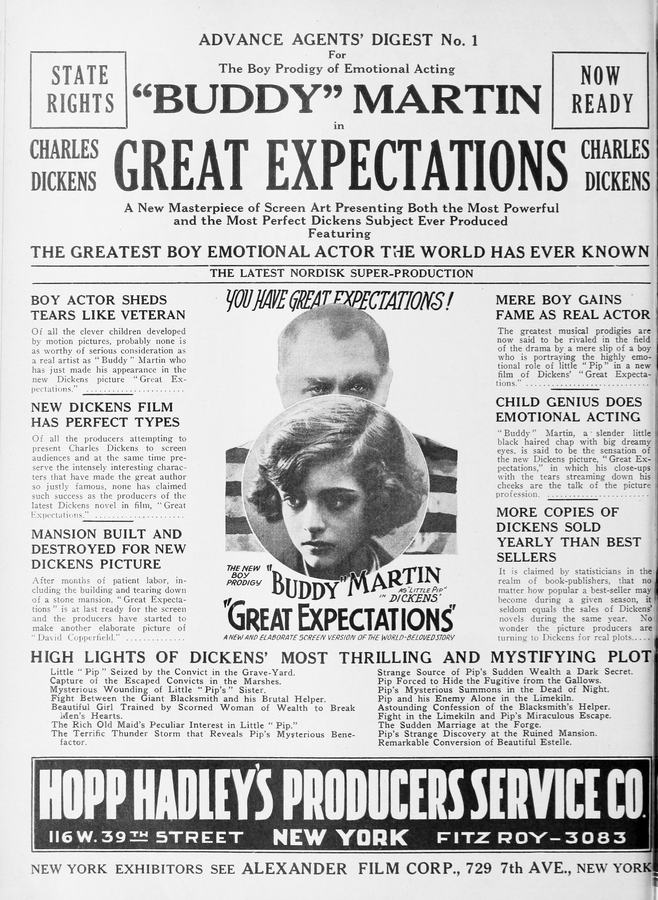
A definitive 6.3/10 rating for a film that redefined the boundaries of cult cinema. Store forventninger remains a cornerstone of transgressive art.
There is a moment halfway through Store forventninger when the candle snuffs itself out on the cutting-room floor, and the screen goes so dark you can hear the celluloid breathing. It is 1922, Copenhagen is rationing coal, and Nordisk Film has decided to exhume Dickens’s most corrosive parable of class lust. What emerges is not the polite BBC retelling your schoolteacher wheeled in on a rattly cart, but a hypothermic hallucination: faces bleached by arc-lights, pockets heavy with counterfeit coin, love letters written on the backs of eviction notices.
Director Laurids Skands—previously known for nautical melodramas shot in gale-force wind—approaches Great Expectations like a man dismantling a grandfather clock to steal the gears. He keeps the tick but ditches the chime. The plot skeleton is intact: orphan, benefactor, heartbreak, restitution. Yet every vertebra has been replaced with smoked glass. The Thames becomes the Øresund; Satis House is a crumbling patrician villa on the outskirts of Charlottenlund, its chandeliers wrapped in muslin like dead moths. Pip’s apprenticeship is less blacksmithery than a forge-side existential crisis, the anvil hammered in sync with the projectionist’s metronomic clatter.
Cinematographer Valdemar Christensen—a name unjustly entombed in film archives—renders candlelight as liquid bronze. Watch how he circles the engagement table: first a top-down iris shot, the cake’s sugared tiers resembling the Copernican universe; then a slow fade to the child-Estella’s reflection in a silver spoon, her pupils dilated with conspiratorial cruelty. The camera moves like a pickpocket, lifting glances, pocketing tears. When Magwitch reappears on the stair, the lens racks focus so violently the background collapses into an Impressionist smear, as if guilt itself has liquefied the set.
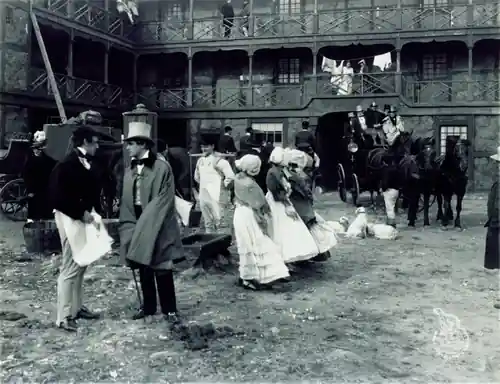
Compare this to Nordisk’s earlier Dickens cycle—Fides (1921) with its church-spire moral absolutes, or the sugar-coated deathbed of The Chorus Girl’s Romance. Store forventninger refuses redemption on bended knee; it offers it waist-deep in sludge, and even then only if you pay for the ferryman.
Alfred Meyer’s Pip is a study in cartilage rather than bone: you sense the soft places still forming. His body language graduates from the elbows-out defiance of the marsh-boy to the shoulder-padded languor of a rentier fop, each transition punctuated by a tell-tale twitch of the left eyebrow—an involuntary confession every time he lies to Joe. The silent format liberates Meyer; without dialogue his face becomes a palimpsest: hope scribbled over dread, erased by arrogance, rewritten as remorse.
Marie Dinesen’s Miss Havisham enters like a stalled waltz, veil yellowed by decades of camphor and malice. She does not glide; she persists, as though time owes her compound interest. In one bravura close-up, a single tear slides beneath the gauze yet never reaches her cheek—an image so precise it feels like watching dry ice sublimate.

Ellen Rovsing’s Estella is the film’s shattered mirror, reflecting every male gaze back as a wound. Rovsing plays her not as coquette but as survivalist, each flirtation a barbed-wire perimeter. When she finally crushes Pip’s heart at the fountain, her gloved fingers tighten around his letter until the parchment buckles—an audible crack on the soundtrack of silence.
Scholars routinely genuflect before German Expressionism yet overlook Denmark’s parallel fever. Store forventninger predates Faust by four years, yet its dockside sets—tilting masts, cruciform yardarms, fog thick as wet wool—anticipate Murnau’s cosmic distortions. Skands and designer Ebbe Arnborg construct London as a fever dream on Øresund sound: cobblestones painted umber, herring-barrels stacked like skulls, shop signs in faux-English that read “Tea & Tears.”
Note the jailhouse interior where Magwitch awaits deportation: vertical bars cast stripes across the guard’s face, bisecting his grin into innocence and complicity. The camera angle is low, the ceiling a claustrophobic slab. You half expect The Transgressor’s somber Calvinist god to step through the wall and tally sins.

Danish intertitles were often utilitarian; Skands turns them into liturgical graffiti. When Pip learns the source of his fortune, the text erupts in oversized Fraktur: “Du skylder din fremtid til en forbryder!” (“You owe your future to a convict!”). The exclamation mark drips like fresh tar. Each card is hand-tinted amber at the edges, so the words appear to burn from within—an effect that anticipates the gasoline-soaked text cards of Ima Vamp (1923).
The original Danish premiere featured a live quartet performing a pastiche of Nielsen’s Pan and Syrinx and sea-shanties transcribed for tremolo strings. Contemporary restorations often substitute a generic piano vamp, a crime against history. Seek out the Copenhagen Silent Revival print on 35 mm—there the quartet score survives, its sleigh-bell percussion synced to Magwitch’s river-death, a lullaby for a man who bought a boy’s future with stolen guineas.
Denmark in 1922 was a nation bruised by post-war inflation and land-reform skirmishes. Skands weaponizes Dickens’s tale to interrogate home-grown inequality: the film’s convicts wear caps identical to dockworkers; the bourgeois drawing-room is wallpapered with stock certificates soon to be worthless. When Pip tips a porter, the coin spins in extreme close-up—an oversized silver disc embossed with Christian IX’s profile—then lands off-screen, clattering into the void. Capital is rendered as both opulent and weightless.

Compare this monetary vertigo to the purse-snatching scene in Find the Woman, where banknotes flutter like wounded gulls; here the coin’s silence is more unnerving—wealth absorbed by darkness rather than dispersed by wind.
Skands rewrites the novel’s maternal absence into a Nordic nightmare of frozen wombs. Joe’s wife, the tyrannical Mrs. Gargery, is excised entirely; in her place the forge is ruled by silence and the clang of iron. The result: masculinity becomes self-perpetuating bruise. Meanwhile, Havisham’s aborted wedding dress swallows the screen—lace cascading like calcified surf—turning female grief into a national monument. Estella’s final exit in a horse-drawn sleigh across the frozen sound is shot through a blizzard of iris-in snowflakes, each flake a rebuttal to patriarchal possession.
The penultimate reel stages Pip’s reconciliation with Magwitch on a prison hulk frozen into the winter fjord. Fog horns moan off-camera; chains rattle like church bells for the damned. Skands overlays a double exposure: the dying convict’s face dissolves into young Pip’s hand clutching a stolen pork pie—an image of culpability looping back on itself like a Möbius strip. Forgiveness is not pronounced; it is projected, a celluloid absolution flickering onto the frostbitten wall of history.

For decades the negative was presumed lost in the 1923 studio fire that devoured Nordisk’s celluloid catacombs. Then a cache of 28 mm show-at-home prints surfaced in a Helsingør attic, shrink-wrapped around issues of Nationaltidende. Restored by the Danish Film Institute in 2017, the tinting reinstated via photochemical replication rather than digital wash, preserving the tobacco-amber glow that makes faces appear varnished by guilt.
Today you can stream the 4 K scan on niche platforms, but do yourself a favor: attend a cinematheque screening, where the projector’s mechanical heartbeat syncs with the forge hammer, and the audience’s collective breath fogs the auditorium like communal penance.
Skands’s Store forventninger is neither the dutiful literary illustration nor the Expressionist curio scholars pigeonhole. It is a country’s self-interrogation wearing Dickens’s skin, a film where fog functions as both weather and jurisprudence. You will emerge shivering, convinced morality is a ledger written in disappearing ink, and that every kindness you perform already carries the convict’s fingerprints.
Seek it out before the last print flakes into chemical dusk; some silences deserve to be heard in the dark.
IMDb 6.6
1918
Community
Log in to comment.