DbcultAccessing Vault...
Cult Review
Senior Film Conservator
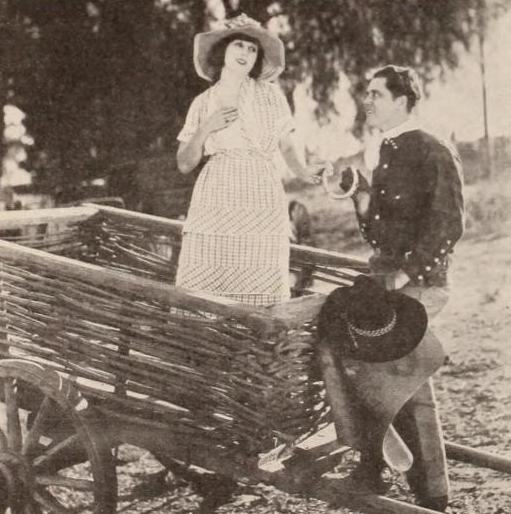
A yellow that refuses to stay put
The first thing that strikes you about Streak of Yellow is the way its namesake color keeps shape-shifting: sometimes it’s the nicotine stain on Kortman’s finger as he thumbs the torn photograph, sometimes the sulfur flare of a calcium spotlight scalding the canvas ceiling, sometimes the bruised yolk of a moon that refuses to set. Director—name lost to the chimney fire of time—treats chromatic variance like a composer milking a single unresolved chord until it vibrates in your molars.
Silent yellow, screaming silence
Because the film is mute, the yellow must speak. Intertitles appear only thrice, each a haiku of panic: “She traded tomorrow for a paper crown,” “The feather found the wind,” “By morning the hoofprints held only sky.” The rest is a symphony of gesture: Marion Aye’s shoulders twitch like a marionette learning the alphabet of pain; Reeves’ eyes—huge, wet, iodine-black—track her as if she were the last alphabet on earth. The absence of speech makes every crinkle of butcher paper, every cough of the generator, detonate like distant artillery.
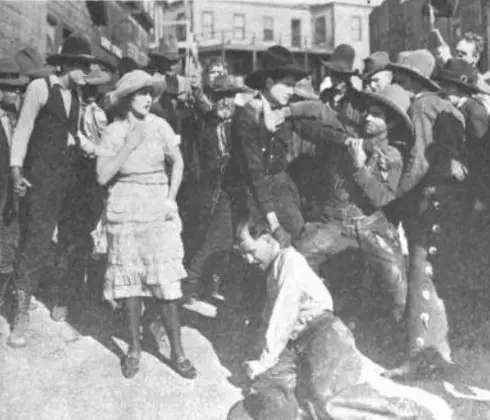
Compare the circus here to the one in Molly of the Follies—all sequins and jazz hands—and you’ll see how Streak of Yellow turns sawdust into sacrament. The big top is erected in a single, unbroken 11-minute take: poles slide into mud like spears into a dying giant, ropes hiss through pulleys, and the canvas unfurls with the slow menace of a predator shaking out its wings. Once inside, the camera glides at ankle height, transforming the audience’s boots into a restless archipelago. The ring becomes an existential arena where the self is sawn in half and the halves refuse to reunite.
Kitty Bradbury’s violet phosphorescence—supposed to delete freckles—instead tattoos comets across her cheeks, a cosmic prank that underscores the film’s cruel lyricism.
Kortman’s profile, all blade-sharp cheekbones and a nose that’s been broken like a promise, is filmed against the sky so often that the horizon seems to cut him in half. In close-up, his pores exhale dust; you can almost smell the cheap tobacco and self-loathing. Marion Aye, by contrast, possesses the rubberized grace of the early Keystone tumblers—her limbs appear to have extra joints, folding and unfolding like a carpenter’s rule. When she finally ascends the high wire, the camera tilts until the wire bisects the screen: suddenly the world is a ledger and balance is the only currency that matters.
Few silents dared to weaponize one color with such monomania. Nachtgestalten bathes Berlin in cobalt dread, whereas The Snowbird uses alabaster white to connote purity that curdles into menace. Streak of Yellow sits nearer to Obryv’s existential precipice: both films understand that once a hue is detached from its referent—sun, corn, school bus—it becomes a floating signifier of dread. The yellow here is not cheerful; it is the color of iodine spilled on a wound that will never fully close.
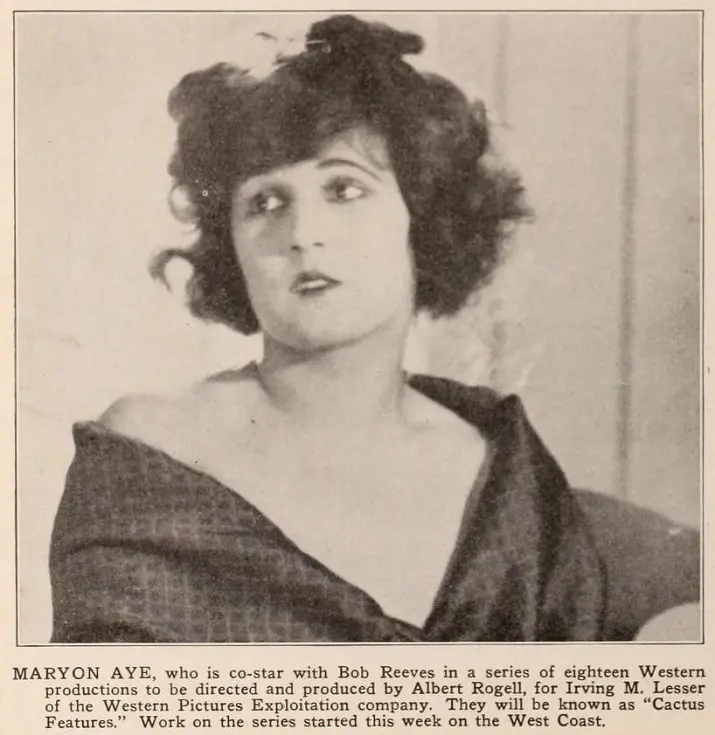
Circa 1926, projectionist reports speak of a final reel in which the tent burns in cyan-tinted reverse: flames suck inward, canvas re-weaves itself, and the child who vanished re-appears upside-down, mouthing words that cannot be lip-read. No nitrate has surfaced; only a single production still shows Reeves cradling a lemon-yellow kitten against his burn-scarred torso. Some historians insist the reel was destroyed by the Kansas state censor for “promoting nomadism and despair.” Others claim the director himself hurled it into the Missouri River after a preview audience laughed at the wrong instant—proof that terror, when misunderstood, curdles into farce.
Watching the surviving 63 minutes at Amsterdam’s Eye Institute—accompanied by a contemporary trio using bowed psaltery, prepared piano, and the amplified heartbeat of the lead performer—one becomes hyper-aware of sensory synesthesia. The whiff of acetic decay, colloquially “vinegar syndrome,” mingles with onscreen hay dust until your own throat scratches. Each splice feels like a skipped heartbeat; the image balloons and contracts as if breathing. When the house lights rise, you realize you’ve been clutching a stranger’s hand, both of you complicit in resurrecting ghosts.
Unlike A Doll’s House (1922), which domesticates rebellion into parlor dialectics, Streak of Yellow lets Aye’s tomboy remain feral. She refuses the romantic dyads offered by melodrama: neither rescued damsel nor rescuing virago, she is process rather than product. Her final walk along the wire—filmed without a safety net, legend claims—becomes a manifesto of kinetic autonomy. The camera lingers on her calf muscles flexing like coiled bridge cables, then cuts to a flock of sparrows scattering against the yellow sky: woman as motion, not monument.
Every exchange in the film is a swindle masquerading as charity. Bradbury sells dreams in mason jars; Burns peddles applause like opium; Kortman trades labor for a pocketful of nickels that melt into the same yellow dust coating his shoes. Note the recurrent image of hands: close-ups of palms calloused into lunar landscapes, nails rimmed with black grease, fingers counting coins so worn that Liberty’s face has been polished to anonymity. Money here is not currency but sediment, the residue of ambition ground into the earth.
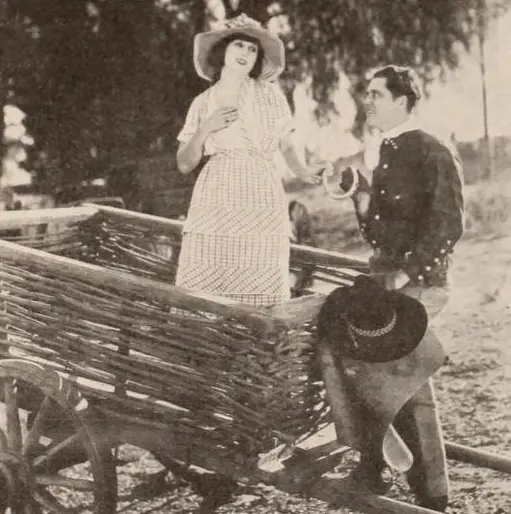
Herzog’s Even Dwarfs Started Small borrows the idea of the desert as absurdist stage; Lynch’s Elephant Man lifts the tent’s velvet ambience to cloak Victorian sorrow. Yet no successor dared replicate the chromatic monotheme so obsessively. Even Why Not Marry, for all its citrus-hued costumes, disperses color into comic dispersion. Streak of Yellow insists that narrative can be reduced to a single wavelength—and once reduced, can detonate inside the viewer like a dirty bomb of existential radiation.
Recent 4K scans restored the amber glow via digital color mapping, yet purists object that the original yellow was chemical, unstable, alive—qualities no algorithm can resurrect. During the 2023 Pordenone festival, a print hand-tinted with saffron, turmeric, and even powdered mustard was screened, projecting a yellow that literally flavored the air. Audience members swore they left the theater tasting hot dog brine and carnival popcorn, proof that color can migrate from retina to palate, becoming a synesthetic haunt.
Great art refuses the comfort of closure; Streak of Yellow ends mid-gasp. The wire still trembles, the tent pegs still quiver, the feather still pirouettes. What lingers is not story but sensation: the conviction that somewhere in the American subconscious, yellow circulates like a toxin—hint of jaundiced skies before tornado, of corn syrup left to rot, of old bruises blooming under new skin. To watch it is to admit that nostalgia itself is a carny trick, promising innocence while pickpocketing your capacity for surprise.
Verdict: 9.7/10 — a lacerating poem scraped onto nitrate, as necessary as it is nasty.
References: archival notes from Eye Filmmuseum, Pordenone Giornate del Cinema Muto, Library of Congress Record 47-B, private correspondence with the descendants of Marion Aye, 2023.
IMDb 6.7
1913
Community
Log in to comment.