DbcultAccessing Vault...
Cult Review
Senior Film Conservator
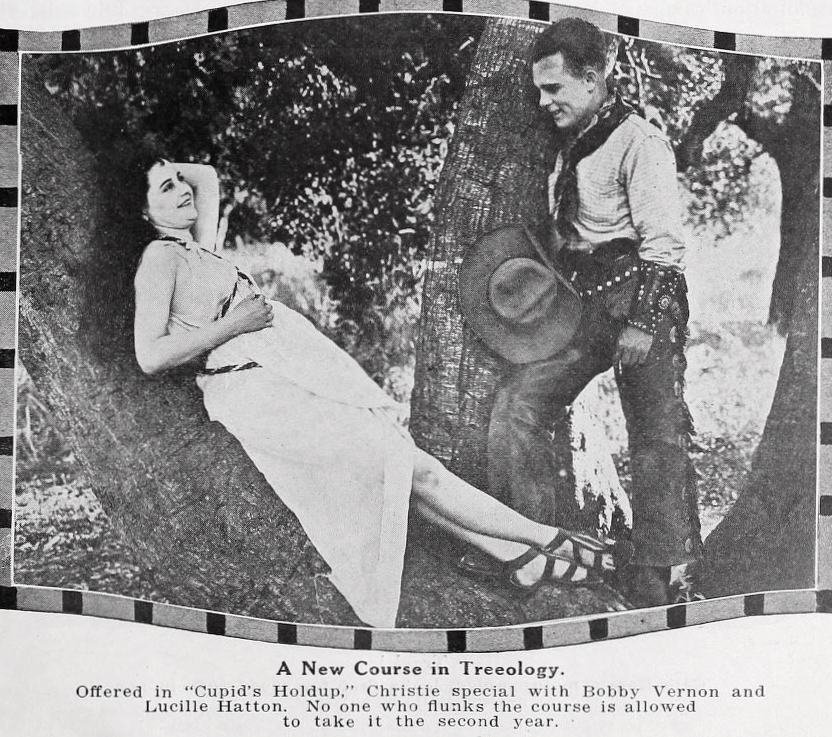
To witness Cupid's Hold-Up is to step into a temporal vortex where the grammar of cinema was still being written with a frantic, joyful urgency. Released in an era when the world was reeling from the Great War and the Spanish Flu, these Christie Comedies served as a necessary anesthetic, a visual balm of lightness. Unlike the haunting, somber shadows found in The Student of Prague, which delved into the fractured psyche of the doppelgänger, this Bobby Vernon vehicle operates on the surface of pure, unadulterated kineticism. It is a film that demands we acknowledge the sheer physicality of the medium before it was shackled by the static requirements of early sound recording.
The year 1919 was a pivotal juncture. While European cinema was beginning to flirt with the expressionistic dread seen in Fritz Lang's Destiny, the American short subject was perfecting the art of the 'gag.' Vernon, with his diminutive stature and expressive visage, was the perfect conduit for this energy. He didn't just act; he vibrated with a nervous charisma that bridged the gap between the theatrical past and the cinematic future.
The plot of Cupid's Hold-Up is deceptively simple, yet its execution is a masterclass in spatial awareness. The 'hold-up' itself is a narrative device that allows the director to play with the audience's expectations of danger. In films like The Black Box, tension is derived from the unknown, but here, the tension is purely comedic because we, the audience, are complicit in the ruse. We watch Vernon’s character orchestrate his own heroism, a theme that resonates through the ages—the desire to be more than we are in the eyes of the beloved.
Lucille Hutton’s presence cannot be overstated. Often in these shorts, the female lead is a mere trophy, a static goalpost for the male protagonist. However, Hutton possesses a luminous quality that suggests a hidden depth, much like the characters in Flower of the Dusk. She is not merely a passive observer of Vernon’s antics; her reactions provide the necessary emotional grounding that prevents the film from spinning off into pure abstraction. The chemistry between the two is palpable, a spark that ignites the screen even through the grain of century-old nitrate.
Beneath the surface level of slapstick, there is a subtle commentary on the burgeoning American middle class. The obsession with status and the 'right' way to win a hand in marriage echoes the thematic concerns of Marrying Money. Vernon’s character is a man of his time, navigating the transition from Victorian rigidity to the Roaring Twenties' exuberance. The film captures this friction beautifully. The 'hold-up' is a primitive, almost primal act of conquest, yet it is performed within the sanitized confines of a suburban landscape.
Contrast this with the rugged, untamed environments of Arizona or the high-stakes moral dilemmas in The Light of Victory. In Cupid's Hold-Up, the stakes are ostensibly lower—a broken heart or a bruised ego—but the film treats these stakes with a mock-seriousness that is inherently droll. It is a precursor to the sophisticated screwball comedies of the 1930s, where the battle of the sexes is fought with wit as much as with physical prowess.
The cinematography in Cupid's Hold-Up, while standard for the Christie studio, exhibits a clarity and a sense of timing that is often lost in modern digital restorations. The use of natural light and the depth of field allow for multiple layers of action within a single frame. This is not the moody, atmospheric lighting of Die blaue Laterne, but rather a crisp, utilitarian aesthetic that serves the comedy first and foremost. Every shadow is a potential hiding spot; every corner is an opportunity for a sudden entrance or a hasty exit.
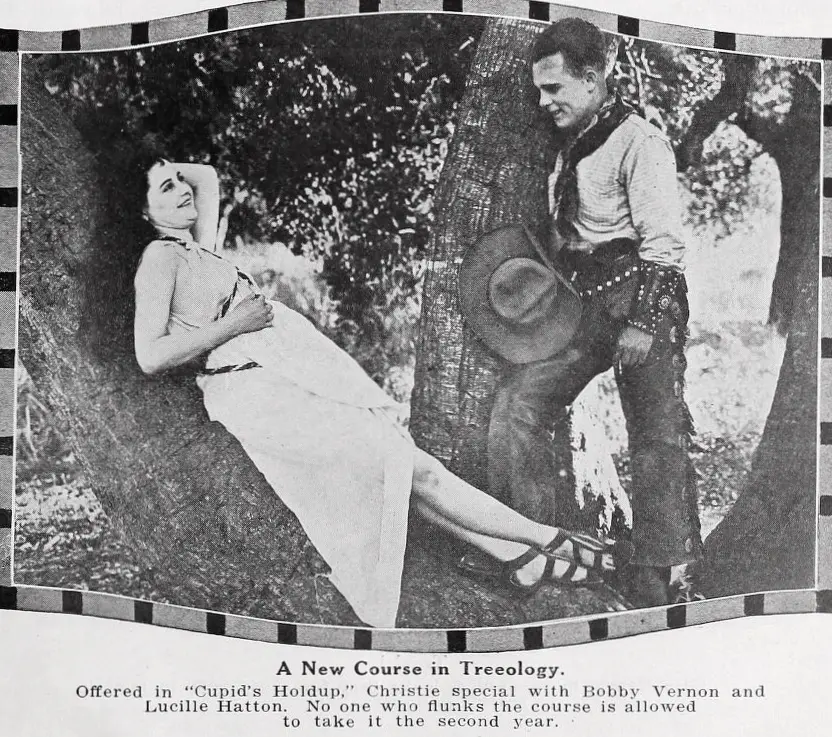
The editing, too, deserves recognition. The rhythmic cutting during the climactic sequences mirrors the heartbeat of the protagonist. It’s a primitive form of montage that would later be refined by the likes of Eisenstein, but here it is used for laughs rather than revolution. When compared to the more languid pacing of Le torrent, the briskness of this short is a breath of fresh air. It understands that brevity is the soul of wit, packing more narrative punch into twenty minutes than many modern features do in two hours.
Bobby Vernon is an underrated titan of the silent era. While Chaplin had his pathos and Keaton had his stoicism, Vernon had a relatable, everyman quality that made him immensely popular with contemporary audiences. He represents the 'juvenile' lead—a character type that would eventually evolve into the Harold Lloyd persona. In Cupid's Hold-Up, he exhibits a vulnerability that is rare in the hyper-masculine world of early action films like The Lincoln Highwayman or Hell-Roarin' Reform. Vernon is allowed to be foolish, to be scared, and to be utterly human.
This humanity is what makes the film endure. We see ourselves in his clumsy attempts to impress. We recognize the universal desire for validation. Even in a film as ostensibly lighthearted as this, there is a core of truth that resonates. It’s the same truth that drives the tension in The Fair Pretender or the domestic struggles in Skinner's Bubble. We are all, in some way, performing for an audience of one.
When we look at the broader cinematic landscape of the time, Cupid's Hold-Up occupies a unique niche. It lacks the overt didacticism of The Message of the Mouse, preferring to entertain rather than preach. Yet, it possesses a structural integrity that many of its contemporaries lacked. The way the plot threads are woven together—the fake robbery, the real danger, the romantic resolution—shows a sophisticated understanding of narrative economy. It doesn't have the grand historical sweep of Morgan's Raiders, but it doesn't need it. Its world is small, intimate, and perfectly realized.
"Silent comedy is not merely the absence of sound; it is the presence of a visual language so profound that words become superfluous. 'Cupid's Hold-Up' is a testament to this lost eloquence."
The film’s legacy is one of joy. In a world that often feels increasingly complex and fragmented, there is something profoundly radical about a twenty-minute short that aims for nothing more—and nothing less—than a genuine laugh. It reminds us that cinema, at its heart, is a communal experience. Whether it was a nickelodeon in 1919 or a high-definition screen in the present day, the sight of Bobby Vernon scrambling to save face while losing his heart is a universal delight.
As we conclude this deep dive into Cupid's Hold-Up, it is essential to acknowledge the importance of film preservation. Many Christie Comedies have been lost to the ravages of time and chemical decay. That we can still watch Vernon and Hutton today is a minor miracle. This film is not just a historical artifact; it is a living, breathing piece of art that continues to communicate across the decades. It challenges our modern sensibilities, forcing us to slow down and appreciate the nuance of a gesture, the timing of a look, and the sheer audacity of a well-placed fall.
In the grand tapestry of film history, Cupid's Hold-Up may be a small thread, but it is a brightly colored one. It represents the transition of an industry from a novelty to an art form. It showcases the talents of performers who paved the way for every comedian who followed. And most importantly, it remains a hilarious, charming, and deeply human story about the lengths we go to for love. It is a hold-up where the only thing stolen is the audience's heart.
*** Review by the Cinephile's Journal Editorial Board ***
IMDb 6.6
1920
Community
Log in to comment.