DbcultAccessing Vault...
Cult Review
Senior Film Conservator
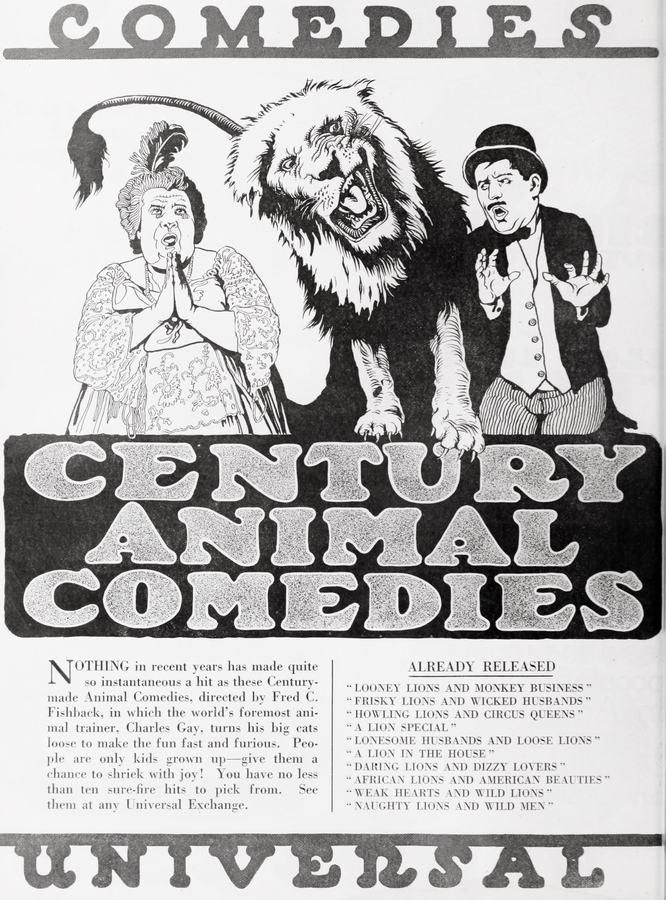
The silent era of cinema was often characterized by a frantic, almost desperate pursuit of the visceral gag, and A Lion Special stands as a testament to the era's uninhibited creativity. Produced during a time when the boundaries between domestic comedy and dangerous spectacle were porous, this film utilizes the Century Lions not merely as props, but as the primary catalysts for a narrative resolution that is as absurd as it is terrifying. To understand this film, one must look past the grainy celluloid and appreciate the sheer audacity of integrating apex predators into a storyline about farmhand romances and perpetual motion machines.
Pop Hebenezer, portrayed with a delightful curmudgeonly energy, represents the quintessential figure of the early 20th-century inventor—a man obsessed with stability in an increasingly mobile world. His 'Nutt motor' is a fascinating MacGuffin. In a cinematic landscape where motion was king, Hebenezer invents a device to stop things from moving. This thematic irony permeates the film. While the inventor seeks stillness, his daughters, Lucy and Sally, are in a state of constant emotional and physical flux. Their 'spooning' with the hired help—Luke and Billy—creates a friction that the film explores through a series of increasingly elaborate set pieces.
The farm itself is depicted as a site of subverted labor. In a sequence that feels like a precursor to the surrealism found in Some Cave Man, the animals are seen performing the chores typically reserved for humans. The goat beating the carpet and the dog mowing the lawn aren't just visual jokes; they reflect a contemporary anxiety regarding the automation of labor. When the human characters neglect their duties for the sake of romance, the natural order is upended, leading to a world where even the trees (camouflaged lovers) have eyes. This use of camouflage and animal labor elevates the film from a standard farmyard romp to something more akin to a dreamscape.
The true stars of the film, as the title suggests, are the lions. The Century Film Corporation was renowned for its 'animal comedies,' and A Lion Special is perhaps one of their most emblematic works. Unlike the stylized drama of Camille (1917), where the conflict is purely internal and social, the conflict here is raw and predatory. The transition from the 'Nutt motor'—a symbol of human ingenuity—to the lion in the box—a symbol of untamed nature—is a brilliant narrative pivot.
The crooks, who represent the external threat of industrial espionage, are met with a force they cannot negotiate with. The lion is an agent of chaos. When the thieves open the crate expecting a revolutionary engine and instead find a carnivorous beast, the film shifts gears into a high-octane chase. The physical comedy of Charles Dorety, particularly in his interactions with the lion, showcases a level of stunt work that is frankly harrowing by modern standards. There is no CGI here; the fear on the actors' faces is often palpable, adding a layer of tension that purely domestic comedies like The Matrimaniac rarely achieve.
When placed alongside contemporaries such as Kærlighedsspekulanten or the more somber Leben heisst kämpfen, A Lion Special appears almost anarchic. It lacks the moralizing tone of The Legacy of Happiness, opting instead for a celebration of the grotesque and the unexpected. Even compared to the exoticism of The Temple of Dusk, the film’s reliance on the 'here and now' of a dangerous animal on a farm feels more immediate and visceral.
The character of Charlie, the 'oriental cook,' is a problematic trope of the era, yet within the internal logic of the film, he serves as the pivot for the plot's descent into misunderstanding. His scapegoating for the stolen food is the catalyst for the 'revenge' water-bucket gag, a staple of the genre. However, the film's lexical diversity in visual storytelling comes from how it bridges these simple gags with the complex 'Nutt motor' subplot. It’s a synthesis of the mundane and the fantastic, much like the romantic escapades found in Gloria's Romance, but stripped of the high-society pretension.
The pacing of A Lion Special is relentless. From the opening scenes of 'spooning' to the final, frantic chase, there is rarely a moment for the audience to catch their breath. This kinetic energy is a hallmark of the best silent shorts. The cinematography, while constrained by the technology of 1920, manages to capture the scale of the chase across the farmstead with surprising clarity. The use of depth—specifically in the scenes where characters hide behind 'trees' while Pop Hebenezer stalks the foreground—shows a sophisticated understanding of the frame.
Furthermore, the film’s climax suggests a meta-commentary on the nature of 'specials' in early cinema. A 'special' was often a film that featured something unique—in this case, the lions. The title itself is a promise of spectacle. Unlike the more traditional narratives of A Jewel in Pawn or Her Life for Liberty, A Lion Special doesn't care about social redemption or patriotic duty. It cares about the roar of the lion and the tumble of the clown. It is cinema in its purest, most primitive form: a series of moving images designed to provoke an involuntary reaction, whether it be laughter or a gasp of fright.
In the final analysis, the 'Nutt motor' is a failure within the world of the film—it cannot stop the chaos—but it is a triumph of screenwriting. It provides the perfect excuse for the crate that eventually houses the lion. This clever bit of plotting ensures that the transition from a domestic comedy to a wild animal chase feels earned rather than tacked on. It’s this structural integrity that separates A Lion Special from lesser shorts of the period like Prudence, the Pirate, which often relied on more disjointed gag sequences.
Ultimately, A Lion Special is a fascinating relic. It captures a moment in time when the world was balancing between the old agrarian ways and a new, mechanical future, all while being chased by the literal ghosts of the wild. Charles Dorety’s contribution, often overlooked in the shadow of giants like Keaton or Chaplin, is vital here. His ability to maintain a character’s internal logic while being pursued by a 400-pound cat is nothing short of heroic. For fans of silent cinema, this is a essential viewing—a reminder that before there were superheroes, there were lions, Nutt motors, and the sheer, unadulterated joy of a well-timed bucket of water.
"A Lion Special is a whirlwind of 1920s ingenuity, where the mechanical meets the feral in a masterclass of silent-era pacing."
IMDb 5.9
1936
Community
Log in to comment.