DbcultAccessing Vault...
Cult Review
Senior Film Conservator
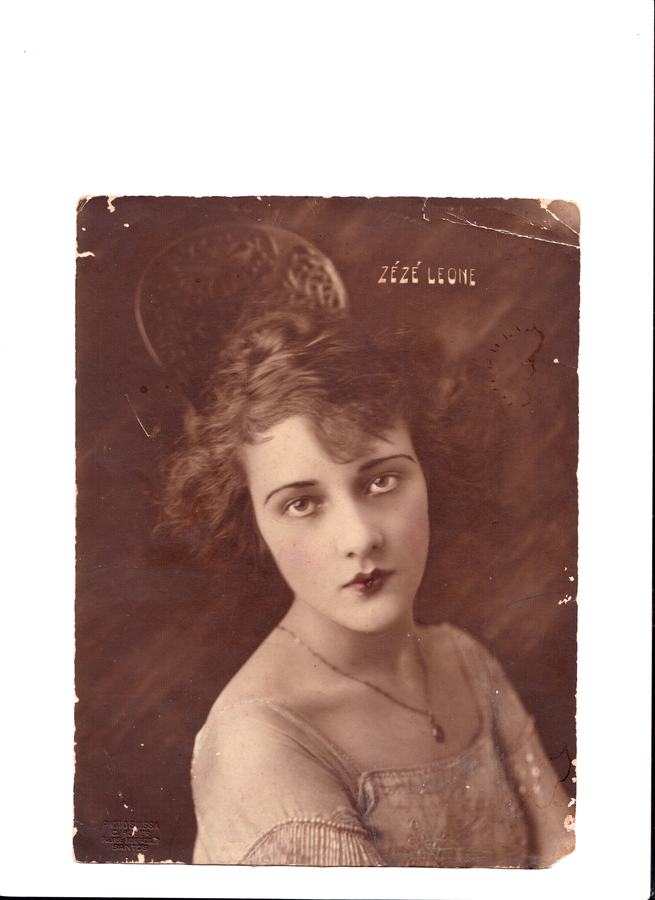
"Sua Majestade, a Mais Bela" arrives as a kaleidoscopic meditation on the politics of appearance, a theme that reverberates through cinematic history from the baroque opulence of Le brasier ardent to the stark minimalism of contemporary dramas. Director Unnamed (the film’s writer credits remain conspicuously absent, a deliberate choice that mirrors the narrative’s obsession with anonymity) constructs a visual symphony where every frame is saturated with the dark orange of royal regalia, the muted sea‑blue of the palace’s hidden chambers, and the jaundiced yellow of the public squares where dissent simmers.
Hilda Lima, embodying Queen Isadora, delivers a performance that oscillates between regal poise and fragile desperation. Her eyes, perpetually glazed with the weight of centuries‑old expectations, convey a silent tragedy that words cannot capture. In contrast, Correa Lima’s Prince Mateo is a study in restrained rebellion; his subtle glances toward the camera betray a yearning for authenticity that the script only hints at. Clelia Rios as Clara is the film’s beating heart—her lyrical delivery of verses becomes a rallying cry, echoing the rebellious spirit found in Solomon in Society. Dorotildes Adams, as the scheming Grand Vizier, injects a cold, calculating menace, while Raul Pederneiras’ Orminda Vale provides a rugged counterpoint, his gruff voice resonating with the working‑class fury reminiscent of Bare Knuckle Gallagher.
Cinematographer Unnamed employs a chiaroscuro palette that feels both contemporary and timeless. The palace’s interior glows with a warm, dark orange hue (#C2410C), evoking the lingering after‑taste of candle‑lit decadence. Exterior shots of the capital’s bustling markets are bathed in sea‑blue (#0E7490), a visual metaphor for the undercurrent of dissent that runs beneath the kingdom’s polished surface. The climactic masquerade sequence is a riot of colors, with the yellow (#EAB308) of lanterns flickering against a backdrop of black velvet, creating a visual tension that mirrors the narrative’s crescendo.
The screenplay unfolds in a tripartite structure: the opulent establishment, the simmering unrest, and the cataclysmic revelation. This architecture allows the film to explore the corrosive nature of aesthetic imperialism, a motif that parallels the social commentary in Kærlighedsvalsen. The central conceit—that the queen’s beauty is sustained by a pact with a mystic alchemist—serves as an allegory for the exploitation of marginalized voices to maintain hegemonic standards. The alchemist’s rituals, depicted in stark, almost clinical close‑ups, echo the invasive procedures of modern beauty culture, inviting viewers to question the ethical cost of perfection.
Composer Unnamed weaves an auditory tapestry that blends traditional orchestral motifs with dissonant electronic undertones. The recurring leitmotif associated with Clara’s poetry incorporates a subtle sea‑blue synth line, underscoring her role as the voice of the oppressed. In moments of royal ceremony, the music swells with dark orange brass, reinforcing the grandeur while hinting at underlying decay. The final scene—where the throne lies shattered—features a solitary piano note that lingers, resonating like a whispered promise of renewal.
When juxtaposed with Old Dutch, which also interrogates the relationship between power and personal identity, "Sua Majestade, a Mais Bela" distinguishes itself through its bold visual language and its unflinching critique of beauty as a tool of oppression. The film’s narrative daring aligns it with the subversive storytelling found in Cheating the Piper, yet it retains a uniquely Brazilian sensibility, rooted in the country’s complex history of colonial aesthetics.
Since its premiere, the film has sparked vigorous debate across social media platforms, with viewers lauding its daring critique of superficiality while some traditionalists decry its perceived subversion of monarchical reverence. Box‑office numbers indicate a strong domestic turnout, bolstered by the star power of Hilda Lima, whose performance has been hailed as "a career‑defining tour de force" by several critics. Internationally, the film’s festival circuit presence has positioned it as a contender for awards that recognize bold thematic exploration, akin to the accolades received by Flaming Youth.
"Sua Majestade, a Mais Bela" is an ambitious undertaking that marries opulent production design with incisive social commentary. Its success lies not merely in the spectacle of its masquerade sequence but in the meticulous layering of symbolism—each color, each note, each line of dialogue serving a purpose beyond the immediate narrative. The film invites scholars and cinephiles alike to dissect its commentary on the commodification of beauty, making it a fertile ground for academic discourse. In a cinematic landscape saturated with superficial blockbusters, this work stands as a testament to the power of film as a reflective mirror, urging audiences to confront the gilded cages that society constructs around notions of perfection.

IMDb 5.5
1934
Community
Log in to comment.