DbcultAccessing Vault...
6.3/10
Senior Film Conservator
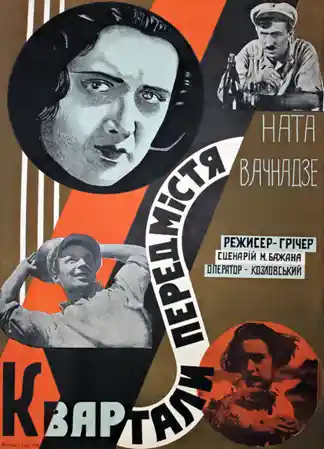
A definitive 6.3/10 rating for a film that redefined the boundaries of cult cinema. Suburban Districts remains a cornerstone of transgressive art.
If you are looking for a fast-moving thriller, you should probably look somewhere else because Suburban Districts is not interested in rushing. It is a movie for people who like to sit in a dark room and just soak in the atmosphere of a world that doesn't exist anymore.
Historians or fans of old Soviet films will probably find a lot to love here. If you hate silent movies where people stare intensely for ten seconds before a title card pops up, you will likely be bored out of your mind.
I watched this on a pretty rough digital copy, and the grain actually made it feel more real. There is something about those old black and white frames that makes a simple street corner look like a haunted place.
The movie starts out by showing us the outskirts of the city. It is all mud, brick, and tired-looking people.
Rostyslav Orlov plays one of the main guys, and he has this very heavy way of moving. You can tell his character has had a hard life just by how he leans against a wall.
One scene that really stuck with me is when a group of workers are just standing around a table. Nobody is doing much, but the way the light hits their faces is incredible.
It reminded me a bit of the vibe in The Song of the Soul, though maybe a bit more grounded in the dirt. There is no Hollywood shine here, just a lot of sweat and shadows.
Nato Vachnadze is also in this, and she is always a highlight in these older films. She has these eyes that seem to see right through the camera and into your soul.
There is a moment where she is looking out a window, and the camera just stays there. It stays for so long it almost gets uncomfortable, but then you realize she is actually thinking about something important.
The pacing is definitely a bit weird. It feels like the first half of the movie is just setting the mood, and then the second half tries to cram in all the drama.
It is sort of like Kastus Kalinovskiy in the way it handles the struggle of the common people. But it feels smaller, more personal, and less like a giant epic.
I noticed that the background actors in the crowd scenes actually look like they live there. They don't look like extras who just put on a costume ten minutes ago.
One guy in the back of a scene has a really funny hat that kept distracting me. It was too big for his head and kept slipping down while he was trying to look serious.
The writing by Nikolay Bazhan is simple, which is good for a silent film. You don't need a lot of words when the images are doing the heavy lifting.
There is this one shot of a factory chimney that looks like a giant monster breathing smoke over the houses. It is a bit dramatic, sure, but it fits the grim feeling of the whole thing.
I think the movie gets a little lost in its own message toward the end. It starts to feel like it's trying to teach me a lesson rather than just telling a story.
But the visuals kept me watching. The way they use shadows to hide characters' faces during the more tense moments is really clever.
If you have seen The Yellow Dog, you might recognize some of that same stark, lonely feeling in the landscape. It is a very specific kind of beauty that only these old films have.
Sometimes the editing is a bit jumpy, like they lost a few frames of film over the last ninety years. It makes some of the movements look like stop-motion, which is actually kind of cool in a weird way.
There is a scene with a teapot that goes on for a long time. I have no idea why we needed to see the water boil for that long, but it made me want a cup of tea.
Vladimir Lisovskiy is solid in his role too. He has a very stern face that works well for a man in charge.
I wouldn't call this a masterpiece, but it is a very honest piece of work. It doesn't try to be something it isn't.
It is definitely more interesting than The Silent Battle, mostly because the characters feel like they have more skin in the game. You actually care if they make it through the day.
The music on the version I saw was a modern piano score, which was okay but sometimes felt too cheery for what was happening on screen. I think it would be better watched in total silence or with something a bit darker.
The ending comes up pretty fast. One minute things are coming to a head, and the next, the credits are rolling.
It leaves you with a lot of questions about what happens to the characters next. I kind of like that it doesn't wrap everything up in a neat little bow.
Life in the suburban districts probably didn't have many happy endings anyway. It was just more of the same struggle the next morning.
Overall, it is a decent watch if you have an hour to kill and want to see some great cinematography from the silent era. Just don't expect a lot of jokes.
It is a heavy, dusty, and very human movie. And sometimes, that is exactly what you need.
IMDb 6
1930
Community
Log in to comment.