DbcultAccessing Vault...
5.4/10
Senior Film Conservator
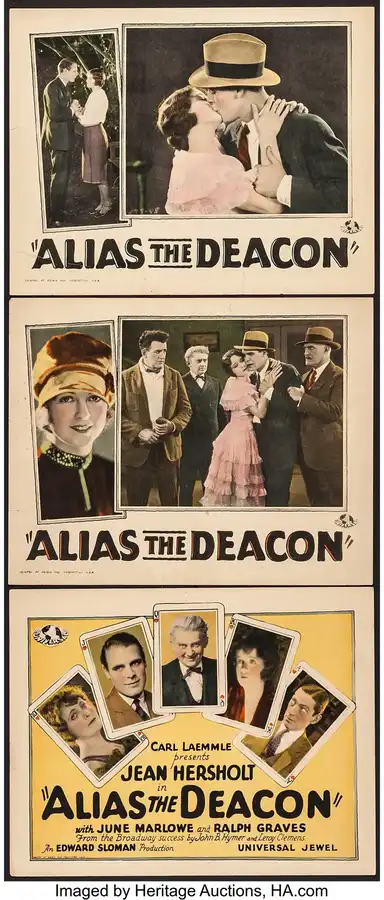
A definitive 5.4/10 rating for a film that redefined the boundaries of cult cinema. Alias the Deacon remains a cornerstone of transgressive art.
Is Alias the Deacon a forgotten relic or a hidden masterpiece of the silent era? Short answer: it is a surprisingly sharp character study that rewards those who appreciate the nuance of a well-executed grift.
This film is for viewers who enjoy the 'gentleman rogue' archetype and the dry, observational humor of 1920s character actors. It is certainly not for audiences who demand the kinetic energy of a Buster Keaton chase or the heavy-handed melodrama typical of the period's lesser efforts.
1) This film works because Jean Hersholt brings a sophisticated, understated warmth to a role that could have easily devolved into a cartoonish caricature of a con man.
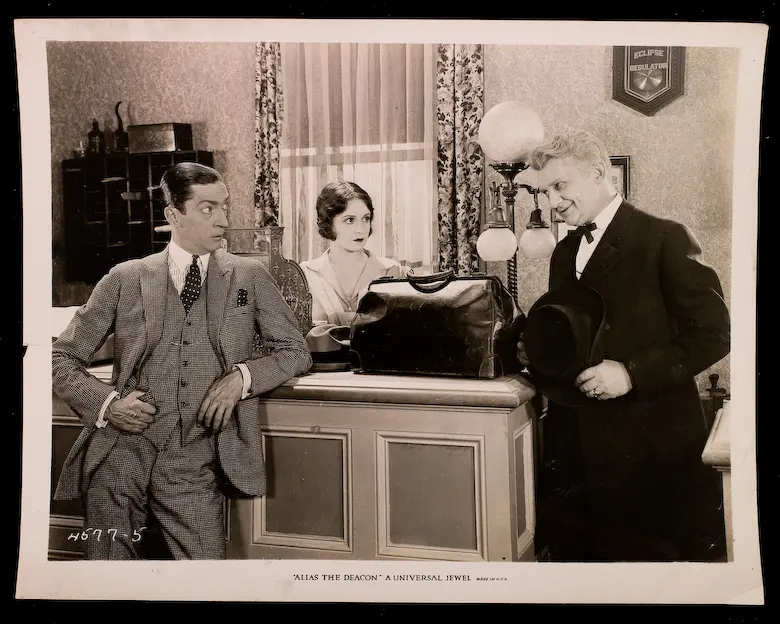
2) This film fails because the secondary plot involving the boxing match feels tacked on, a concession to the popular 'fight game' tropes of the era that distracts from the central character study.
3) You should watch it if you want to see a masterclass in silent-era ensemble acting, specifically the interplay between Hersholt and the legendary Ned Sparks.
Alias the Deacon operates on a fascinating premise: the idea that a man who lives by deception is the only one capable of seeing through the hypocrisy of 'respectable' society. Jean Hersholt, an actor often remembered for his later humanitarian efforts, is a revelation here. He plays the Deacon with a calculated stillness. In an early scene where he first enters the town, he doesn't use grand gestures to establish his 'pious' persona. Instead, he uses small, precise movements—the way he adjusts his spectacles or clutches a prayer book—to signal a false sense of vulnerability.
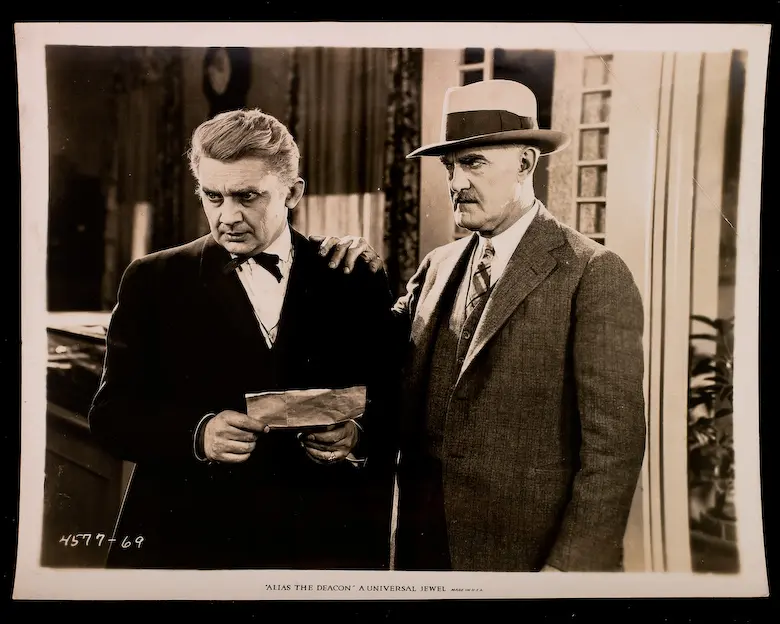
This performance stands in stark contrast to the broader physical comedy found in films like The Hick. While both films deal with rural archetypes, Alias the Deacon is far more interested in the psychology of the outsider. The Deacon is a predator, but he is a predator with a code. He is the wolf in sheep's clothing who decides to protect the flock because he finds the other wolves distasteful.
It works. But it’s flawed. The script, based on the stage play by John B. Hymer and LeRoy Clemens, carries some of the staginess of its origins. There are moments where the action feels confined to a single room, relying heavily on title cards to bridge the gap between scenes. However, the direction by Edward J. Montagne manages to breathe enough cinematic life into the proceedings to prevent it from feeling like a filmed play.
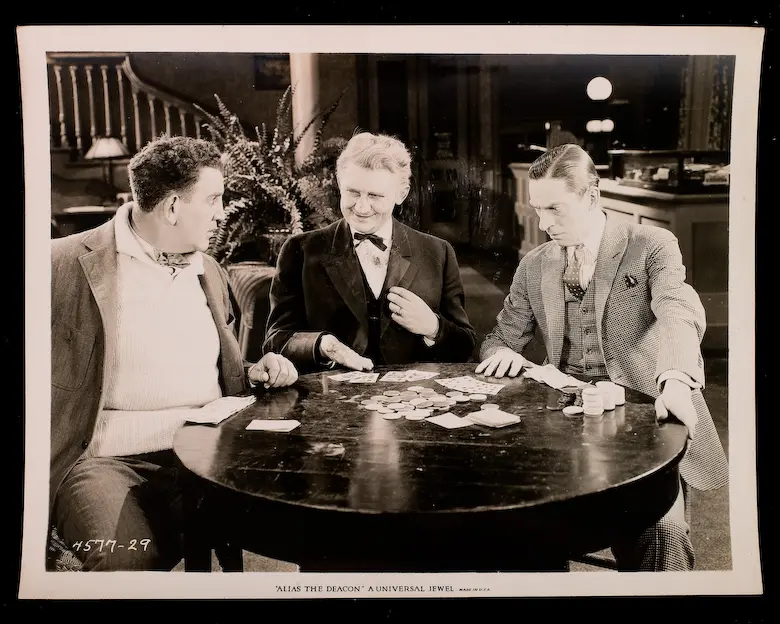
If Hersholt is the soul of the film, Ned Sparks is its cynical spine. Sparks, known for his nasal voice and perpetual scowl in the early sound era, is equally effective in the silent medium. His timing is impeccable. In a sequence involving a botched card game, Sparks’ reaction shots—minimalist and bone-dry—provide the film’s biggest laughs. He doesn't need to fall down a flight of stairs to be funny; he just needs to look slightly inconvenienced by the world’s stupidity.
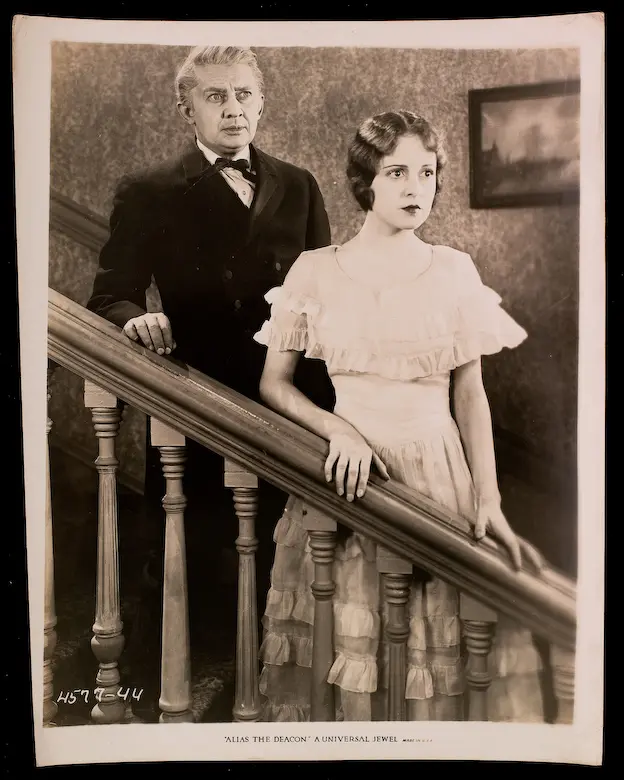
The chemistry between the cast is palpable. Unlike Single-Handed Sam, which relies heavily on a lone protagonist, Alias the Deacon is a true ensemble piece. June Marlowe and Ralph Graves provide the necessary romantic stakes, but they are wisely kept in the periphery. The heart of the movie is the camaraderie between the grifters. They are a surrogate family, a theme that resonates more deeply than the superficial 'fight game' plot.
Visually, the film captures the claustrophobia of a small town with surprising effectiveness. The lighting in the backroom poker scenes is moody and atmospheric, casting long shadows that mirror the Deacon’s own dual nature. There is a specific shot where the Deacon is silhouetted against a window, his clerical collar clearly visible while he expertly shuffles a deck of cards in the dark. It is a perfect visual metaphor for the entire film.
This attention to visual storytelling elevates it above contemporaries like Gossip, which often felt flat and uninspired. In Alias the Deacon, the camera is an active participant in the grift, often lingering on a hidden card or a subtle wink that the other characters miss, but the audience is invited to share.
Yes, Alias the Deacon is a mandatory watch for anyone interested in the evolution of the 'lovable rogue' in American cinema. While it lacks the high-budget spectacle of a Cecil B. DeMille production, it offers a level of character depth that was rare for 1927 comedies. It serves as a bridge between the slapstick of the early 20s and the sophisticated screwball comedies that would dominate the 1930s.
For those who find silent films difficult to sit through, this is a surprisingly accessible entry point. The plot is straightforward, the stakes are clear, and the performances are modern enough to avoid the 'eye-rolling' melodrama of films like Shame. It is a lean, efficient piece of storytelling that knows exactly what it wants to be.
The film’s biggest hurdle is its climax. The pivot to a boxing match feels like the producers were checking a box for 'popular entertainment.' While the choreography of the fight is decent, it lacks the emotional weight of the Deacon’s internal struggle. We care about whether the Deacon gets caught; we don't particularly care about who wins the local prize fight. It’s a classic case of a film not trusting its own best elements.
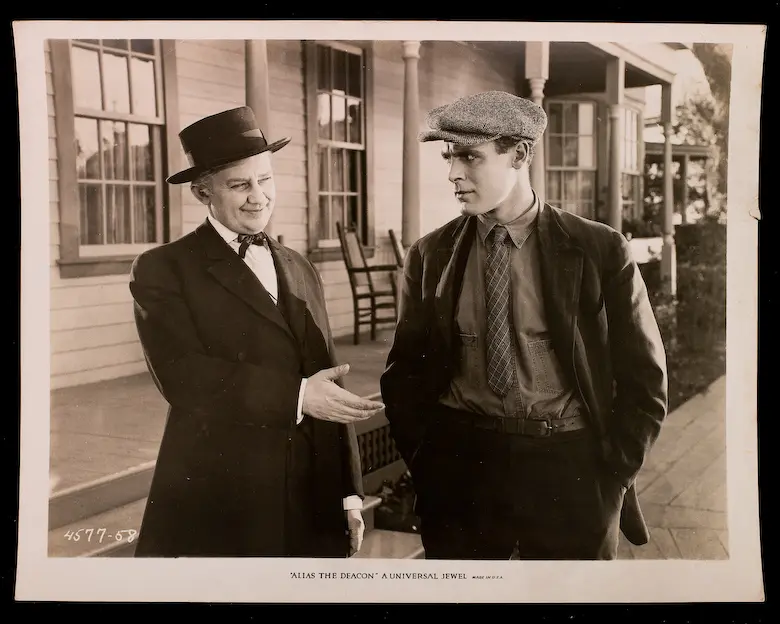
However, the resolution of the grift itself is handled with a deft touch. The Deacon doesn't just win; he wins with style. There is a sense of justice that feels earned rather than forced. It avoids the saccharine endings found in Waifs or The Heart of a Woman. Instead, it leaves us with the Deacon moving on to the next town, his secret intact and his pockets slightly heavier, a true American nomad.
Pros:
Cons:
Alias the Deacon is a testament to the power of the character actor. While many silent films are remembered for their directors or their massive sets, this one belongs to Hersholt and Sparks. It is a film that understands the inherent comedy in a man pretending to be holy while dealing from the bottom of the deck. It’s smart, it’s cynical, and it has just enough heart to keep you invested. It isn't a life-changing experience, but it is a thoroughly entertaining one. In the landscape of 1920s cinema, it stands as a sturdy, well-crafted piece of entertainment that holds up surprisingly well today. Don't let the 'hillbilly' title fool you; there is a sophisticated wit at play here that many modern comedies would do well to emulate.
IMDb —
1920
Community
Log in to comment.