DbcultAccessing Vault...
5.7/10
Senior Film Conservator
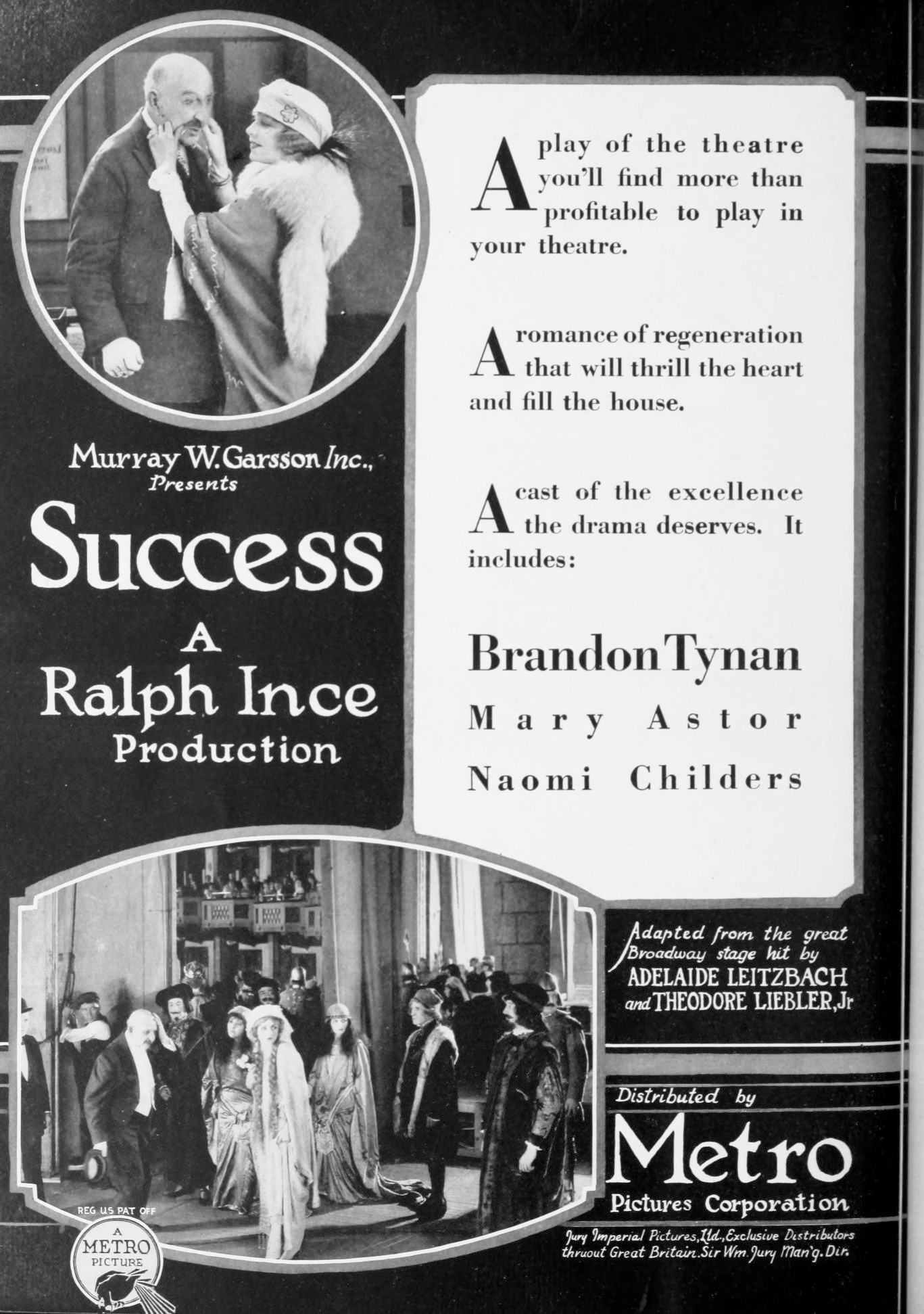
A definitive 5.7/10 rating for a film that redefined the boundaries of cult cinema. Success remains a cornerstone of transgressive art.
The celluloid landscape of the early 1920s was frequently a battleground for morality plays, yet Success (1923) carves a unique niche by intertwining the artifice of the proscenium with the raw, jagged edges of paternal failure. Directed with a keen eye for the dramatic irony inherent in the life of a thespian, the film explores the corrosive nature of fame and the grueling path toward absolution. It is a work that demands we look past the flickering grain of silent film to see the universal pulse of a man lost in his own mythmaking.
Lionel Adams delivers a performance of remarkable gravitas as Barry Carleton. Unlike the slapstick inebriation seen in Two A.M., Adams portrays alcoholism not as a comedic device but as a slow-motion shipwreck. Carleton is a man who has scaled the heights of Shakespearean grandeur only to find the air too thin to breathe. His descent into the bottle is treated with a somber realism that predates the more stylized depictions of addiction in later cinema. The early scenes, where his domestic life crumbles, are punctuated by a palpable sense of loss—not just of status, but of the self-respect required to look one's family in the eye.
The screenplay, penned by the trifecta of George V. Hobart, Theodore A. Liebler Jr., and Adeline Leitzbach, skillfully utilizes the play-within-a-play motif. By casting Carleton as a real-life Lear, the writers elevate the melodrama into something more profound. Like Lear, Carleton is a man who has divided his kingdom—his career and his family—and finds himself wandering in a metaphorical storm of his own making. The irony of his return to the theater as a humble dresser is a narrative masterstroke, placing him in a position of subservience to those far less talented than himself.
A significant portion of the film's emotional weight rests on the shoulders of a young Mary Astor, who plays Rose. Even in this early stage of her career, Astor possesses a screen presence that is both ethereal and grounded. Her Rose is not merely a damsel in distress or a pawn in the theatrical games of men; she is the moral compass of the film. The belief that her father is dead adds a layer of tragic irony to her interactions with the aging dresser who watches over her with a protective, albeit hidden, intensity.
Astor’s performance contrasts sharply with the more traditional melodramatic tropes found in films like What Would You Do?. There is a subtlety to her expressions that suggests a deep interior life, making the eventual revelation of her father’s identity all the more impactful. The chemistry between the cast, including the reliably solid Naomi Childers and Stanley Ridges, creates a believable ensemble that anchors the film’s more heightened theatrical moments.
The second act of the film introduces a fascinating dynamic between Carleton and Gilbert Gordon (played with an appropriate level of shallow ebullience by Steve Pendleton). The concept of the "dresser" as a silent witness to the actor’s vanity is explored with great nuance. Carleton, once the star, now handles the costumes of a man who is essentially a caricature of his former self. This role reversal serves as Carleton's purgatory, a necessary period of humiliation before he can earn his redemption.
When Gilbert Gordon succumbs to the same vice that destroyed Carleton—drunkenness on opening night—the film reaches its thematic crescendo. The symmetry is perfect. Carleton’s decision to step into the role of Lear is not born of a desire for fame, but of a desperate need to protect Rose. The backer’s attempt to manipulate Rose’s career in exchange for her favors is a grim reminder of the industry's predatory underbelly, a theme that feels startlingly modern. By reclaiming the stage, Carleton isn't just performing; he is conducting a ritual of exorcism, casting out the demons of his past to secure his daughter’s future.
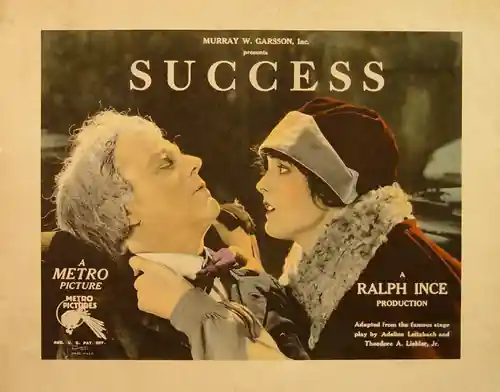
Visually, Success utilizes the constraints of 1923 cinematography to emphasize the claustrophobia of the backstage world. The use of shadows in the dressing rooms and the bright, unforgiving lights of the stage create a visual dichotomy between the truth of the man and the artifice of the performer. While it may lack the experimental flair of Das wandernde Auge, its straightforwardness serves the narrative’s emotional honesty. The camera lingers on Adams’ face during the Lear performance, capturing a level of psychological depth that many silent films sacrificed for broader action.
The pacing of the film is deliberate, allowing the audience to feel the passage of the years and the weight of Carleton's regret. This isn't the frantic energy of Never Weaken; it is a slow burn that builds toward a finale of genuine emotional resonance. The direction ensures that the theatrical setting never feels static, using the movement within the theater—the scurrying of stagehands, the hushed whispers in the wings—to build a world that feels lived-in and authentic.
To understand Success, one must understand the cultural cachet of Shakespeare in the early 20th century. In an era before the talkies, the ability of a silent actor to convey the complexity of Shakespearean verse through gesture and expression was the ultimate test of talent. By choosing King Lear as the central play, the filmmakers tap into a deep well of cultural meaning. Lear is the quintessential story of a man realizing his folly too late, a theme that mirrors the trajectory of the "prodigal" figure explored in L'enfant prodigue.
The film also touches upon the class dynamics of the era. The "backer" represents the corrupting influence of wealth on art, a recurring motif in silent dramas like One Million Dollars. Carleton’s victory is not just a personal one; it is a victory of the artist over the financier, of genuine talent over the transactional nature of the industry. This subtext adds a layer of social commentary that prevents the film from being a mere family melodrama.
While Success may not be as widely cited as some of its contemporaries, its influence on the "backstage drama" genre is undeniable. It manages to balance the high stakes of the theater with the intimate stakes of a family reunion. The final scenes, where Barry is reunited with his wife and Rose finds happiness with a reformed Gilbert, might seem overly tidy to modern audiences, but within the context of 1923, they represent a hard-won restoration of order. The film suggests that while success is fleeting and often destructive, redemption is a tangible, if difficult, goal.
Comparing this to other films of the period, such as the more adventurous The Blue Lagoon or the rugged Channing of the Northwest, Success stands out for its psychological focus. It is a film about the interior life, about the masks we wear and the courage it takes to remove them. It reminds us that the greatest performance an actor can give is the one where they finally stop acting and start living.
In the grand scheme of silent cinema, where many films have been lost to time or neglect, Success remains a testament to the power of a well-told story and a powerhouse performance. It is a reminder that the themes of fatherhood, failure, and the search for a second chance are timeless. Whether you are a fan of Mary Astor's early work or a scholar of silent era Shakespearean adaptations, this film offers a rich, rewarding experience that transcends its age. It is a cinematic success in the truest sense of the word.
For those interested in the evolution of the 'fallen star' trope, I highly recommend viewing this alongside The Miracle of Love and Et Syndens Barn to see how different cultures handled the intersection of sin and social standing during the silent era.

IMDb —
1926
Community
Log in to comment.