DbcultAccessing Vault...
5.2/10
Senior Film Conservator
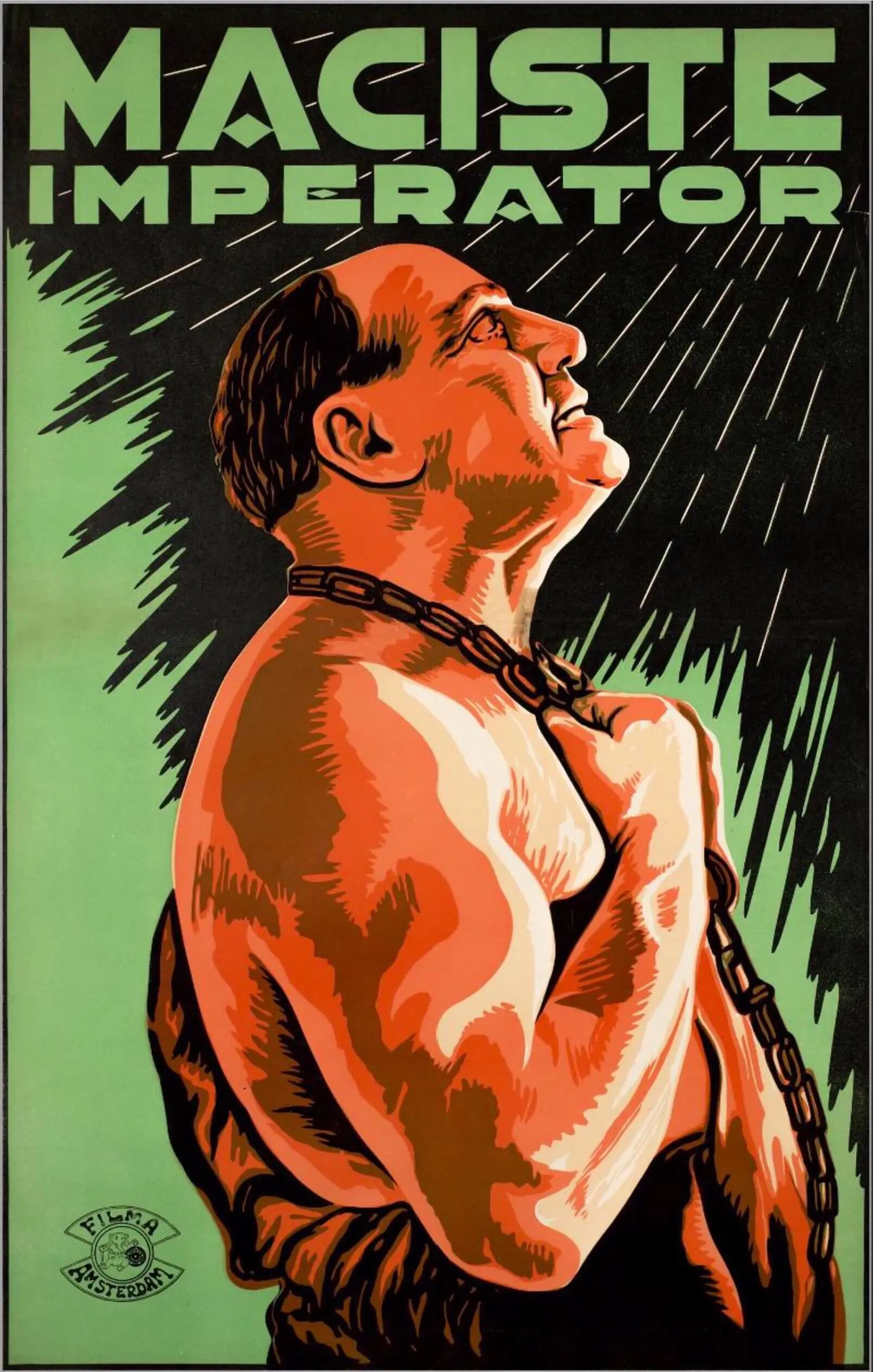
A definitive 5.2/10 rating for a film that redefined the boundaries of cult cinema. Maciste imperatore remains a cornerstone of transgressive art.
The cinematic landscape of the 1920s was often defined by its pursuit of the gargantuan, a period where the screen was not merely a window but a cathedral for the worship of the human form and the architectural imagination. In Maciste imperatore, we witness the crystallization of the 'strongman' archetype that would eventually birth the modern action hero. Bartolomeo Pagano, who first breathed life into Maciste in the seminal 1914 epic Cabiria, returns here with a presence that feels less like acting and more like a force of nature. Unlike the nuanced, often fragile domesticity explored in The Honor of His House, Zambuto’s film operates on a plane of mythic abstraction, where the stakes are nothing less than the soul of a kingdom.
The narrative architecture, penned by the astute Pier Angelo Mazzolotti, leans heavily into the tropes of the era while subverting them through sheer scale. We are transported to Sindia, a locale that exists in that peculiar cinematic space between reality and fever dream. The production design is a marvel of the silent era, utilizing light and shadow to create a sense of depth that rivals the atmospheric density of During the Plague. However, where that film found terror in the unseen, Maciste imperatore finds its power in the hyper-visible. Every muscle contraction on Pagano’s frame is a plot point, every furrowed brow a declaration of war against tyranny.
"Pagano does not merely occupy the frame; he colonizes it, transforming the screen into a showcase of sculptural heroism that predates the superhero industrial complex by nearly a century."
Comparing this to the lighthearted diversions of Be a Little Sport reveals the stark divergence in early 20th-century cinema. While the latter sought to amuse through the mundane, Zambuto and Mazzolotti aimed for the celestial. The casting of Franz Sala as the villainous Prince Regent provides the perfect aesthetic foil to Pagano. Sala’s performance is one of sharp angles and predatory stillness, a contrast to Maciste’s rounded, boulder-like solidity. This duality is the engine of the film, a chess match between the intellectual cruelty of the usurper and the primal justice of the hero.
The film’s flirtation with Orientalism is undeniable, yet it handles its fictional kingdom with a stylistic flair that avoids the mere caricature found in lesser works like The City of Masks. Instead, the Sindian court is a place of genuine menace. Elena Sangro, playing the female lead, brings a luminosity to the screen that provides a necessary emotional counterpoint to the relentless action. Her interactions with Pagano suggest a tenderness that humanizes the 'Imperatore,' elevating him from a mere circus performer to a tragic figure of immense responsibility. This depth of characterization is often missing in contemporary silent films like Queens Are Trumps, where the characters are often secondary to the gimmickry of the plot.
Technically, the film is a masterclass in the use of the wide shot. Zambuto understands that to appreciate Maciste, one must see him in relation to the environment he is dismantling. The scenes in the royal dungeons, featuring the expert cinematography of the era, utilize a high-contrast style that echoes the experiments found in La luz, tríptico de la vida moderna. The way the light catches the sweat on the actors' skin and the dust in the air creates a tactile reality that is often lost in the digital sheen of modern restorations.
A recurring theme in Maciste imperatore is the fragility of identity. Much like the narrative pivots in Alias Mary Brown or the hidden motives in Somebody Lied, the film plays with the idea of who is truly 'regal.' Is it the one with the crown, or the one with the moral fortitude to protect the people? Maciste, despite his common origins, is the only true 'Emperor' in the room. This subversion of class is a potent undercurrent, one that would have resonated deeply with post-WWI audiences in Italy and beyond. It mirrors the societal shifts seen in The Torch Bearer, where traditional roles are upended by the sheer force of individual will.
The supporting cast, including Felice Minotti and Augusto Bandini, provides a robust framework for Pagano’s central performance. Minotti, in particular, offers a groundedness that prevents the film from drifting too far into the realm of the fantastic. Their presence ensures that the political stakes feel visceral rather than theoretical. In contrast to the more theatrical, almost pantomime performances in Once a Mason, the ensemble here treats the material with a gravity that borders on the operatic. This is not a film that winks at the camera; it demands total immersion in its world of shadows and steel.
One cannot discuss this film without acknowledging its place in the lineage of the 'masked' or 'hidden' hero. While films like The White Masks used the literal mask to generate mystery, Maciste imperatore uses the body of Pagano as a mask of its own—a shell of invincibility that hides a deeply empathetic core. The sequence where Maciste is forced to navigate the palace gardens at night is particularly striking, utilizing a blue tinting that evokes the chilling atmosphere of Winter Has Came. The visual poetry of a giant moving through a delicate landscape of flowers and fountains is a testament to Zambuto’s directorial sophistication.
Furthermore, the film’s pacing is surprisingly modern. Unlike the often-stilted progression of Der Mann ohne Namen - 1. Der Millionendieb, which can feel bogged down by its own procedural elements, Maciste imperatore moves with the rhythmic precision of a heavyweight boxer. Each scene builds upon the last, escalating the tension until the inevitable, explosive confrontation. The editing, though primitive by today's standards, exhibits a keen understanding of 'the reveal,' a technique that keeps the audience in a state of perpetual anticipation.
There is a subtle melancholy that pervades the final act of the film. As Maciste restores order, there is a sense that he is a man out of time, a relic of a more heroic age that cannot fully exist within the confines of modern political structures. This thematic resonance is similar to the emotional core of The Faded Flower, where the beauty of the past is constantly threatened by the encroachment of the present. Pagano captures this perfectly in the film’s quieter moments, his eyes reflecting a weariness that his muscles cannot hide. It is this humanity that elevates the film from a mere action spectacle to a work of genuine art.
In the broader context of international cinema, Maciste imperatore stands as a bridge between the theatricality of the nineteenth century and the kinetic energy of the twentieth. It lacks the satirical bite of Boman på utställningen, but it compensates with a sincerity and a commitment to its own mythos that is infectious. The film remains a vital piece of cinematic history, not just for its technical achievements, but for its preservation of a specific type of masculine ideal—one defined by protection rather than just destruction.
Ultimately, the legacy of Maciste imperatore is found in its ability to transform the screen into a space of pure, unadulterated wonder. In an era where we are inundated with digital effects, there is something profoundly moving about watching a man of Pagano’s stature physically manipulate his environment. It is a reminder of the power of the human presence in cinema, a power that no amount of CGI can ever truly replicate. This is a film that demands to be seen on the largest screen possible, with an audience ready to be swept away by its grand, silent ambition.
IMDb 3.9
1922
Community
Log in to comment.