The Sculptor's Pyre: When Creation Becomes Entombment
Frank Wedekind's fingerprints bleed through every frame of Erdgift, translating his trademark sexual fatalism into silent cinema's visual grammar. Georg Jacoby directs this 1919 curio not as mere melodrama, but as an archaeological dig into the psychic strata beneath artistic compulsion. Kurt Lilien's sculptor doesn't merely fashion marble—he conducts a séance with his own demons, channeling desire into form until the boundary between muse and destroyer liquefies like molten wax. What begins as Pygmalion's dream metastasizes into a Bluebeard's chamber of psychological horror, where the chisel becomes both phallus and dagger.
"The statue gazes with colder comprehension than its living counterpart, its marble eyes documenting the artist's erosion with geologic patience."
Anatomy of a Creative Implosion
Lilien's performance operates on three tectonic levels: the public virtuoso holding court at gallery openings, the domestic ghost haunting his own mansion, and the primordial shaman who communes with stone in moonlit solitude. Watch how his hands—those instruments of creation—progress from caressing clay to convulsing around a demolition hammer. Marga Cornelsen as the wife performs emotional subtraction through infinitesimal gestures: the slow retreat of her hand from his shoulder, the way her mourning clothes gradually lighten into liberation's pastels after leaving. Grit Hegesa's muse operates as a psychic vampire, draining not blood but creative essence—her satisfaction peaking not during seduction, but while watching the sculptor mutilate his own genius.
Cinema as Chisel: Jacoby's Visual Syntax
Jacoby employs chiaroscuro not as mere atmosphere but as moral mathematics. The sculptor's workshop becomes a cathedral of shadows where light only falls on two subjects: the emerging statue and the artist's tormented face. Notice the terrifying scene where the muse poses beside her stone doppelgänger—Jacoby frames them in split lighting so the live woman's left side merges with the statue's right, creating a composite creature of flesh and marble. When financial ruin hits, the director manifests it through the gradual emptying of space: servants vanish, then furniture, then finally the wife and child, leaving only the statue as the sole occupant of his crumbling world.
The Poisoned Clay: Wedekind's Theatrical DNA
Wedekind's preoccupation with destructive sexuality permeates the narrative architecture. The sculptor's trajectory mirrors Lulu's victims in Pandora's Box—his artistic potency drained then discarded. Yet cinema grants Wedekind new weapons: the terrifying silence as the sculptor circles his completed statue, the monumental close-ups of marble veins that look like frozen tear tracks. Paul Otto's screenplay transforms stage monologues into visual soliloquies; the wife's accusation "You married my likeness, not me" becomes a devastating montage comparing her fading wedding portrait with the increasingly idealized statue.
Stone as Character
The statue evolves from object to antagonist. Early scenes show raw block resisting the chisel—later, the finished work seems to will its own survival, surviving demolition attempts until choosing the precise moment to collapse.
Tactile Cinema
Jacoby forces audiences to feel textures: sweaty palm prints on clay, silk sliding from the muse's shoulder, the chalky powder rising as hammer meets marble—a ghostly exhalation.
Destruction as Coitus
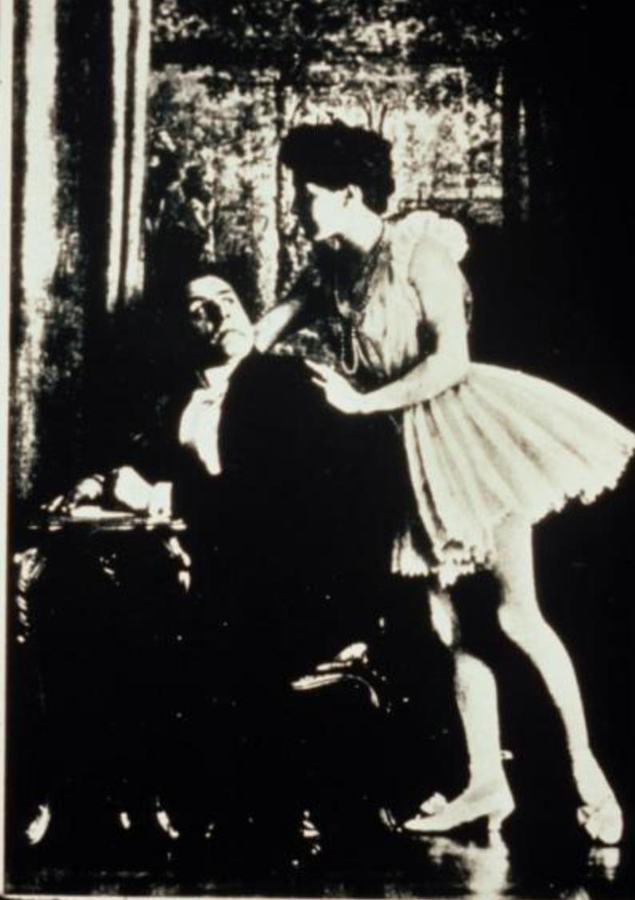
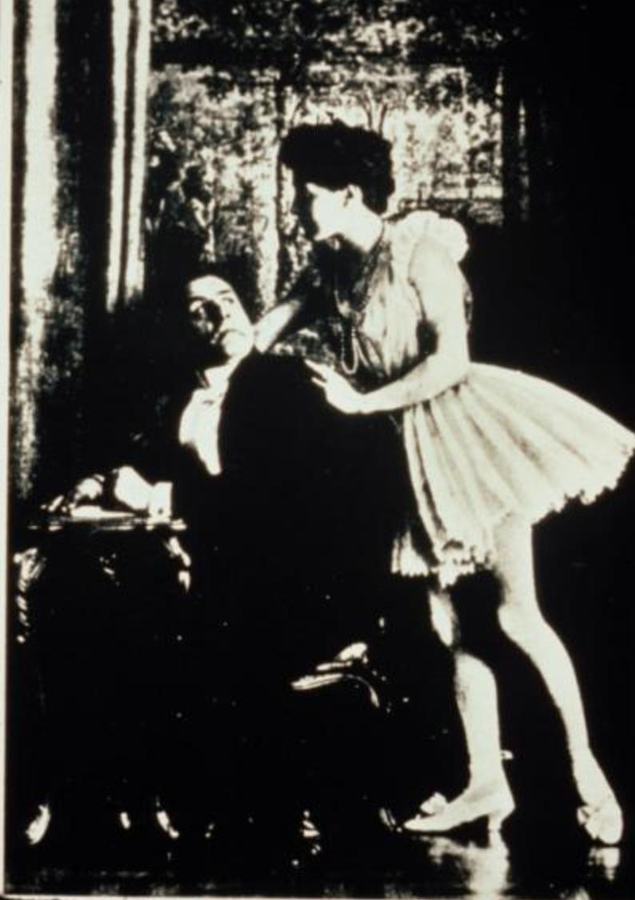
The film's violent climax operates on psychosexual levels unseen in contemporary works like The Eyes of the Mummy. As the sculptor batters his creation, Lilien's face contorts into something between agony and ecstatic release—each hammer blow synced to convulsive body movements suggesting both orgasm and death throes. When the statue's limb crushes him, the composition mirrors an embrace: artist and muse finally united in mutual annihilation. This transcends Infatuation's simpler erotic destructiveness, reaching for mythological resonance.
Weimar Shadows: Contextual Echoes
Released during Germany's tumultuous reconstruction, Erdgift functions as national allegory. The sculptor's crumbling estate mirrors a defeated nation gutted by reparations; his self-immolation foreshadows the coming cultural suicide of the 1930s. Ralph Arthur Roberts' art dealer—profiting from the sculptor's disintegration while feigning concern—embodies predatory capitalism. Unlike the frontier reinvention in The Man from Montana, this German narrative insists there's no escape from inherited poison ("Erdgift" translating to "earth poison"—referring to radium's recent discovery).
Gender Geologies
The film subverts traditional muse narratives. Hegesa's character exhibits terrifying agency—she's neither passive inspiration nor Miss Robinson Crusoe's innocent victim. Her sabotage stems from recognition that the statue will immortalize her while she ages. Cornelsen's abandoned wife achieves agency through departure, rejecting the martyrdom expected in films like The Joan of Arc of Loos. The sculptor's fatal error lies in believing he controlled the creative transaction, unaware the earth poison flowed both ways.
Symphony of Ruin: Technical Revelations
Cinematographer Max Lutze pioneers tactile photography—marble isn't just white, it's veined with glacial blues and corpse yellows under specific lighting. His lenses caress textures until stone seems to breathe. The demolition sequence remains revolutionary: alternating between agonizing slow-motion (falling debris) and frenzied cuts (Lilien's hammer swings), creating a dissonant rhythm that predates Eisenstein's theories. Hermann Nesselträger's production design makes architecture psychologically volumetric—doorways shrink as the sculptor's mental state deteriorates, windows become barred rectangles of accusing light.
The Sound of Silence
Intertitles function as punctuation marks in visual sentences. Wedekind's sparse dialogue appears in abrupt intercuts—"You gave her my face" feels like a stiletto between ribs. The true dialogue occurs in images: the sculptor's child building sandcastles beside his monumental failure, the muse dropping a pawnbroker's ticket like a grenade pin.
Comparative Alchemy
- Unlike The Blue Bird's allegorical hope, Erdgift explores creation's toxicity
- Kinkaid, Gambler shares self-destructive masculinity but lacks artistic dimension
- Precursors German Expressionism's decay obsession in The Coming Power
Legacy in Fragments
Erdgift's influence radiates obliquely—seen in the artist-monster hybrids of later German cinema, the eroticized destruction of Carmen of the Klondike's remakes, even modern studies of toxic creativity like Black Swan. Its genius lies in understanding that creation and entropy share DNA—every act of making contains the blueprint for unmaking. The final shot—dust motes dancing where the statue stood—suggests art's ultimate victory over the artist. The poison becomes the monument.
Resurrection from the Archives
Rediscovering Erdgift today feels like uncorking absinthe—its potency undiminished by time. In an era obsessed with artists' mental health, its depiction of creative compulsion as both sacrament and pathology resonates violently. Lilien's performance—especially the moment he tenderly kisses the statue's mouth before raising the hammer—remains one of silent cinema's most complex portraits of erotic nihilism. Unlike the crowd-pleasing closure of Lieutenant Danny, U.S.A. or Who's Who in Society, this film stares unblinking into the abyss where art consumes life. The earth poison wasn't radium—it was the intoxicating lie that beauty redeems suffering. When the dust settles, only the lie remains standing.