DbcultAccessing Vault...
Cult Review
Senior Film Conservator
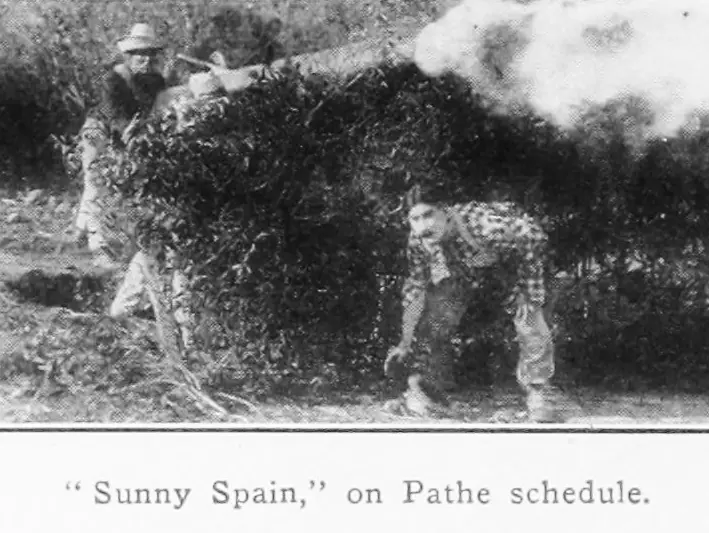
James Parrott’s Sunny Spain (1919) stands as a fascinating relic of the silent era’s obsession with the 'other.' While many contemporary works like The Big Town Round-Up focused on the rugged domesticity of the American West, Parrott looks southward, blending the mercenary archetype with the performative violence of the Spanish bullring. The film operates on a logic of sheer kinetic energy, where the protagonist is less a driver of the plot and more a leaf caught in a gale of aristocratic caprice. Parrott, who would later find immense success behind the camera directing Laurel and Hardy, displays here a physical vocabulary that is both elastic and profoundly human. His soldier of fortune is not the stoic warrior one might find in The Man Trail, but rather a man whose primary skill is the art of the narrow escape.
The setting of the rubber plantation is an inspired choice, providing a backdrop of industrial colonialism that contrasts sharply with the archaic ritual of the bullfight. It is within this liminal space that the 'rich senorita' exercises her agency, treating the soldier as a trophy or a curiosity. This dynamic subverts the typical damsel-in-distress trope found in films like Within the Law. Here, the man is the one being carried off, a passive object of desire whose only path to autonomy is through the chaos of the arena. The rubber plantation itself feels like a character—sticky, humid, and fraught with the tensions of class and commerce. It is a far cry from the domestic interiors of Baby Mine or the urban grit of The Deep Purple.
When the narrative finally thrusts Parrott into the ring, the film transcends its setup and enters the realm of pure burlesque. The bullfight is not treated with the reverence of a cultural institution but as a playground for gravity-defying gags. Parrott’s movements are a frantic counterpoint to the bull’s singular focus. Unlike the calculated maneuvers in Forward March, where military precision is the joke, Sunny Spain relies on the total absence of technique. Every dodge is a stumble; every 'pass' with the cape is a desperate attempt to hide. This is the 'ludicrous in the extreme' promised by the synopsis, yet there is a rhythmic beauty to the carnage. It mirrors the existential dread found in A Modern Mephisto, but replaces the philosophical weight with the visceral thrill of a near-miss.
The climax hinges on the idiom 'throwing the bull.' In 1919, this phrase carried a dual meaning: the literal wrestling of an animal and the figurative act of deception or boastful talk. Parrott’s hero succeeds because he is a master of both. He deceives the audience into seeing bravery where there is only panic, and he physically overcomes the beast through sheer, uncoordinated luck. This thematic thread of the 'successful fraud' is a recurring motif in silent comedy, often explored with more cynicism in films like Prohibition. However, in Sunny Spain, the deception is victimless and joyous. The fame and fortune he acquires are the spoils of a man who has successfully navigated a world that tried to pigeonhole him as a mere mercenary.
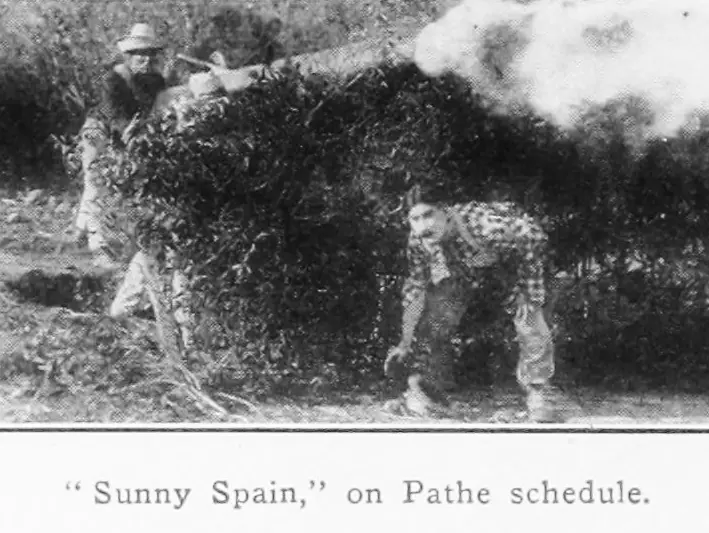
Technically, the film utilizes the harsh sunlight of its (likely Californian) locations to simulate the searing heat of the Iberian Peninsula. The cinematography doesn't possess the experimental flair of Through the Wall, but it excels in its clarity of action. During the bullring sequences, the editing creates a sense of spatial continuity that is essential for the comedy to land. We need to see the proximity of the horns to Parrott’s trousers for the stakes to be felt. The film avoids the static, stagey feel of The Fotygraft Gallery, opting instead for a mobile, aggressive camera that follows the protagonist’s erratic flight paths. This visual dynamism is what keeps the film's pace from flagging, even during the expositional moments on the plantation.
When comparing Sunny Spain to other shorts of the era, such as Peace and Quiet or Peace in Pieces, one notices a distinct lack of domestic tranquility. Parrott’s comedy thrives on displacement. While Oh! Louise! finds humor in the familiar, Sunny Spain finds it in the alien. The hero is a fish out of water, or more accurately, a soldier in a bullring. This sense of being overwhelmed by one's environment is a hallmark of Parrott's style, often bordering on the 'tough luck' persona that defined many of his characters (and indeed, is echoed in the title Tough Luck). Yet, unlike the darker, more brutal humor found in Une brute, there is an inherent sweetness to Parrott’s survival. He isn't a brute; he's a survivor of his own clumsiness.
Ultimately, Sunny Spain is a testament to the versatility of James Parrott. As a writer and performer, he understood that the best comedy comes from the subversion of dignity. The soldier of fortune—a figure typically associated with grim professionalism—is stripped of his gravitas and forced to perform for the amusement of a wealthy heiress and a bloodthirsty crowd. This deconstruction of masculine tropes is surprisingly modern. It suggests that fame is not the result of skill, but of the ability to survive one's own humiliations with a smile. The film remains a vibrant example of how early cinema used international settings not for authentic cultural exploration, but as a canvas for the universal language of the pratfall. It is a work that, much like its hero, manages to win the day through a combination of sheer nerve and the spectacular 'throwing of the bull.'
Reviewer Note: For those tracking the evolution of James Parrott from his 'Pollard' days to his directorial peak, Sunny Spain serves as a crucial bridge, showcasing the nascent comedic timing that would later define the greatest duos in Hollywood history.
IMDb —
1926
Community
Log in to comment.