DbcultAccessing Vault...
5.8/10
Senior Film Conservator
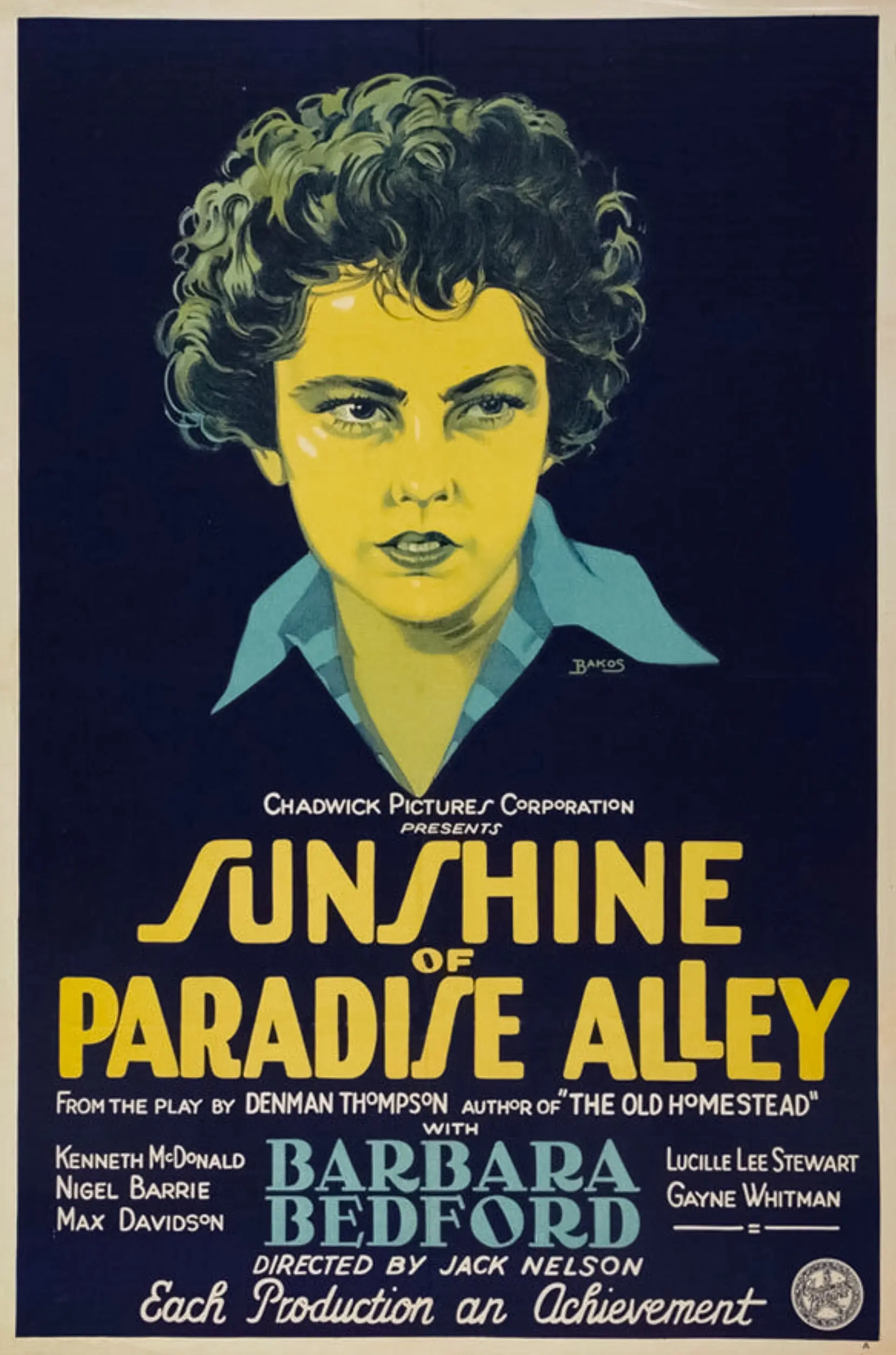
A definitive 5.8/10 rating for a film that redefined the boundaries of cult cinema. Sunshine of Paradise Alley remains a cornerstone of transgressive art.
Is Sunshine of Paradise Alley a forgotten masterpiece of the silent era? Short answer: no, but it is an essential artifact for those interested in the evolution of urban melodrama and the 'social uplift' genre of the 1920s. This film is for the dedicated cinephile who enjoys dissecting the morality plays of the Jazz Age, but it is certainly not for the modern viewer who requires fast-paced action or nuanced, morally gray protagonists.
This film works because of Barbara Bedford’s radiant screen presence, which manages to transcend the often-stilted dialogue cards of the era.
This film fails because the third-act shift into a crime procedural involving stolen bonds feels disjointed and forced, distracting from the more compelling class conflict.
You should watch it if you want to see how early Hollywood conceptualized the 'housing crisis' long before it became a modern buzzword.
At its heart, Sunshine of Paradise Alley is a film about the tension between progress and preservation. The banker, played with a rigid, almost mechanical coldness, represents the industrial spirit of the 1920s. He sees a factory; the residents see a home. This is a trope we have seen a thousand times, yet in 1926, it felt urgent. The film treats the tenement not as a place of misery, but as a vibrant, if impoverished, ecosystem. This is a sharp contrast to other films of the time like Sold at Auction, which often leaned more heavily into the tragedy of poverty rather than its communal resilience.
The 'Sunshine' character is the bridge. She doesn't argue with spreadsheets; she argues with humanity. There is a specific scene where she brings the banker into the alley, forcing him to look at the faces of the people he intends to displace. It’s a bit heavy-handed. It works. But it’s flawed. The transition from a man obsessed with profit to a man building luxury apartments for the poor happens with a speed that only silent film logic can justify.
The casting is a fascinating mix. Max Asher and Max Davidson bring a level of character acting that provides the 'flavor' of the tenement. Asher, known for his more comedic roots, offers a groundedness here that balances the high melodrama of the central plot. The way the tenement dwellers are portrayed avoids the 'pitiful' trap. They are survivors. They are loud. They are real.
Barbara Bedford is the engine of the film. In an era where many actresses relied on exaggerated pantomime, Bedford uses her eyes to convey a sense of weary hope. When the crooked bank employee attempts to force himself on her, the shift in her performance from 'charming local' to 'threatened survivor' is jarringly effective. It is one of the few moments where the film feels truly dangerous. It’s a stark reminder of the vulnerability inherent in the class dynamics the film explores.
The middle of the film sags under the weight of a crime subplot that feels like it was imported from a different script. The crooked bank employee and his tenement accomplice stealing bonds is a standard 'black hat' move. It’s designed to give the banker a reason to doubt Sunshine and her boyfriend, but it feels unnecessary. The social conflict was already enough. By introducing a frame-up, the writers—including Rick Todd and Josephine Quirk—fall back on a safe, melodramatic structure rather than following through on the more difficult social commentary.
Compare this to Pals First, which handles deception with a bit more grace. In Sunshine of Paradise Alley, the theft is merely a tool to get us to the finish line. The villainy is cartoonish. The bank employee doesn't just want money; he wants to ruin lives. It’s a bit much, honestly. It lacks the subtlety found in films like Cheap Kisses, which explored social mores without needing a literal crime to drive the plot.
Visually, the film excels in its depiction of Paradise Alley. The set design captures the claustrophobia of the tenements—laundry hanging between buildings, children playing in the dirt, the constant sense of being watched. This grit is contrasted sharply with the sterile, expansive offices of the bank. The lighting in the bank scenes is flat and cold, while the alley scenes have a warmth and texture that suggests that, despite the poverty, this is where the life is.
There is a surprising observation to be made about the camera work during the attempted frame-up. The use of shadows in the bank vault creates a noir-lite atmosphere that was somewhat ahead of its time. It’s a brief flash of stylistic brilliance in a movie that is otherwise quite traditional in its framing.
If you are looking for a clear-cut answer: yes, if you are a student of film history. Sunshine of Paradise Alley offers a unique look at 1920s social politics and the 'Golden Girl' archetype. It’s a film that tries to have its cake and eat it too—critiquing the rich while ultimately making a rich man the savior. It’s contradictory. It’s messy. And that is exactly why it remains interesting nearly a century later.
Pros:
- Strong lead performance by Barbara Bedford.
- Interesting historical perspective on urban development.
- Effective character work from the supporting cast, particularly Max Asher.
- High production values for the tenement sets.
Cons:
- The crime subplot feels disconnected from the main theme.
- The villain is a one-dimensional caricature.
- The pacing stutters significantly in the second act during the bond theft setup.
When placed alongside other films of the era, such as Annie-for-Spite, we see a recurring theme of the 'virtuous poor' winning over the 'hardened wealthy.' It was a comforting narrative for a country undergoing rapid industrialization. Sunshine of Paradise Alley doesn't break the mold, but it fills it with more personality than many of its contemporaries. While The Sea Master dealt with rugged individualism, this film is firmly rooted in the collective experience of the city.
Sunshine of Paradise Alley is a fascinating, if uneven, slice of silent cinema. It captures a specific moment in American cultural history where the 'slum' was both a place of fear and a place of romanticized virtue. The film is held together by the sheer force of Barbara Bedford's charisma, even when the plot threatens to veer off the rails into generic crime territory. It’s a bit of a mess, honestly. But it’s a beautiful, earnest mess that deserves a look from anyone interested in the roots of social cinema. It won't change your life, but it will give you a better understanding of where our cinematic tropes come from.
Ultimately, the film is a testament to the power of the 'Sunshine' archetype—the belief that a single good person can change a broken system. It’s naive, but in the world of 1926, it was exactly what audiences wanted to believe.
IMDb 5.6
1917
Community
Log in to comment.