DbcultAccessing Vault...
Cult Review
Senior Film Conservator
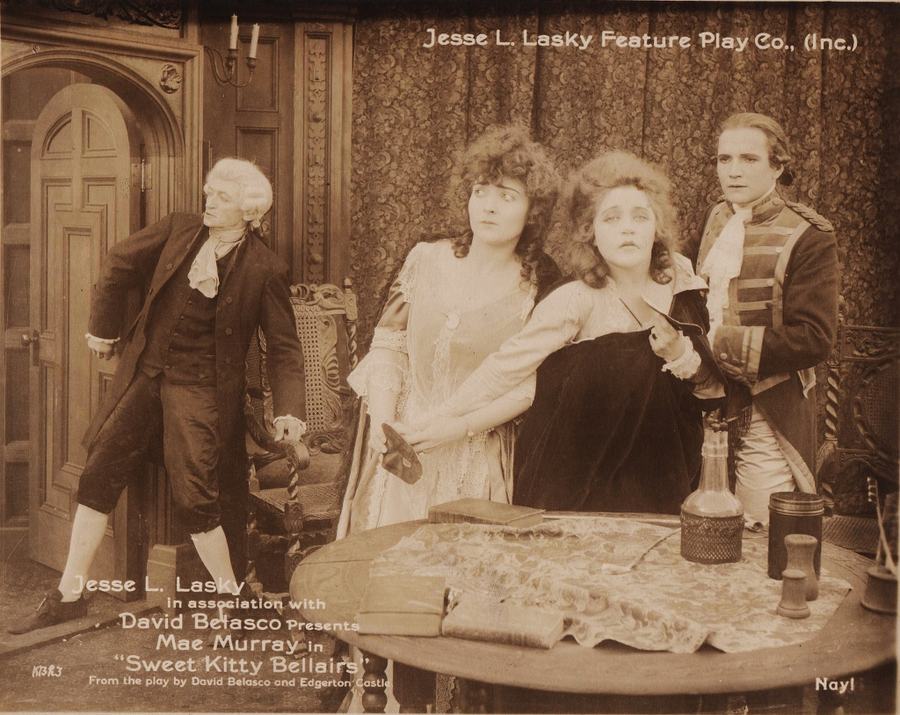
The silver screen, even in its nascent years, possessed an undeniable allure for tales of bygone eras, particularly those steeped in romance and societal intrigue. Among these, James Young's 1916 rendition of Sweet Kitty Bellairs emerges as a delightful, if somewhat forgotten, period piece that captures the effervescent spirit of 18th-century England with remarkable fidelity. Based on David Belasco's popular play, itself an adaptation of Agnes and Egerton Castle's novel, the film plunges viewers into the lavish, gossipy world of Bath, a spa town synonymous with social climbing, clandestine assignations, and an intricate web of manners that often masked rather more scandalous realities.
At the heart of this frothy confection is Kitty Bellairs, brought to life with an infectious charm by the luminous Mae Murray. Murray, a star of considerable magnitude in her day, imbues Kitty with a captivating blend of innocence and cunning, making her far more than a mere flighty ingenue. Her Kitty is a force of nature, a young woman whose flirtations are not simply an indulgence but a strategic tool in the complex game of social survival. The narrative, as it unfolds, quickly establishes Kitty’s penchant for leaving a trail of smitten admirers in her wake, a testament to her irresistible charisma and quick wit. This isn't just a story about a girl on holiday; it's a shrewd observation of how a woman’s charm could be her most potent weapon in an era of stringent social codes.
The film truly gains its dramatic impetus when Kitty’s sister finds herself embroiled in a deeply compromising situation. The specter of scandal in 18th-century society was a terrifying force, capable of utterly ruining reputations and prospects. It’s here that Kitty’s seemingly superficial flirtatiousness reveals its deeper utility. Her ability to captivate and influence, to navigate the intricate social dance, becomes the very mechanism through which she endeavors to rescue her sister from the precipice of public disgrace. The stakes are palpable, lending a surprising weight to what might otherwise be dismissed as a light romance. The tension between the frivolous surface and the serious undertones is expertly maintained, a testament to the original source material’s enduring appeal and Young’s direction.
Mae Murray’s performance is, without question, the linchpin of the entire production. Her expressive eyes and graceful movements convey a depth of character that transcends the often-exaggerated acting styles common in early cinema. She embodies Kitty Bellairs with a vivacity that is utterly convincing, making her magnetic presence understandable. One can easily see why gentlemen like those played by Joe King and Tom Forman would fall under her spell. Murray’s portrayal is a masterclass in silent film acting, utilizing gesture and facial nuance to communicate complex emotions and motivations. Her chemistry with the various suitors is palpable, adding layers of romantic intrigue to the unfolding drama. It’s a performance that solidifies her status as a compelling leading lady of the era, capable of carrying a film with her sheer star power.
The supporting cast, while not always given the same expansive canvas as Murray, provides solid grounding for the central narrative. Joe King, James Neill, and Tom Forman each contribute to the ensemble, portraying the various gentlemen captivated by Kitty’s charms with varying degrees of earnestness and comedic effect. Lucille La Verne brings a certain gravitas to her role, her presence adding texture to the societal landscape. Horace B. Carpenter and Robert Gray round out the male contingent, each contributing to the tapestry of Bath’s social elite. Belle Bennett and Lucille Young, portraying other female characters, help to illustrate the societal pressures and expectations placed upon women during this period, offering a contrast to Kitty's unconventional resourcefulness.
James Young’s direction is commendable for its ability to evoke the period convincingly. The sets and costumes, while perhaps not as lavish as later Hollywood epics, nonetheless transport the viewer to the elegance and artifice of 18th-century Bath. The attention to detail in the period attire, the grand ballrooms, and the picturesque outdoor settings contributes significantly to the film’s immersive quality. Young demonstrates a keen eye for framing and composition, utilizing the visual language of silent cinema to maximum effect. His pacing is generally brisk, allowing the romantic entanglements and dramatic machinations to unfold with an engaging rhythm, preventing the film from ever feeling sluggish despite its length.
Thematically, Sweet Kitty Bellairs offers a fascinating glimpse into the societal constraints and gender roles of its historical setting. While presented as a romance, it subtly critiques the superficiality and hypocrisy often found within high society. Kitty's journey is not just about finding love, but about asserting agency within a system designed to limit women's power. Her intelligence and quick thinking are her true assets, allowing her to manipulate social situations to her advantage. This underlying current of female resourcefulness, albeit in a lighthearted package, resonates even today, drawing parallels to how women have historically navigated restrictive environments. In a way, it shares a distant thematic kinship with films like What 80 Million Women Want, albeit with a vastly different approach and tone, by examining the societal roles and expectations placed upon women.
The adaptation by James Young from the original play and novel is handled with a deft touch, ensuring that the theatricality of the source material translates effectively to the cinematic medium. Silent films often faced the challenge of conveying complex dialogue and character nuances without spoken words, a hurdle that Sweet Kitty Bellairs largely overcomes through strong visual storytelling and compelling performances. The intertitles are used judiciously, providing necessary exposition without interrupting the flow of the narrative. This balance is crucial for maintaining audience engagement, especially in a period piece where understanding the social context is paramount.
While the film is predominantly a romantic comedy with dramatic undertones, it also offers moments of genuine tension and emotional resonance. The potential ruin of Kitty's sister provides the necessary dramatic anchor, ensuring that the stakes remain high amidst the witticisms and romantic escapades. This blend of genres is a hallmark of successful storytelling, allowing the film to appeal to a broad audience. It avoids the overt melodrama sometimes associated with silent films, opting instead for a more nuanced approach to its emotional beats. One might draw a very loose comparison to the intricate family dramas found in The Sins of the Mothers, in terms of familial reputation being at stake, though Sweet Kitty Bellairs maintains a far lighter, more optimistic spirit.
The film’s historical significance lies not just in its portrayal of a specific period, but also in its contribution to the evolving language of cinema. It showcases the capability of early filmmakers to craft engaging narratives that resonated with audiences, proving that the medium could effectively adapt popular literary and theatrical works. The artistry involved in recreating an 18th-century world for the screen, from the costumes to the customs, is a testament to the dedication of the production team. Such efforts laid the groundwork for countless period dramas that would follow, establishing conventions and expectations for historical accuracy and romantic grandeur.
For contemporary viewers, Sweet Kitty Bellairs serves as a charming window into a bygone era of both society and cinema. It’s a reminder of the foundational talents that shaped the art form, particularly the captivating presence of stars like Mae Murray. While some aspects might feel dated by modern standards – the pacing, the reliance on intertitles, and certain narrative conventions – its core appeal remains intact. The universal themes of love, scandal, and the triumph of wit over adversity are timeless, ensuring that Kitty’s adventures retain their power to entertain. The film stands as a delightful artifact, offering both historical insight and engaging entertainment.
In conclusion, Sweet Kitty Bellairs is more than just a historical romance; it's a vibrant character study wrapped in a beautifully rendered period package. Mae Murray’s portrayal of Kitty is nothing short of captivating, elevating the material beyond simple escapism. James Young’s direction ensures a consistent tone and visual appeal, making Bath feel like a living, breathing backdrop for the unfolding drama. It’s a film that, despite its age, continues to enchant with its blend of humor, romance, and subtle social commentary. For enthusiasts of silent cinema, period dramas, or simply a well-told story, Sweet Kitty Bellairs is a delightful discovery, a testament to the enduring power of classic storytelling and the undeniable star quality of its lead actress. It's a journey back to a world of powdered wigs, whispered secrets, and the magnetic pull of a truly unforgettable heroine.
IMDb —
1918
Community
Log in to comment.