DbcultAccessing Vault...
5/10
Senior Film Conservator
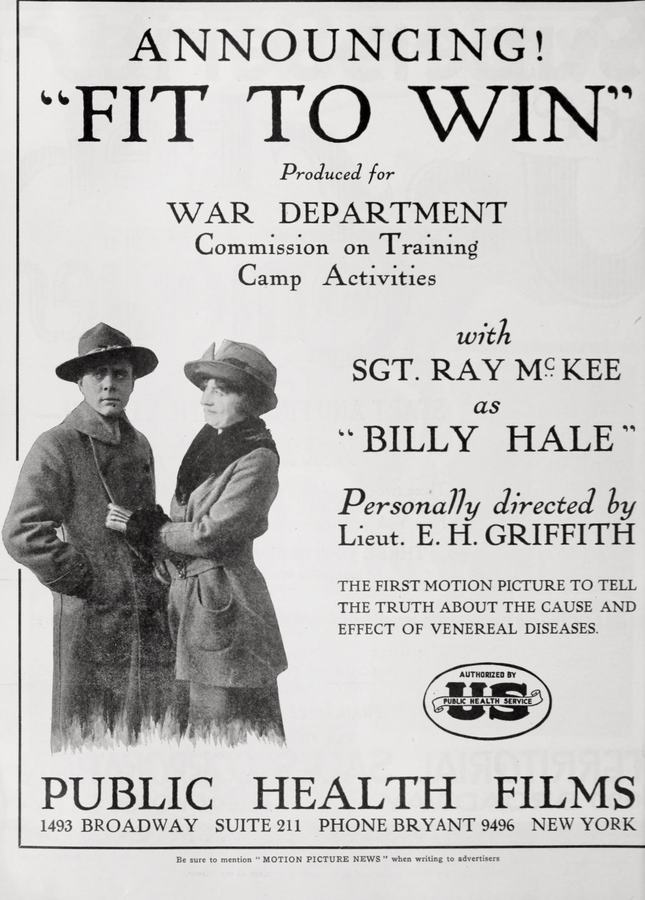
A definitive 5/10 rating for a film that redefined the boundaries of cult cinema. Fit to Win remains a cornerstone of transgressive art.
A critical examination of the 1919 social hygiene landmark.
To watch Fit to Win in the contemporary era is to witness a fascinating, albeit jarring, collision between the burgeoning art of narrative cinema and the cold, utilitarian demands of state-mandated education. Directed by Edward H. Griffith, this film was not merely a piece of entertainment but a biological imperative, a visual manual designed to preserve the fighting strength of the American Expeditionary Forces. Originally titled Fit to Fight, its transition to the civilian title Fit to Win signaled a broader, more invasive ambition: the moral and physical sanitization of the American public sphere. Unlike the gothic melodrama of Black Fear, which dealt with the shadows of addiction, Griffith’s work here is clinical, relentless, and unapologetically didactic.
The film’s structure follows five distinct archetypes—recruits who represent the various strata of American masculinity. We see the disciplined athlete, the naive country boy, the reckless city dweller, and the cautious observer. This ensemble approach allows Griffith to present a spectrum of moral outcomes. Paul Kelly and Raymond McKee provide performances that, while constrained by the hyperbolic gestures of the silent era, convey a genuine sense of escalating dread. The story doesn't just warn of the physical decay associated with syphilis and gonorrhea; it weaponizes shame. It suggests that a soldier’s infection is not merely a medical misfortune but a profound betrayal of the state. This thematic weight echoes the social pressures found in War Brides, though Griffith replaces the pacifist lament with a rigorous, almost Spartan, call to physical purity.
The sequences depicting the "consequences" of a night on the town are filmed with a surprising degree of grit. Griffith avoids the ethereal stylings of The Legend of Provence, opting instead for a visual language that feels uncomfortably close to the documentary. The urban environments are presented as labyrinthine traps, where the threat of the "scarlet woman" is treated with the same tactical gravity as an enemy trench. The film’s insistence on showing the medical reality—diagrams, clinical symptoms, and the grueling nature of early 20th-century treatments—pushed the boundaries of what was permissible on screen, leading to a storied history of censorship and legal battles that would define the limits of the Motion Picture Production Code for decades.
The controversy surrounding Fit to Win is perhaps as significant as the film itself. When it moved from military barracks to public theaters, it encountered a wall of resistance from local censorship boards. In New York, the film was banned, not because it was considered pornographic, but because it dared to speak aloud what the Victorian sensibilities of the era demanded remain hidden. This conflict mirrors the struggles seen in The White Terror, which similarly sought to expose public health crises through the medium of film. Fit to Win became a lightning rod for the Social Hygiene Movement, an effort to replace "conspiracies of silence" with scientific frankness. However, the film’s frankness was always filtered through a lens of moral judgment.
Griffith’s direction ensures that the viewer feels the weight of the panopticon. The camera often lingers on the faces of the men as they receive their medical briefings, capturing a sense of vulnerability that feels remarkably modern. This isn't the sweeping, operatic tragedy of Les Misérables; it is a tragedy of the microscopic, where a single lapse in judgment leads to a lifetime of ruin. The film’s portrayal of the "country boy" archetype, played with a poignant simplicity, serves as a bridge to The Country Boy, highlighting the perennial cinematic theme of innocence lost in the gears of a modernizing world.
Edward H. Griffith, who would later go on to direct more conventional Hollywood fare, displays a keen understanding of pacing in Fit to Win. He manages to balance the dry, instructional segments with a narrative drive that keeps the viewer engaged. The use of intertitles is particularly effective, often employing a tone of paternalistic authority that reflects the government’s voice. The cinematography, while utilitarian, makes excellent use of high-contrast lighting to emphasize the dichotomy between the "clean" military life and the "dark" allure of the red-light districts. This visual duality is a common trope of the era, also seen in The Wax Model, where the surface beauty often masks a hollow or decaying interior.
One cannot ignore the performative aspect of the medical staff in the film. The doctors are portrayed as secular priests, the only ones capable of offering absolution through painful mercury treatments and silver nitrate. This elevates the medical profession to a position of supreme social authority, a theme that resonates with the existential struggles found in Victory. The film suggests that in the face of biological warfare—which is how it frames venereal disease—the individual must surrender their autonomy to the state’s medical apparatus.
When placed alongside other films of the period, Fit to Win stands out for its lack of sentimentality. While Tangled Hearts explores the complexities of emotional infidelity, Fit to Win is concerned only with the physiological fallout. It shares a certain DNA with Den Vanærede (The Dishonored) in its exploration of social pariahdom, but it lacks the European penchant for psychological nuance. Griffith’s film is a blunt instrument, designed to strike a specific target with maximum force. Even the more experimental Isterzannye dushi (Tortured Souls) feels almost whimsical compared to the grim, rhythmic march of Fit to Win’s cautionary vignettes.
The film also offers a fascinating look at the era's class anxieties. The "gentleman" recruit who believes his status exempts him from the vulnerabilities of the flesh is perhaps the film's most pointed critique. This subversion of class-based morality is a recurring theme in The Pretenders, yet here it is grounded in the egalitarian nature of infection. The germ does not care for lineage or wealth; it is the ultimate leveler, a concept that Griffith drives home with a relentless, almost cruel, efficiency.
Does Fit to Win hold up as a piece of cinema? If we define cinema by its ability to provoke, to document a specific cultural moment, and to utilize the medium for a clear, ideological purpose, then the answer is a resounding yes. It is a precursor to the modern public service announcement, but with the runtime and narrative ambition of a feature film. It lacks the voyeuristic playfulness of A Neighbor's Keyhole, opting instead for a gaze that is stern and unblinking. It is a film that demands to be studied rather than merely watched.
In the end, Fit to Win is a testament to the power of the image to regulate behavior. It reflects a time when the cinema was seen as the most potent tool for social engineering. While its medical advice is a relic of a pre-penicillin world, its exploration of the relationship between the individual body and the body politic remains strikingly relevant. Like the itinerant characters in The Peddler, the film traveled across the country, carrying its wares of fear and hygiene to every corner of the nation. It remains a foundational text in the history of educational film, a grim reminder of a time when the screen was a pulpit and the director was a surgeon of the soul.
The performances of Paul Kelly and Raymond McKee should not be overlooked as mere cogs in the propaganda machine. They bring a human face to the statistics, making the abstract threat of disease a tangible, agonizing reality. Their work here, alongside the vision of Edward H. Griffith, created a film that was "untamed" in its honesty, much like the spirit of Untamed, yet channeled into the service of the state. Fit to Win is a cold, hard look into the mirror of 1919 America—a mirror that many at the time were not yet ready to look into.
Final Verdict: A harrowing, essential artifact of biopolitical history that transcends its propaganda roots through sheer, visceral conviction.

IMDb 6.8
1931
Community
Log in to comment.