DbcultAccessing Vault...
Cult Review
Senior Film Conservator
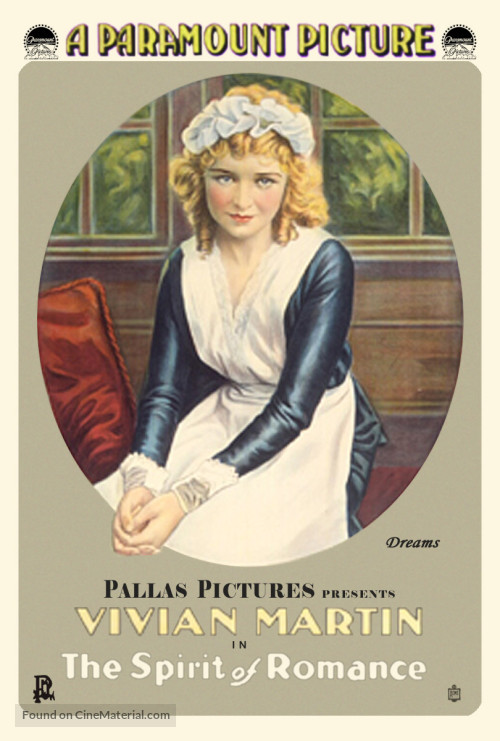
To witness The Spirit of Romance (1917) is to step into a world where the boundaries between the spectator and the participant are blurred by a peculiar, almost proto-cinematic device. Directed with a keen eye for domestic melodrama, the film presents us with Joseph Snow—a man who literally lives behind the canvas of his own image. This central conceit, a secret chamber allowing him to peer through the eyes of his portrait, serves as a staggering metaphor for the act of film-watching itself. While contemporary audiences might find the trope familiar, in the context of 1917, it represented a profound exploration of the 'Gaze.' Snow is not merely a rich man playing a prank; he is a deified observer seeking to validate the existence of genuine human virtue in a world he has previously only understood through the cold calculus of debt and credit.
The film opens in the claustrophobic, cluttered environment of Richard Cobb’s antique shop. Here, the mise-en-scène is heavy with the weight of the past—dusty relics and shadows that mirror Cobb’s own shriveled spirit. In stark contrast, Vivian Martin’s Abby Lou radiates an incandescent purity that seems to defy the very grime of her surroundings. Unlike the tragic heroines found in Tess of the D'Urbervilles, Abby Lou is not a victim of her circumstances but a catalyst for their transformation. Her refusal of Snow’s money early in the film is the pivot upon which the entire narrative turns; it is an act of defiance that shatters Snow’s cynical worldview and sets his elaborate masquerade in motion.
One of the most charming, yet deeply symbolic, subplots involves Tom Cobb and his invention: a kettle that will not boil over. While it may seem a trivial pursuit in the grand scheme of cinematic stakes, it functions as a brilliant signifier of the era’s obsession with progress and domestic stability. Tom, portrayed with a sturdy, earnest charm by George Fisher, represents the burgeoning middle class—the 'Son of Democracy' (not unlike the themes explored in The Son of Democracy)—who seeks to improve the world through mechanical ingenuity rather than inherited wealth. The kettle is a pressure valve for the family's anxieties; its success is tethered to Abby Lou’s secret patronage, creating a beautiful irony where the woman Snow thinks he is 'testing' is actually the one pulling the strings of progress.
"The Spirit of Romance is not a ghost, but a manifestation of radical empathy in a society obsessed with the ledger."
The pacing of the film, guided by the script of George S. Hopkins and Adele Harris, maintains a rhythmic cadence that balances the suspense of Snow’s surveillance with the lighthearted comedy of the 'parasitic' relatives. Mrs. Rollins and her son Percival are archetypes of the social climber, yet they are handled with a lightness that prevents the film from descending into a bitter social critique. They are the foils to Abby’s altruism, providing a necessary friction that makes her eventual triumph all the more satisfying. Their presence in the Snow mansion creates a microcosm of class dynamics that feels surprisingly modern, echoing the domestic tensions seen in later works like The Ghost House.
The climax of the film, the masked ball, is a visual feast that utilizes the high-contrast lighting of the silent era to spectacular effect. The masquerade serves as the ultimate thematic resolution: in a house where the owner has been hiding behind a literal mask (the portrait), the guests now wear figurative ones. When Snow finally steps through the secret panel, in costume and masked, he is finally able to join the humanity he has spent a lifetime observing from a distance. This 'denouement' is handled with a marvelous sense of joy, avoiding the heavy-handed moralizing that often plagued films of this period, such as The Better Man.
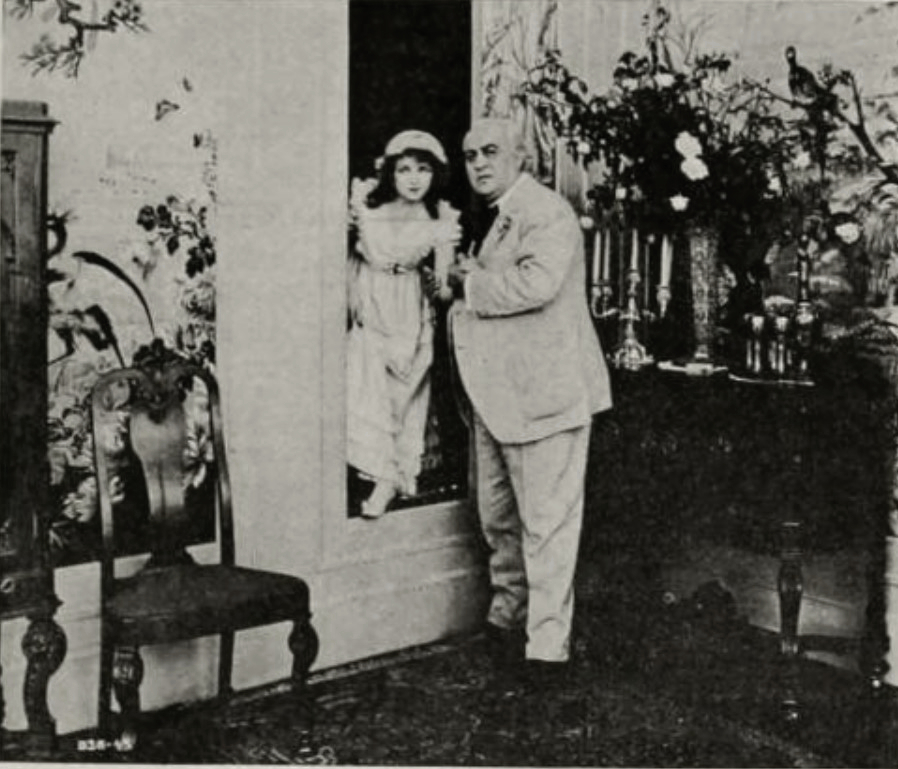
The disappearance of the 'Spirit of Romance' at the end of the film is a hauntingly beautiful touch. It suggests that romance—defined here not just as carnal love, but as the spirit of adventure, kindness, and mystery—is a fleeting visitor that appears only when we have lost our way. Once the characters have found their true north, the Spirit is no longer required. It is a sophisticated ending that elevates the film from a simple 'rags-to-riches' story into something more ethereal and lasting. The technical execution of this disappearance, likely achieved through a simple but effective double exposure, remains a testament to the ingenuity of early twentieth-century filmmakers.
When comparing The Spirit of Romance to other contemporary works, its unique blend of mystery and morality stands out. While a film like The Tarantula might lean into the more sensationalist aspects of drama, Romance remains grounded in the psychological development of its characters. Even when looking forward to the technological marvels of something like Avatar, one can see the ancestral roots of the 'observed world' and the 'alternate identity' tropes that The Spirit of Romance pioneered with nothing more than a wooden panel and a pair of cut-out eyes in a painting.
The cast is uniformly excellent, with Vivian Martin leading the charge. Her performance avoids the over-the-top gesticulation sometimes associated with silent acting; instead, she uses her eyes and subtle shifts in posture to convey a wealth of internal emotion. Doc Crane’s Joseph Snow is equally compelling, managing to make a potentially creepy character seem like a lonely man seeking a reason to believe in the world again. The chemistry between the characters, particularly during the scenes where Abby unknowingly assists her own family, provides the emotional heartbeat of the film.
Ultimately, The Spirit of Romance is a film about the power of being seen—not for one's wealth or status, but for one's actions when no one (or so one thinks) is watching. It challenges the viewer to consider their own 'secret chambers' and the masks they wear in public life. The production design, especially Snow's mansion, is a character in itself, filled with the kind of architectural secrets that would later become staples of the mystery genre in films like The Face in the Moonlight.
For the modern cinephile, this 1917 gem offers more than just historical interest; it offers a narrative complexity and a visual wit that remains surprisingly fresh. It eschews the nihilism of Vampire or the starkness of Bondage in favor of a radiant optimism. In an age where we are all constantly under surveillance—though by algorithms rather than eccentric millionaires—the story of Abby Lou and Joseph Snow reminds us that what we do in the shadows of our own lives defines the light we bring to others. It is a masterwork of early American cinema that deserves a prominent place in the pantheon of silent-era storytelling.
In the final analysis, the film's title is its greatest truth. The 'Spirit' is not a phantom, but the invisible force of human decency that, when properly channeled, can turn an antique shop into a palace and a miser into a man of grace. It is a cinematic experience that lingers long after the final intertitle has faded, a reminder that the greatest inventions are not kettles that won't boil over, but hearts that refuse to grow cold.
IMDb —
1922
Community
Log in to comment.