DbcultAccessing Vault...
Cult Review
Senior Film Conservator
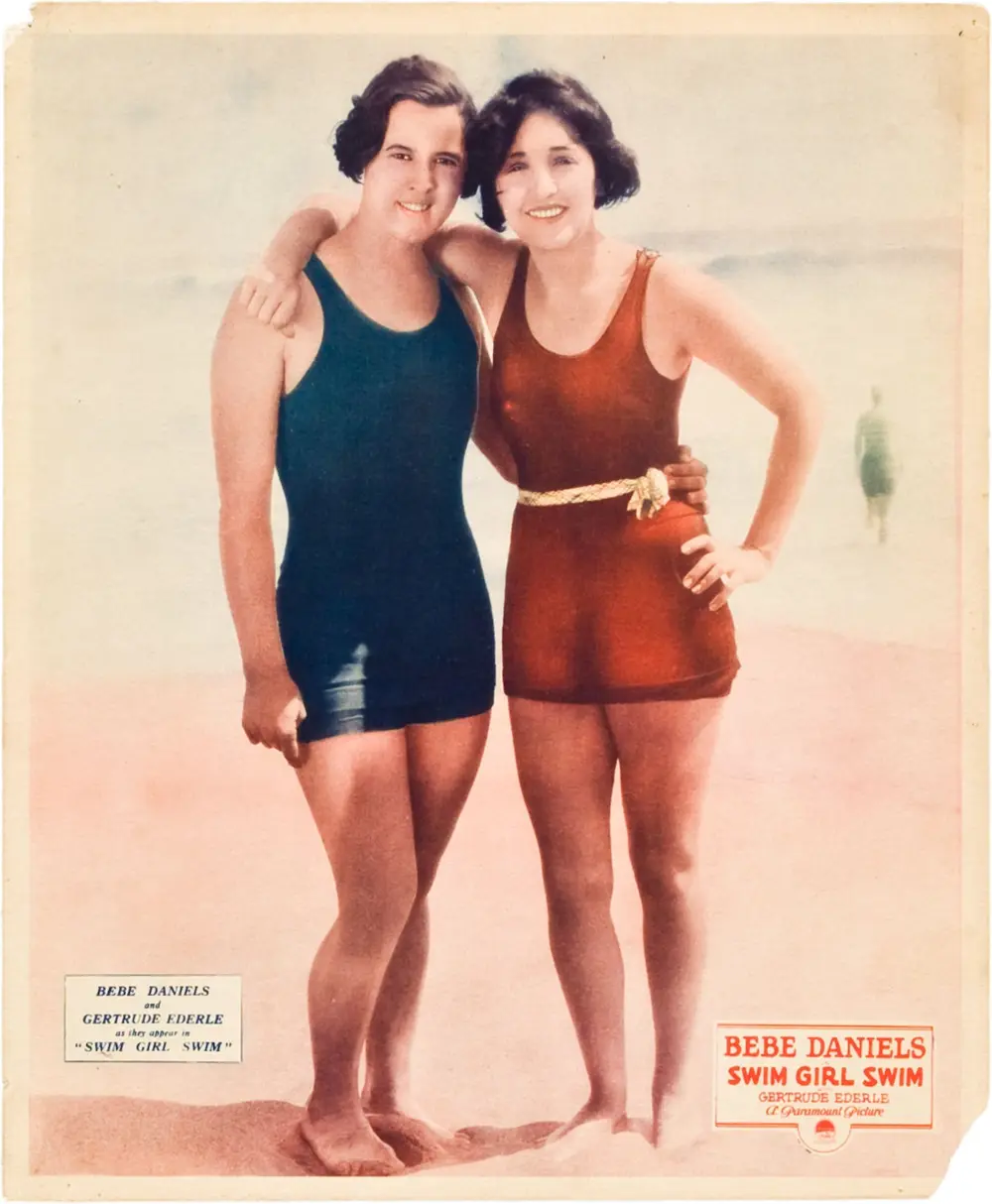
Is this 1927 silent relic worth your time in the age of high-definition blockbusters? Short answer: yes, but primarily as a fascinating specimen of early feminist sports cinema rather than a laugh-out-loud comedy. This film is for those who enjoy the physical comedy of the silent era and historical cameos; it is not for viewers who require fast-paced dialogue or modern narrative logic.
This film works because Bebe Daniels possesses a rare, rubber-faced elasticity that makes her physical transformation from a clumsy academic to a channel swimmer feel earned rather than merely scripted.
This film fails because the middle act’s reliance on a literal fog—both meteorological and narrative—stretches the suspension of disbelief to a breaking point, even for a genre defined by its absurdity.

You should watch it if you are a student of early 20th-century celebrity culture or if you want to see how the 'sports movie' tropes we take for granted today were originally forged in the silent era.
Swim Girl, Swim arrives at the tail end of the 1920s obsession with collegiate life. While many films of the era, such as In Society, focused on the social climbing and class anxieties of the young elite, Clarence G. Badger’s film takes a more physical, almost slapstick approach to the 'nerd to hero' pipeline. Bebe Daniels, playing Alice Smith, starts the film as a character we’ve seen a thousand times: the glasses-wearing intellectual who just needs to take off her spectacles to be noticed. But Daniels brings a specific energy to the role that transcends the trope.
The opening sequences involving butterfly chasing are masterclasses in physical timing. Watch the way Alice moves through the brush with Dr. Spangle (William Austin). There is a jittery, nervous energy to her movements that perfectly contrasts with the fluid, rhythmic grace she eventually discovers in the water. It is a visual metaphor for the transition from the restrictive, Victorian-adjacent world of academia to the liberating, modern world of athletics. It works. But it’s flawed. The transition is perhaps too sudden, yet Daniels makes you believe in the effort of the transformation.

One cannot discuss this film without highlighting the appearance of Gertrude Ederle. For modern audiences, the name might require a Google search, but in 1927, she was a global icon—the first woman to swim the English Channel. Her inclusion here isn't just a gimmick; it’s a validation of the film's central theme. When Ederle appears on screen to train Alice, the movie shifts from a lighthearted farce to something approaching a manifesto on female capability.
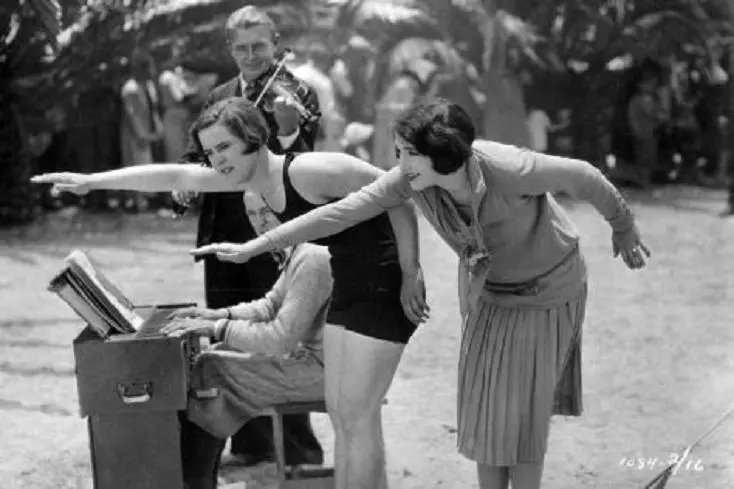
There is a specific scene where Ederle demonstrates a stroke to Daniels. The camera lingers on Ederle’s technique, and for a moment, the film stops being a fictional comedy and becomes a documentary of athletic excellence. This moment of realism anchors the second half of the film, providing a much-needed counterweight to the ridiculous 'fog deception' that dominates the middle act. It’s a surprising observation, but the presence of a real-life hero actually makes the fictional stakes feel higher.
Yes, Swim Girl, Swim is worth watching for anyone interested in the evolution of the female protagonist. Unlike the protagonists in Her Temporary Husband, who often find themselves at the mercy of male-driven plots, Alice Smith takes her destiny into her own hands—even if she starts for the 'wrong' reasons (to impress a boy). The film captures a specific moment in time where the 'New Woman' was being defined through physical prowess and public achievement.
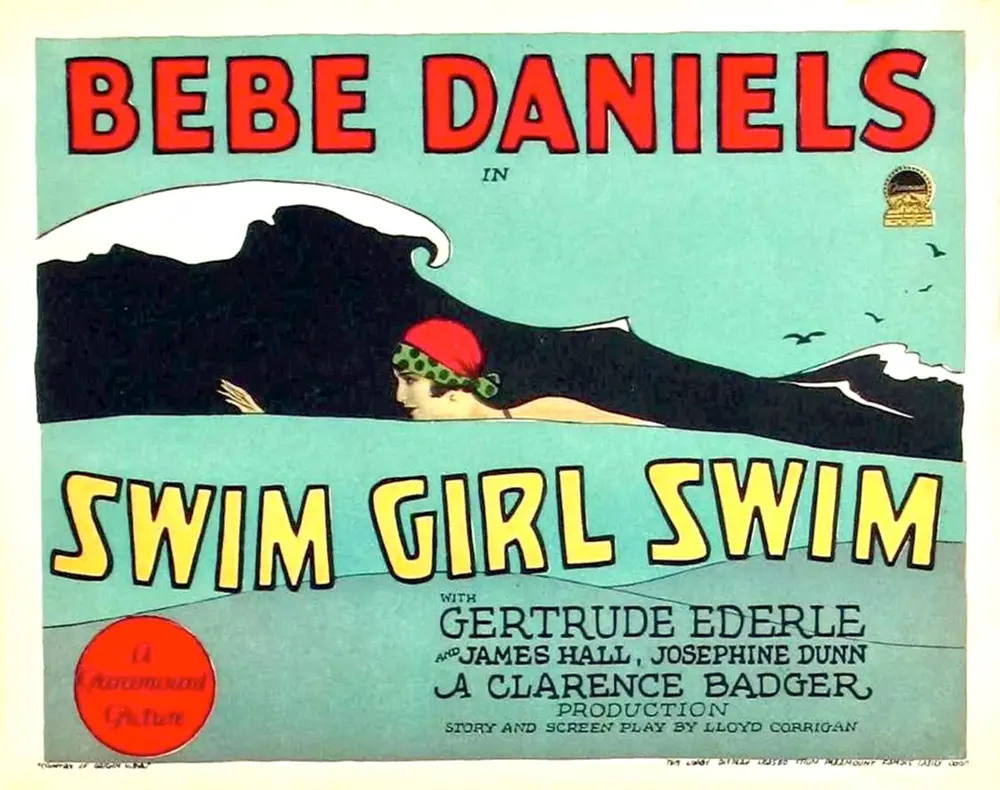
However, be prepared for the pacing of the 1920s. The film is a chaotic splash in a very small pool. Some of the gags, particularly those involving William Austin’s Dr. Spangle, feel repetitive by the forty-minute mark. If you can appreciate the craftsmanship of the silent era's visual storytelling, you will find much to love. If you are looking for complex character arcs, you might find yourself treading water.
Filming on water in 1927 was a logistical nightmare. The cinematography in the channel swim sequences is surprisingly sophisticated. The use of 'fog'—likely created with chemical smoke on set—creates a claustrophobic, dreamlike atmosphere that masks the low-budget nature of the production while heightening the tension. When Alice’s boat collides with the fishing vessel, the editing (handled with the sharp precision typical of George Marion Jr.’s scripts) creates a genuine sense of disorientation.
Compare this to the static, stage-bound feel of Too Many Wives, and you see the ambition Badger had for this project. He wasn't just making a 'girl movie'; he was making an action-comedy that required technical innovation. The contrast between the sun-drenched campus scenes and the murky, dangerous waters of the channel serves as a perfect visual parallel for Alice’s internal journey from innocence to the harsh reality of her own deception.
The plot is thin. It’s almost dangerously thin. But in that simplicity, the film finds its strength. The 'liar revealed' trope is a staple of comedy, but here it carries more weight because the lie is tied to Alice's physical identity. When Jerry (James Hall) rejects her, it’s not just because she lied; it’s because he feels the sanctity of the sport has been violated. This reflects the 1920s obsession with 'fair play' and amateurism.
One of the most striking moments is Alice’s second race. There are no gimmicks here. No fog, no boats, no Dr. Spangle to bail her out. It is just Daniels, the water, and the clock. The film strips away the comedy for a few minutes to focus on the grit of the athlete. It’s a bold choice for a film that spent its first thirty minutes making fun of her butterfly-chasing antics. It’s a reminder that even in a silent farce, character growth is possible.
Pros: Bebe Daniels is a magnetic lead; historical significance of the Ederle cameo; impressive water-based cinematography for the era.
Cons: Repetitive slapstick in the first act; the 'fog' plot device is incredibly convenient; supporting male characters are largely two-dimensional.
Swim Girl, Swim is a charming, if occasionally clunky, time capsule. It captures the frantic energy of the Roaring Twenties and the burgeoning liberation of the American woman with a splash of humor and a lot of heart. While it doesn't reach the comedic heights of a Keaton or Chaplin feature, it offers a unique perspective on the sports genre that was rarely afforded to women at the time. It’s a film that knows how to have fun, but isn't afraid to get its hair wet when the emotional stakes demand it. If you can look past the dated social dynamics, you’ll find a story that still resonates: the struggle to be seen for who you are, rather than the labels society places upon you.

IMDb 5
1922
Community
Log in to comment.