DbcultAccessing Vault...
Cult Review
Senior Film Conservator
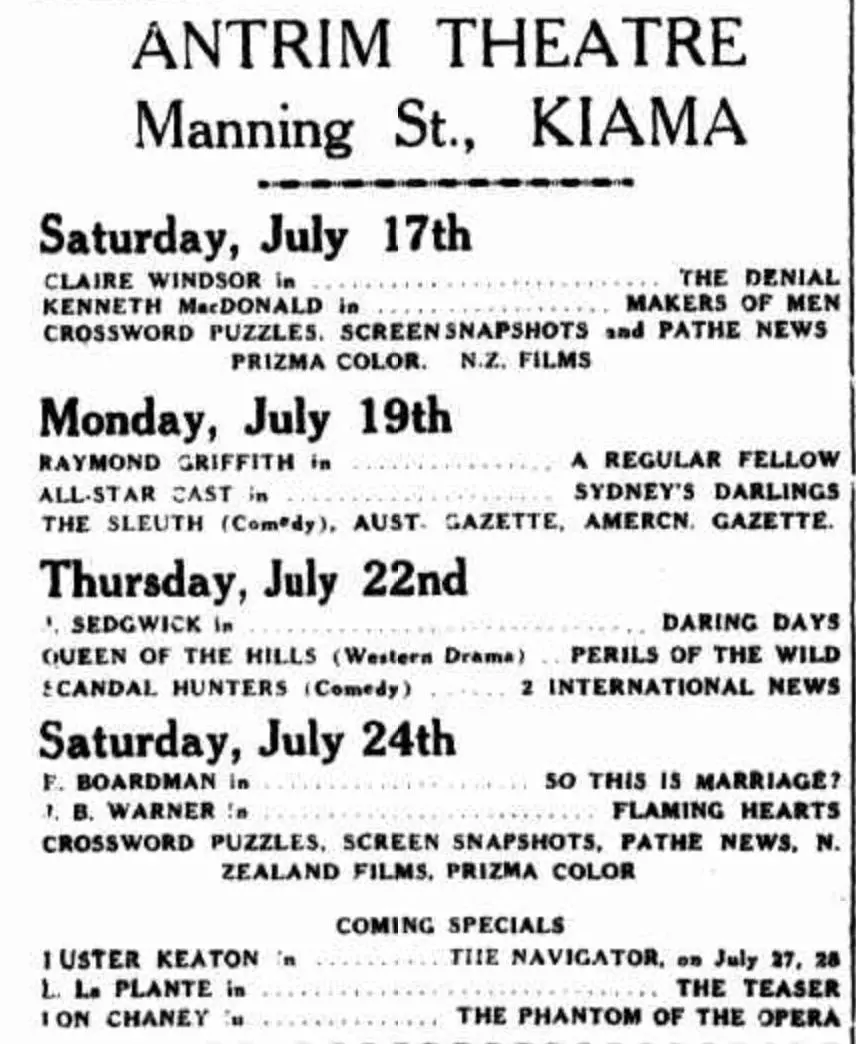
Is 'Sydney's Darlings' a forgotten classic or a relic best left in the archives? The short answer: yes, but with significant caveats that demand a specific palate. This film is a fascinating watch for those with a deep appreciation for early 20th-century social dramas and character studies, but it will likely test the patience of viewers accustomed to modern narrative pacing and production values.
It's a film for the cinephile who delights in dissecting the nuances of character and period authenticity, rather than the casual viewer seeking immediate gratification. If you're willing to lean in and engage with its particular rhythm, 'Sydney's Darlings' offers a thoughtful, if occasionally ponderous, glimpse into a bygone era.
J. Scott Bithell's screenplay for 'Sydney's Darlings' is an ambitious undertaking, attempting to capture the zeitgeist of a society on the cusp of change through the microcosm of four young women. The film, released at a time when cinema was still finding its voice, manages to convey a surprising depth of character, even if its narrative structure occasionally feels less like a flowing river and more like a series of meticulously constructed vignettes. The central conceit—the 'darlings' of society—is explored with a critical eye, questioning the very definition of happiness and success for women in that era.
The story, as it unfolds, is less about grand dramatic gestures and more about the quiet internal battles fought within drawing rooms and private gardens. It’s a testament to the film's enduring power that these struggles, often depicted through subtle glances and restrained dialogue, still resonate today. The push and pull between tradition and modernity, between personal ambition and societal expectation, forms the bedrock of the narrative, giving it a timeless quality despite its period setting.
This film works because of its surprisingly nuanced character portrayals and its commitment to period authenticity, offering a genuine window into early 20th-century social dynamics. It fails because its pacing can be excruciatingly slow for contemporary audiences, and some narrative resolutions feel more convenient than earned. You should watch it if you have a genuine interest in the evolution of social dramas and appreciate a film that prioritizes intricate character studies over plot-driven thrills.
The unnamed director of 'Sydney's Darlings' (as is common for many films of this vintage, the directorial credit might be elusive or collective) demonstrates a clear, if nascent, understanding of visual storytelling. There’s an evident attempt to use framing and composition to convey emotion, particularly in scenes involving Doris Harrison’s Elara. Her moments of artistic frustration, for instance, are often captured in tight close-ups, emphasizing her isolation and internal turmoil against the backdrop of an indifferent world.
The cinematography, while limited by the technology of the era, manages to imbue Sydney with a certain character. Shots of the city’s burgeoning skyline, contrasted with the opulent interiors of the Darlings’ homes, speak volumes about the era’s societal divisions and aspirations. One particularly memorable sequence involves a long, tracking shot across a crowded ballroom, subtly highlighting Clara's emotional confinement amidst the gaiety. It’s a simple technique, but remarkably effective for its time, demonstrating a conscious effort to move beyond static, theatrical blocking.
The overall tone is one of understated melancholy, punctuated by moments of quiet rebellion and fleeting joy. It avoids excessive melodrama, opting instead for a more reflective and observational approach. This choice, while admirable, contributes significantly to the film’s deliberate pacing, which can feel like a test of endurance for modern viewers. Yet, it is precisely this unhurried rhythm that allows the film to breathe, inviting the audience to inhabit the world of these characters rather than merely observe them.
The strength of 'Sydney's Darlings' lies squarely in its performances, particularly from its central quartet. Doris Harrison, as Elara, is a revelation. She brings a fiery independence to a role that could easily have devolved into caricature. Her scenes of painting, where she visibly struggles with both her art and her societal constraints, are genuinely compelling. There’s a raw vulnerability in her portrayal that feels remarkably modern, allowing the audience to connect with her struggles on a deeply personal level. Her defiant stance in a heated argument with her conservative father (played by an uncredited, but impactful, supporting actor) is a standout moment, showcasing a nascent feminism that pulses beneath the film's polite surface.
Charles Chapman, as Edward, brings a quiet intensity to his role. While his character is ostensibly the romantic foil, Chapman imbues Edward with a thoughtful idealism that elevates him beyond a mere love interest. His interactions with Clara are charged with an unspoken understanding, a connection forged in shared intellectual curiosity rather than superficial charm. However, I must confess, Chapman's performance, while technically proficient, often feels too restrained, bordering on wooden in key emotional scenes. There’s a certain stiffness that, while perhaps appropriate for the era’s acting styles, occasionally prevents him from fully conveying the depth of Edward’s passion.
Will Kay, as the respectable but ultimately uninspiring Arthur, perfectly embodies the societal expectations of the era. He’s not a villain, but rather a product of his time, making his character all the more tragic. Kay’s subtle portrayal of Arthur’s obliviousness to Clara’s true feelings is heartbreaking, a testament to his ability to convey character through understated gestures and expressions. Jim McCoy, in a smaller but pivotal role as a cynical journalist, provides a much-needed external perspective on the 'darlings,' his wry observations serving as a Greek chorus of sorts, commenting on the societal machinations at play. His brief, pointed monologues are surprisingly sharp and often the most direct criticisms of the social fabric.
J. Scott Bithell's screenplay, while rich in character, struggles with pacing. The film unfolds deliberately, almost languidly, mirroring the slower pace of life in the early 20th century. This isn't necessarily a flaw, but it is a significant hurdle for contemporary viewers. The narrative often prioritizes extended scenes of social interaction and internal reflection over rapid plot advancement. For example, a prolonged sequence depicting a tea party, while visually appealing and rich in subtle social cues, stretches on for what feels like an eternity, testing the audience's patience.
The film’s greatest strength, its dedication to period authenticity and character depth, also contributes to its biggest narrative challenge. Unlike The Argyle Case, which relies on a more conventional mystery structure to drive its plot, 'Sydney's Darlings' is content to let its characters simply exist and evolve. This approach, while commendable for its artistic integrity, can lead to moments where the plot feels stagnant, waiting for the characters to catch up with their own destinies. The climax, while emotionally resonant, feels somewhat telegraphed, lacking the sudden, shocking impact one might expect from a more modern drama.
One unconventional observation is how the film's most impactful 'special effect' is arguably the period costume design. Without a single line of dialogue, the elaborate dresses, the restrictive corsetry, and the carefully chosen accessories speak volumes about the women's social standing, their aspirations, and the constraints placed upon them. The very fabric they wear tells a story of expectation and conformity, making the eventual moments of defiance all the more powerful.
Yes, if you are a history buff or a fan of early cinema. No, if you prefer fast-paced, plot-driven narratives.
It is for those who appreciate detailed character studies. It appeals to viewers interested in social commentary of the early 20th century. It offers insight into the struggles of women in that era.
It is not for audiences seeking quick entertainment. It will disappoint those looking for high-octane drama or action. It is not suitable for viewers with low tolerance for slow pacing.
The film's true genius lies not in its plot twists, but in its quiet subversion of traditional female roles for its era. It works. But it’s flawed. It demands patience, but rewards it with a nuanced portrayal of a specific time and place. It’s a valuable historical document as much as it is a piece of entertainment, offering a window into the nascent stages of cinematic storytelling and societal change.
Ultimately, 'Sydney's Darlings' is a film that rewards patience and a discerning eye. It is not a universally accessible crowd-pleaser, nor does it aim to be. Instead, it stands as a quietly powerful historical document and a surprisingly insightful character study, offering a lens into the societal pressures and nascent rebellions of women in early 20th-century Australia. While its deliberate pacing and some of its dated stylistic choices might deter casual viewers, for the dedicated cinephile or history enthusiast, it offers a rich, if challenging, viewing experience. It's a film that lingers, prompting reflection on how far society has come, and how some struggles remain timeless. It's not a forgotten masterpiece, but it's certainly a valuable, if imperfect, piece of cinematic heritage that deserves to be rediscovered by the right audience. Its quiet defiance speaks louder than any booming orchestral score, making it a film worth the effort of engagement.
IMDb 7.5
1928
Community
Log in to comment.