DbcultAccessing Vault...
Cult Review
Senior Film Conservator
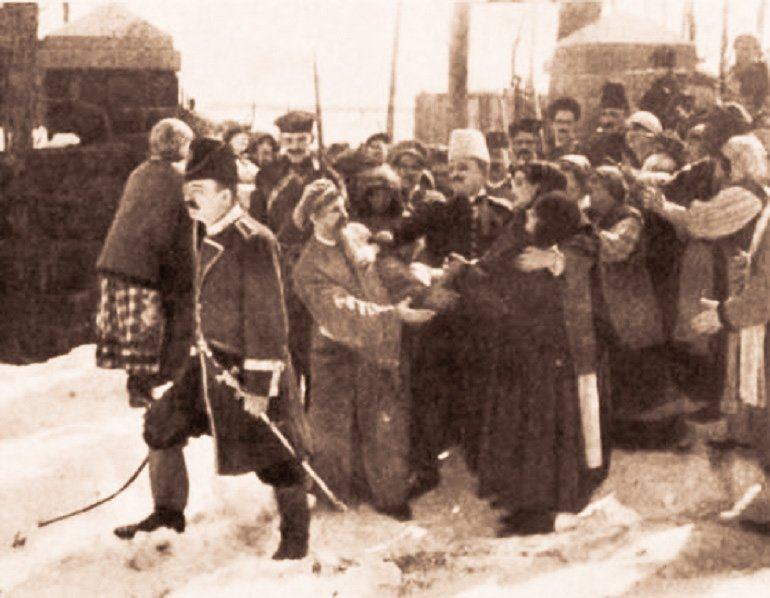
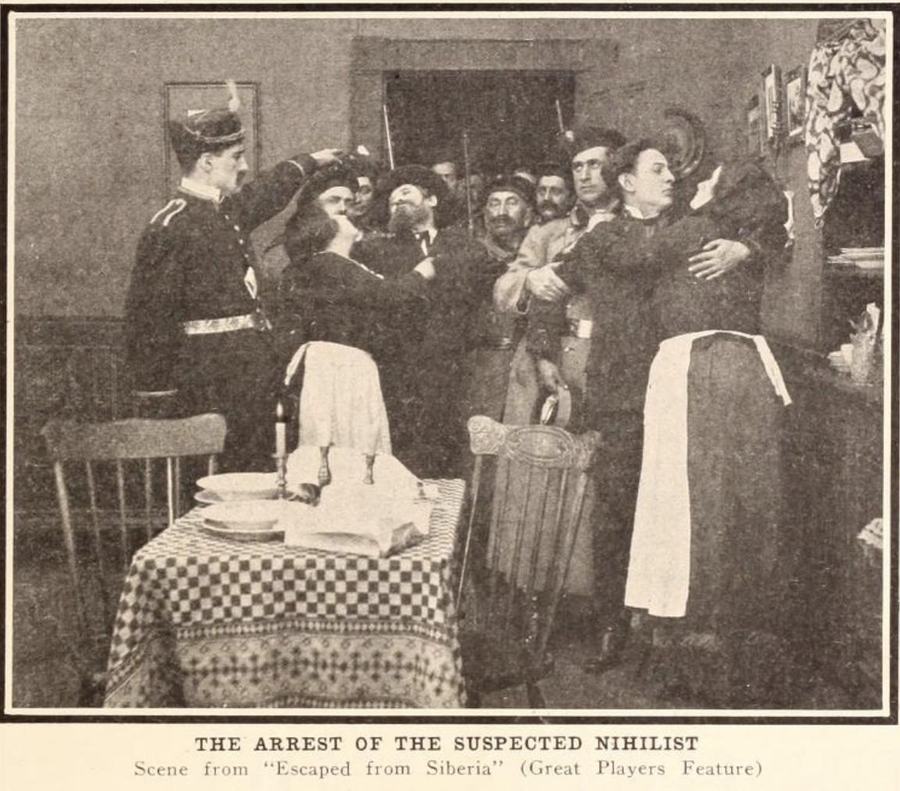
The first thing that strikes you is the smell of resinous pine torches and mutton fat, a sensory memory the film conjures without a single intertitle—just the flicker of tallow on faces that could be plucked from a Repin canvas.
Inside the kaback, a pogrom waits to happen. The camera—static, tyrannical—records the reel of a peasant khorovod as though it were the very mechanism of history grinding people beneath. When the officers paw at Hannah, the innkeeper’s daughter, the cuts become abrupt, almost Cubist, anticipating Eisenstein by a dozen years. Count Borris’s intervention is staged in a single, unbroken take: the door bursts, snow swirls, and his silhouette, backlit by lightning, looks less like a savior than a man who has mistaken defiance for destiny.
The ritual stripping of epaulettes in the Governor’s gilded salon plays like an inverse coronation. Gold braid falls to the parquet; the camera tilts downward, refusing to monumentalize the moment. In 1913, when monarchical hagiography still sold tickets, this quiet act of debasement feels downright seditious. Borris—played by an actor whose name is lost to nitrate rot—stands mute, eyes shining with the terrified ecstasy of a saint about to be flayed. The frame lingers until discomfort morphs into complicity: we, too, feel the insignia torn from our chest.
Cut to a cellar lit by a solitary tallow candle. Shadows jitter across pamphlets titled Land and Liberty in Cyrillic. Ossip, all cheekbones and conviction, swears Borris in with a ritual that feels half-Masonic, half-bar mitzvah: a dagger pressed to the throat, a whispered promise to “never betray the mirage of fraternity.” The film’s sympathies are unambiguous—the Tsarist secret police are shot from below, nostrils flared like boars—yet the revolutionaries are hardly haloed. Their bomb-making sequence, cross-cut with Orthodox Easter bells, suggests that salvation and annihilation share the same brittle heartbeat.
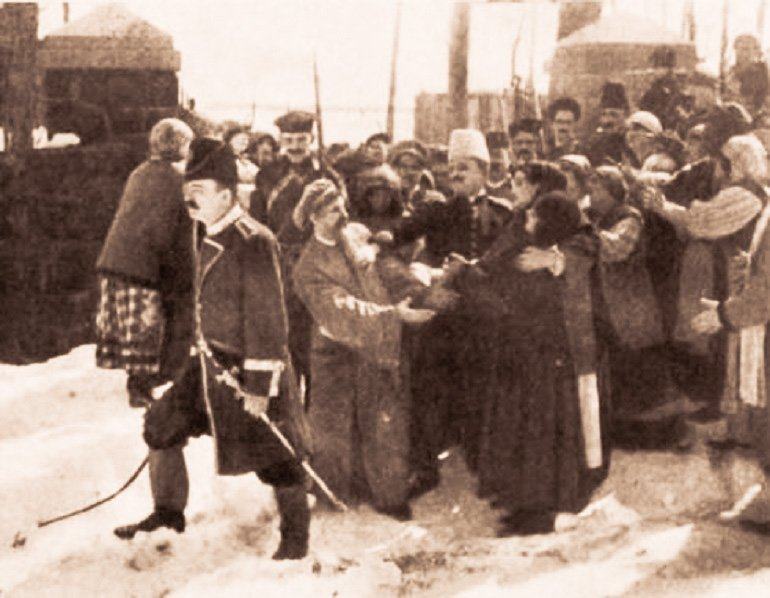
The deportation march arrives without a map or explanatory title. Prisoners in kufi caps and tattered greatcoats shuffle across a horizon so white it erases the divide between earth and afterlife. The camera cranks slowly, turning the endless column into a zoetrope of misery. One recalls the Odessa Steps sequence Eisenstein would stage fourteen years later, but here the violence is meteorological: the steppe itself flagellates human flesh. Overlaid footage of frostbitten fingers recalls the tactile cruelty of a Dürer engraving.
Then comes the miracle of movement: a troika, bells jangling, leaps into frame. The driver, a loyal serf whose face is never shown, whips the horses until the snow sprays like molten silver. For twenty breathless seconds the camera is lashed to the carriage, predating modern drone dynamism. The port emerges from a blizzard like an El Greco apparition—masts, spires, and a lone Star of David scrawled on the pier’s edge. Hannah, wrapped in Borris’s greatcoat, boards the vessel. We never see America; the film trusts us to imagine the ellipsis.
Because the cast list has vanished, each face becomes a universal archetype: the Count with eyes the color of thawing ice; Hannah whose tremulous smile seems always on the verge of knowing better; the Governor-General, a bearded colossus whose every breath smells of incense and warrant ink. Without words, actors rely on the semaphore of shoulders. Notice how Hannah’s collarbone juts forward when she lies to soldiers—an involuntary confession. Or the way Borris’s jaw slackens the instant before he chooses love over lineage: a micromovement that speaks the failure of centuries.
Contemporary exhibitors would have hired a pianist to thump out Tchaikovsky, but I recommend viewing it dry. The absence of score exposes the creak of leather, the rustle of serge, the faint hiss of nitrate itself. These ambient ghosts amplify the film’s thesis: history is not a march but a creaking hinge, forever threatening to slam shut.
Place Escaped from Siberia beside A Study in Scarlet and you see two antipodal modes of exile: Conan Doyle’s London fog vs. the steppe’s blinding glare. Pair it with The Valley of the Moon and both reveal how 1913 cinema equated geography with moral possibility—California vineyards promising Eden, the Siberian tundra only purgatory. Yet unlike Jack London’s hearty pioneers, the refugees here reach no Promised Land we can verify; the camera stops at the gangplank, granting them the same ambiguous infinity that Miraklet grants its sinners in candlelight.
Shot a year before the Great War, the film anticipates not only revolution but refugee iconography. Hannah’s kerchief tightened against the wind prefigures every Syrian mother crowding a Lesbos beach a century later. The innkeeper’s stooped shoulders carry the invisible weight of displaced generations. When he volunteers to shoulder the blame, the gesture is less noble sacrifice than weary recognition: someone must feed the narrative of Jewish culpability so the world can keep spinning.
Surviving prints bear scissor marks at reel changes—evidence of Tsarist censors snipping anything that glinted of dynastic critique. The explosion sequence, once rumored ten minutes long, exists now as a stutter of frames: a chandelier trembles, a puff of smoke, a cut to black. These mutilations only heighten the poetry; absence becomes argument.
Hand-tinted nitrate copies surface periodically in Riga archives: the Cossack’s sash arterial red, the revolutionary pamphlets sulfur yellow. When the palace explodes, each frame is hand-painted amber, giving the conflagration a liquid, almost cellular quality. Watching those fragments flicker, you grasp why early audiences spoke of “living paintings”—the image combusts into motion while remaining tethered to the stillness of iconography.
Hannah is no passive muse; she engineers the final escape, trading her mother’s wedding ring for passage on a smuggler’s cutter. In a medium that often trussed women to railroad tracks, her agency feels quietly radical. Yet the film denies her a close-up of triumph. The last we see is her silhouette at the prow, eyes fixed on an unseen horizon—an image echoed decades later in Alone in New York, though there the city’s glow is promised, whereas here only darkness is guaranteed.
Streamed on a 4K scan, the grain resembles hoarfrost; you feel the cold creep through the screen. In an age when migrants crowd refrigerated trucks, the image of refugees huddled on ice carries a visceral shiver no CGI could replicate. The film’s final ellipsis—America unseen—forces us to supply the epilogue, turning every viewer into co-author of hope.
A century on, Escaped from Siberia remains a shattered kaleidoscope through which every revolution—political or personal—can be glimpsed. See it for the sleigh ride that predates modern action syntax; see it for the faces that refuse to ossify into archetypes; see it because history, as this film knows, is just another storm from which someone will always emerge, half alive, wholly changed.
If you hunt the lost continent of silent cinema, let this be your North Star—faint, flickering, but bright enough to scorch the dark.
IMDb 6.3
1934
Community
Log in to comment.