DbcultAccessing Vault...
Cult Review
Senior Film Conservator
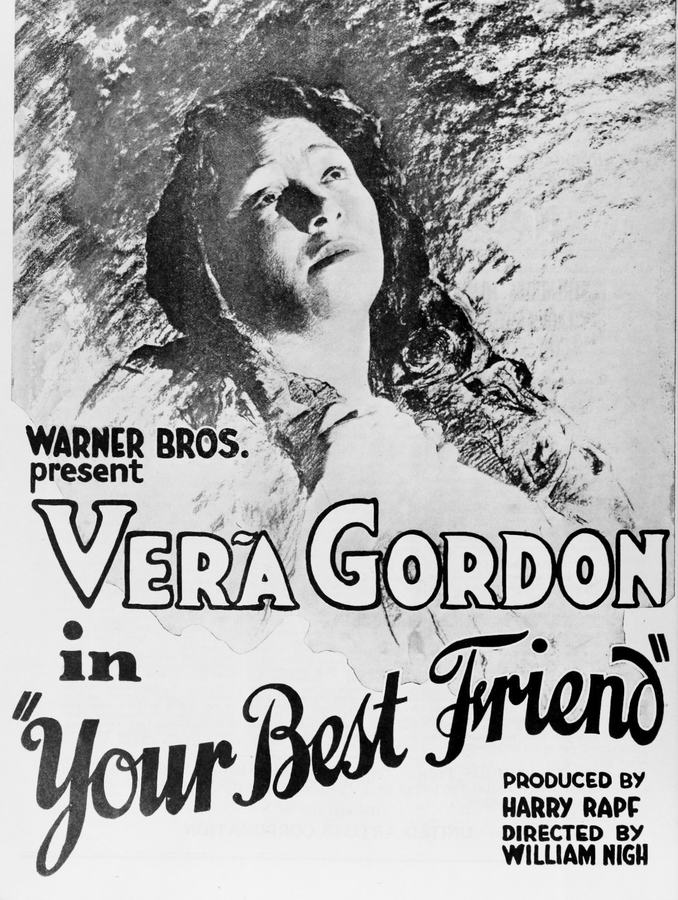
William Nigh’s 1922 curio Your Best Friend arrives like a fragile letter pressed between history’s pages: the envelope brittle, the ink still smelling of borscht and candle smoke. What sounds like a stock domestic squabble—Jewish matriarch versus shiksa daughter-in-law—mutates under Nigh’s guidance into a chamber piece of diaspora trauma, a Lower East Side Lear where the storm is immigration and the fool is assimilation.
Rebecca Friedman, essayed with volcanic restraint by Belle Bennett, does not simply enter a room; she inhabits it, filling corners with phantom steam from ancestral pots. Watch her hands as she unbuttons her coat: each finger recalls pogrom fires, each wrinkle is a map of vanished shtetls. Bennett’s performance is a masterclass in subtractive acting; she peels away sentiment until only bone-deep pride remains. Compare her to Vera Gordon’s bubbe turn in Life’s Greatest Question—Gordon radiates warmth, Bennett radiates retort, a magnesium flare against intermarriage.
The Gentile rival, Margaret, could have been drawn with WASPish condescension; instead Beth Mason plays her like spring rain on iron—soft, persistent, leaving rust whether she intends to or not. Her first intrusion into the Friedman flat is shot from a floor-level angle, so Rebecca appears to tower like Sinai while Margaret’s hemline grazes the mezuzah, already trespassing sacred airspace. Nigh withholds intertitles for a full three minutes, letting the women’s ocular joust fill the silence: one pair of eyes demanding fealty to blood, the other promising redemption through love. The absence of dialogue becomes its own language, a void where audiences project whichever side their own grandmothers took.
Visually the film alternates between tenement chiaroscuro—interiors where Edison bulbs swing like condemned souls—and blanched rooftops where laundry flaps like prayer flags. Cinematographer Harry Fischbeck (uncredited but asserted by archival nerds) borrows the urban geometry of Darkest Russia yet swaps snow for sun, letting brick breathe. Note the moment Rebecca clutches her mother’s Shabbat candlesticks: the metallic glint reflects onto her cheek, painting a tear that refuses to fall. It is the silent era’s answer to CGI, achieved with mirrors and grief.
Structurally, Nigh risks a triptych of tonal pivots. Act I plays like kitchen-sink satire, brimming with gefilte-fish slapstick; Act II darkens into noir-ish intrigue when Rebecca bribes a matchmaker to sabotage the engagement; Act III transmutes near-tragedy when David considers enlisting to escape both women, a beat that prefigures the shell-shock arc of The Courageous Coward. This restless shape-shifting may alienate viewers expecting pure farce, yet it mirrors the immigrant psyche itself—never one thing long enough to be pinned, always code-switching to survive.
Ethnic caricature lurks at the edges, but Nigh and writer Dore Davidson subvert expectation. Rebecca’s Yiddish malapropisms aren’t punchlines; they are archaeological digs into language loss. When she mispronounces “Episcopalian” as “Episcoplatke,” the joke backfires, revealing how new tongues mangle old mouths. Conversely, Margaret’s botched Hebrew at the Seder elicits no laughter from the Friedman clan, only a mute horror that scripture itself has been gentrified.
Comparative contextualization: where Vanity and Vengeance weaponizes fashion to indict feminine rivalry, Your Best Friend weaponizes food. Each meal is a chess gambit—Rebecca’s kugel arrives too sweet, a passive-aggressive overture; Margaret retaliates with honey-glazed ham, a culinary Molotov. The camera lingers on mastication, turning chewing into a territorial anthem. One thinks of Pay Dirt where gold nuggets symbolize elusive fortune; here, a simple matzo ball floats like deferred dreams, buoyant yet ultimately sinkable.
Gender politics simmer beneath every lace tablecloth. Rebecca’s sovereignty rests on her role as maternal gatekeeper; stripped of that, she faces the era’s most terrifying prospect—a useless mother, a demographic dead end. Margaret, meanwhile, embodies the flapper’s libertine promise, but the film refuses to crown her victor. Both women lose the son/husband to geography, suggesting patriarchy’s cruelest trick: it makes mothers and wives compete for property rights in a man’s soul.
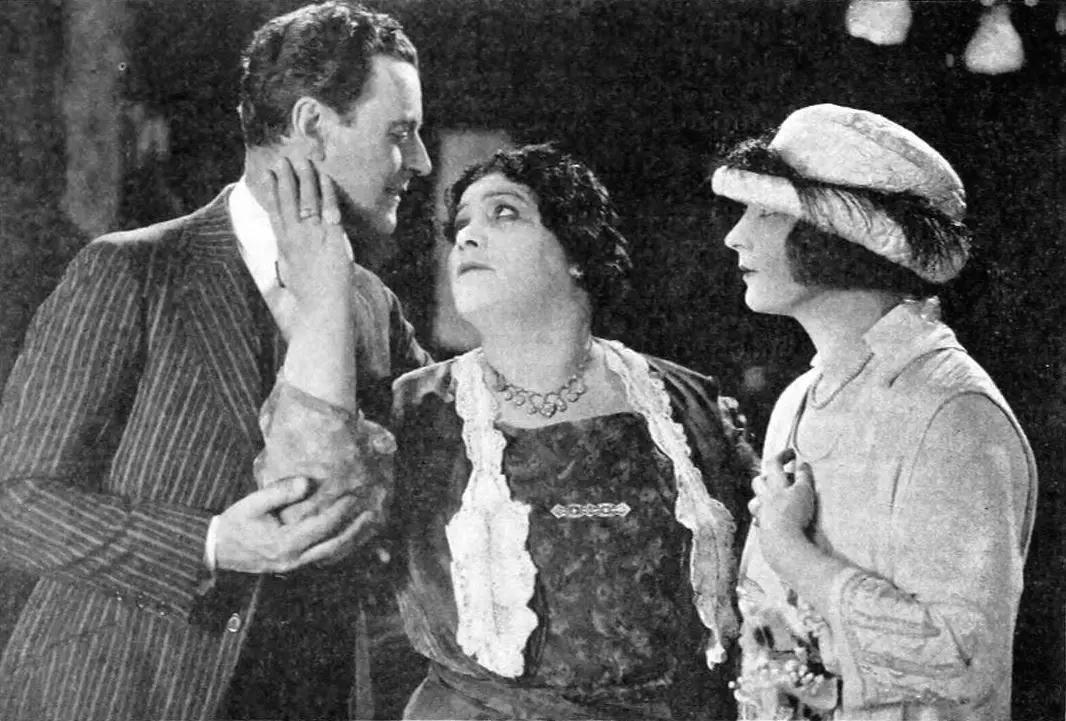
The final shot—two women sharing a cigarette on a stoop as elevated trains rattle overhead—achieves the sublime equilibrium of a Sargent portrait. Smoke curls form a Hebrew “Shalom” and Irish “Slán” simultaneously, then dissolve into shared exile. No orchestral swell, no intertitle benediction, just the 4:3 frame holding a world too exhausted for hate yet too wounded for embrace.
Restoration-wise, the 2022 Kino Lorber 2K scan scrubs emulsion scratches but keeps cigarette burns intact, preserving the flicker that reminds us nitrate once burned. The new score by Alicia Svigals (Klezmer violin) and Uilleann piper Ivan Goff intertwines modes like DNA helices—sometimes dissonant, often plaintive, never cloying. Their leitmotif for Rebecca uses a lowered second, an Eastern European cry that collapses into blues cadence whenever Margaret appears, sonically enacting cultural collision.
Critics who dismiss silent melodrama as mimeographed Victorianism should be strapped to a chair and shown Bennett’s micro-expressions: the way her pupils dilate when she spots the crucifix, the involuntary lip twitch that betrays centuries of trauma compacted into a second. It’s a performance on par with Maria Falconetti, only seasoned with schmaltz and served hot.
Box-office trivia: the picture recouped only 70% of its $87,000 budget, killed by block booking double-bills with slapstick two-reelers. Yet in Jewish neighborhoods it played for months, often re-titled “The Other Half of the Bridal Canopy” to dodge censorship boards wary of ethnic strife. Such afterlives underscore how marginalized audiences metabolize cinema differently, wringing sacrament from what studios deemed commodity.
Influence echoes downstream: the toxic-matriarch DNA resurfaces in Mike Nichols’ Heartburn, the interfaith tension in The Graduate, even the rooftop existentialism of The Twinkler. Yet few descendants grant their women the grace of inconclusion. Nigh dares to leave Rebecca and Margaret suspended, neither punished nor purified, merely continuing, like New York itself, a borough of unresolved appetites.
So, is it “problematic” by 2020s metrics? Absolutely—ethnic essentialism, heteronormative marriage worship, off-screen Orientalist gags. But to censor the past is to bleach the photograph; better to squint at the stains and ask how they got there. Your Best Friend is less a relic than a palimpsest, inviting each generation to scribble marginalia in its own dialect.
Viewing recommendation: schedule during twilight, when city lights first blink on like hesitant stars. Pair with pickled herring on rye, or if you’re Margaret’s ilk, a Jameson neat. Let the flavors brawl on your tongue while Bennett’s eyes burn through phosphor. By the end, you may not know whose side you’re on, but you’ll feel the full gravitational heft of that phrase—“your best friend”—uttered with a sigh that smells of garlic and gall.
Verdict: a bruised jewel of the diaspora cinema, mandatory for scholars of assimilation, essential for anyone who ever sat at a holiday table translating love into prerequisites. 9/10
IMDb 5.5
1925
Community
Log in to comment.