DbcultAccessing Vault...
5.8/10
Senior Film Conservator
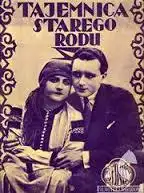
A definitive 5.8/10 rating for a film that redefined the boundaries of cult cinema. Tajemnica starego rodu remains a cornerstone of transgressive art.
Look, if you’re into digging up old cinematic gems, especially from a time when film was still figuring itself out, then Tajemnica starego rodu might be a worthwhile, if *peculiar*, watch. But if you’re looking for anything resembling a modern thriller, or even just a brisk pace, you’ll probably find yourself a bit lost in its *somber* corridors. This one’s for the silent film buffs and those with a real soft spot for early Polish cinema’s particular flavor of melodrama. 🧐
The film, which literally translates to 'Mystery of the Old Family,' really leans into that title. It feels like you’re peering into a dusty old photo album, full of *unspoken secrets* and people who know way more than they let on.
Jadwiga Smosarska, she carries so much of it on her shoulders. Her eyes just *command* the screen, especially when she’s silently piecing things together in that cavernous library. There’s a scene where she finds a hidden compartment behind a loose brick – it’s a classic move, but her reaction shot, that slight tremor in her hand, really sells it.
Honestly, the estate itself is a character. All those long shadows, the way the light catches the dust motes in the grand hall. You *feel* the weight of history, almost too much sometimes. Like the director spent more time framing the *wallpaper* than some of the actual plot points.
There’s this moment early on, a close-up of an old, cracked portrait. It lingers, just… *lingers*. You expect something to happen, a flicker, a subtle shift, but it just stays there. It forces you to project your own unease onto it, which is actually kinda neat, if a little frustrating. 🖼️
Stanislaw Knake-Zawadzki as the stern, watchful guardian is great. He doesn’t need to say much; his *side-eye* does all the heavy lifting. You instantly know he’s got something to hide, or at least he *thinks* he does.
The pacing, well, it’s not exactly a sprint. There are long stretches of characters just... *observing*. Like when our protagonist, I think her name was Helena, walks through the empty dining room for what feels like an entire minute. You get the sense they wanted to build tension, but it just kind of *hangs there*.
One thing that stuck with me was a flickering gas lamp in a dark corridor. The light it cast was so *uneven*, it made the whole scene feel a bit off-kilter, almost dreamlike. A cool effect, even if probably unintentional.
The big 'reveal' near the end, it’s not some grand explosion of information. It’s more of a quiet, almost resigned discovery. It leaves you with more questions than answers, which I guess is the point, but also a little *unsatisfying* if you like things tied up with a neat bow.
The score, what little there is, often feels like it’s trying *too hard* to be dramatic. Sometimes the silence is more effective, actually. Remember that shot of the empty staircase? *Silence* there would have been perfect.
You can almost feel the movie trying to convince you this moment matters. Sometimes it works, sometimes it doesn't. Like the scene where a servant drops a tray of teacups – it’s supposed to be a shock, but it just feels a bit… staged. ☕
It’s not perfect. Some of the editing jumps are a bit jarring, like they lost a reel or something. But then again, that’s part of the charm of these older films, right? The *imperfection*.
This movie gets noticeably better once you accept its own languid rhythm. Don't fight it; just let it wash over you, like a slow, slightly murky river. I’d put it in the same boat as something like Die lebende Tote or maybe even The Circular Staircase – more about mood and the crumbling grandeur than tight plotting.
IMDb 6.6
1930
Community
Log in to comment.