DbcultAccessing Vault...
Cult Review
Senior Film Conservator
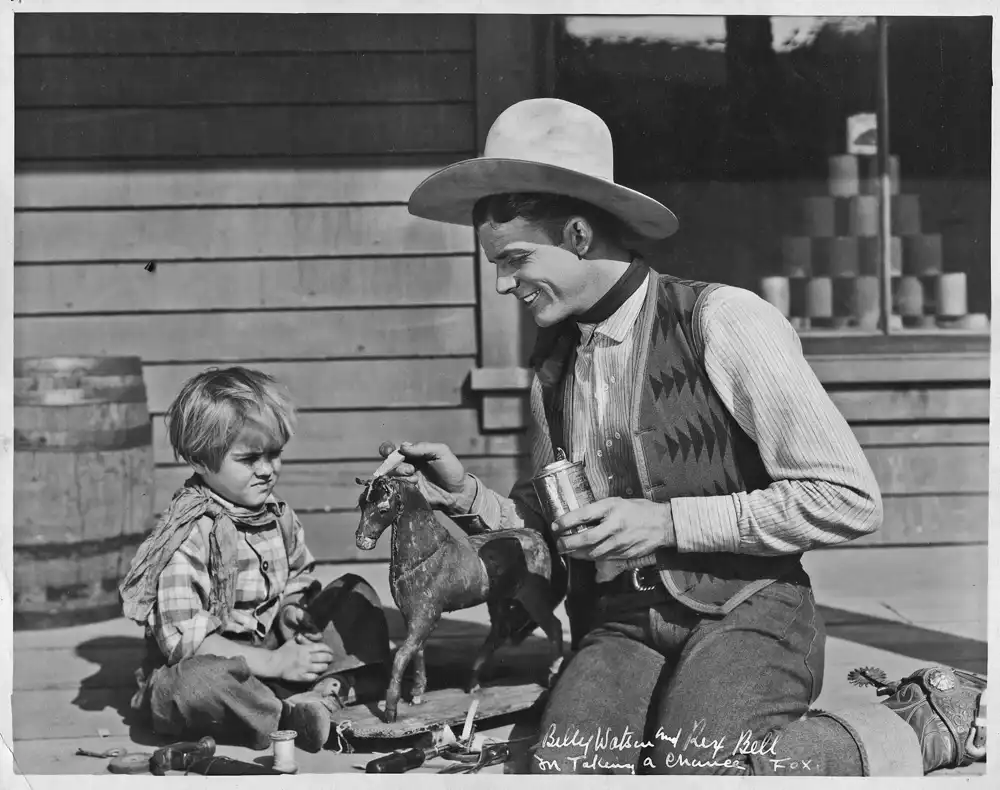
Look, if you're not already into silent westerns, Taking a Chance probably won't be the one to convert you. This is very much for the patient viewer, for someone who enjoys picking apart the early grammar of cinema or just has a soft spot for galloping horses and handlebar mustaches. If you're expecting anything like modern pacing or nuanced performances, you'll likely be bored stiff, but for those willing to lean in, there's some peculiar charm.
The film opens with a flurry of activity, as most silent Westerns do, establishing Joe Courtney (Billy Watson) as a good-hearted, if slightly naive, cowboy. Watson has this earnestness that really sells his character, even when the situations around him are bordering on the absurd. He’s got that classic square-jawed hero thing down, his eyes always scanning the horizon, or, more often, dramatically darting towards the latest damsel in distress.
Lola Todd, as the romantic interest, is… well, she’s there. Her performance feels a bit by-the-numbers for the era. Lots of wide-eyed gasps and delicate hand-to-forehead moments. There’s one scene where she’s supposed to be terrified by a gang of rough riders, and her reaction feels less like genuine fear and more like she’s just remembered she left the stove on. The chemistry between her and Watson is a bit like two polite acquaintances sharing a train car; they’re both there, they’re both going in the same direction, but you never really feel a spark. It’s more of a plot requirement than a passionate connection.
The action sequences are where the film sometimes shines, and sometimes trips over its own spurs. The gunfights are, predictably, full of dramatic falls and very obvious blanks. But there's a sequence involving a runaway stagecoach that, for a few frantic minutes, actually generates some genuine tension. The horses really *look* like they’re trying, and the camera work, while a bit static, manages to capture the chaos pretty well. It’s a highlight.
Then there are the moments that just… drag. There’s a scene where Joe is trying to convince a skeptical rancher of something important (the intertitle makes it clear it's important), and it goes on for what feels like an eternity. Joe gestures, the rancher strokes his chin, Joe gestures again, the rancher slowly nods. It’s maybe thirty seconds too long, and the silence just stretches, making you wonder if the projectionist fell asleep.
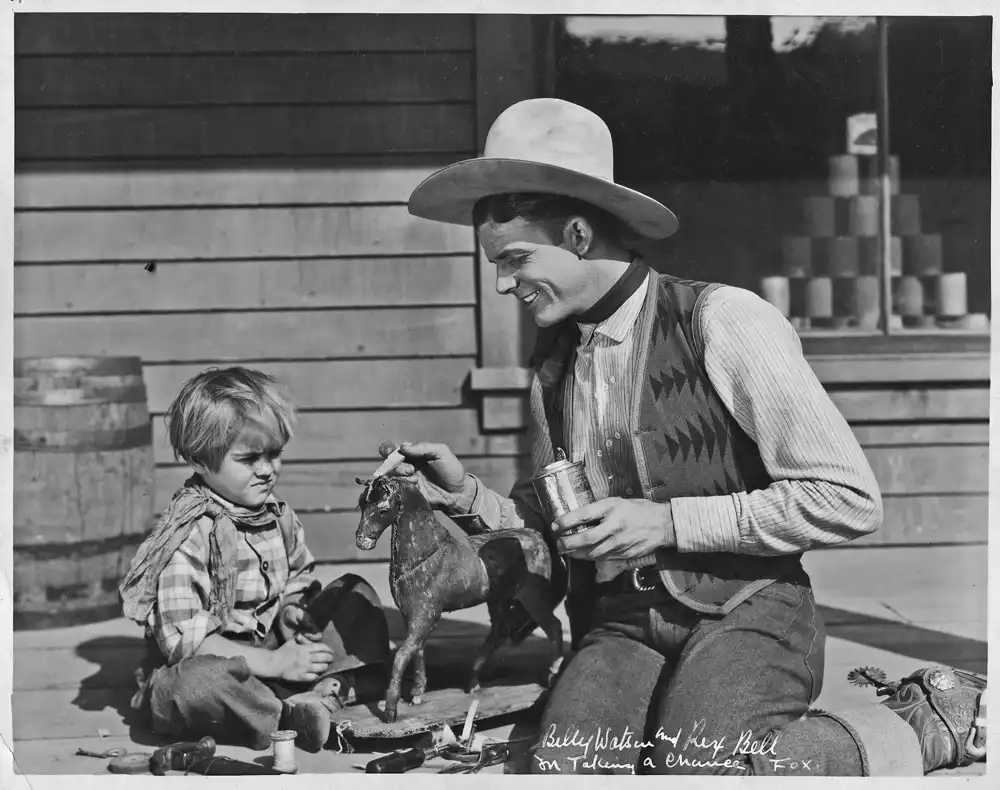
Some of the background details are fun to spot. In one saloon scene, during a particularly rowdy brawl, you can clearly see an extra in the back pause mid-punch to adjust his hat, then resume flailing. It's a tiny, human imperfection that makes the whole thing feel a bit more alive, or at least, less rehearsed. The costumes, too, are a mixed bag. Joe’s cowboy gear always looks impeccably clean, even after a dusty ride or a roll in the dirt. It's like he has a personal dry cleaner riding alongside him. Rex Bell, as the primary antagonist, fares a little better in the visual department; his perpetually scowling face and slightly too-large hat make him instantly recognizable, if not particularly menacing.
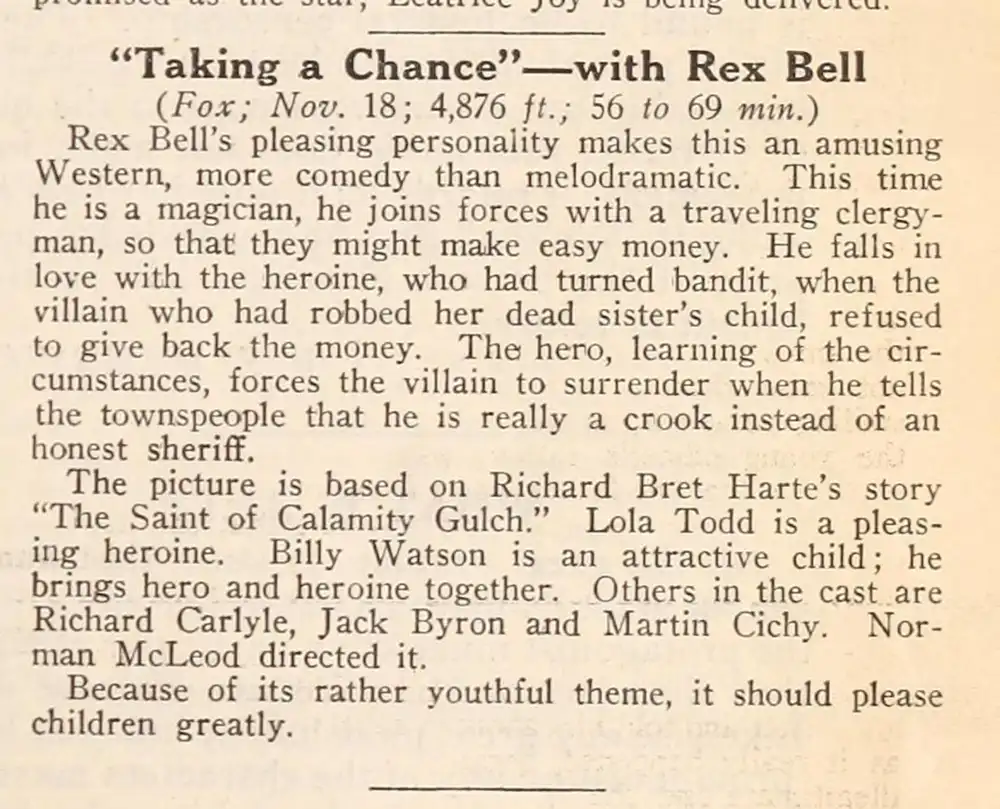
The intertitles are often a treat. Some are wonderfully dramatic, almost poetic, setting up the next conflict with gusto. Others are incredibly literal, stating exactly what you just saw happen on screen. My favorite is probably after a particularly narrow escape: “Joe knew he had taken a chance, but it was worth it.” Yeah, we gathered. The title of the film, right there.
Pacing is the biggest challenge here. It ebbs and flows in a way that feels less like intentional rhythm and more like they just cut when they ran out of film for that particular angle. There are moments of genuine excitement, followed by long, contemplative shots of scenery that, while pretty, halt the narrative completely. It gives the whole film this strange, stop-start energy. You get invested, then you're asked to admire a rock formation for a bit, then back to the plot.
There's a strange tonal shift near the end, where a rather serious confrontation suddenly devolves into almost slapstick comedy. It's not entirely unwelcome; the movie gets noticeably better once it stops taking itself so seriously. Billy Watson actually gets to show a bit more personality when he's not just being stoic. But it feels a little unearned, like they suddenly remembered movies could be funny.
Overall, Taking a Chance is a curious artifact. It’s not going to redefine your understanding of Westerns or silent cinema, but it’s a solid example of what was being made at the time. You watch it for the glimpses into a bygone era of filmmaking, for the earnest performances that sometimes break through the melodrama, and for the sheer, unadulterated fun of seeing cowboys and horses on screen. Just don't expect a masterpiece. Expect a chance. A chance to see some history, and maybe, just maybe, enjoy a few unexpected moments.
IMDb 5.7
1936
Community
Log in to comment.