DbcultAccessing Vault...
Cult Review
Senior Film Conservator
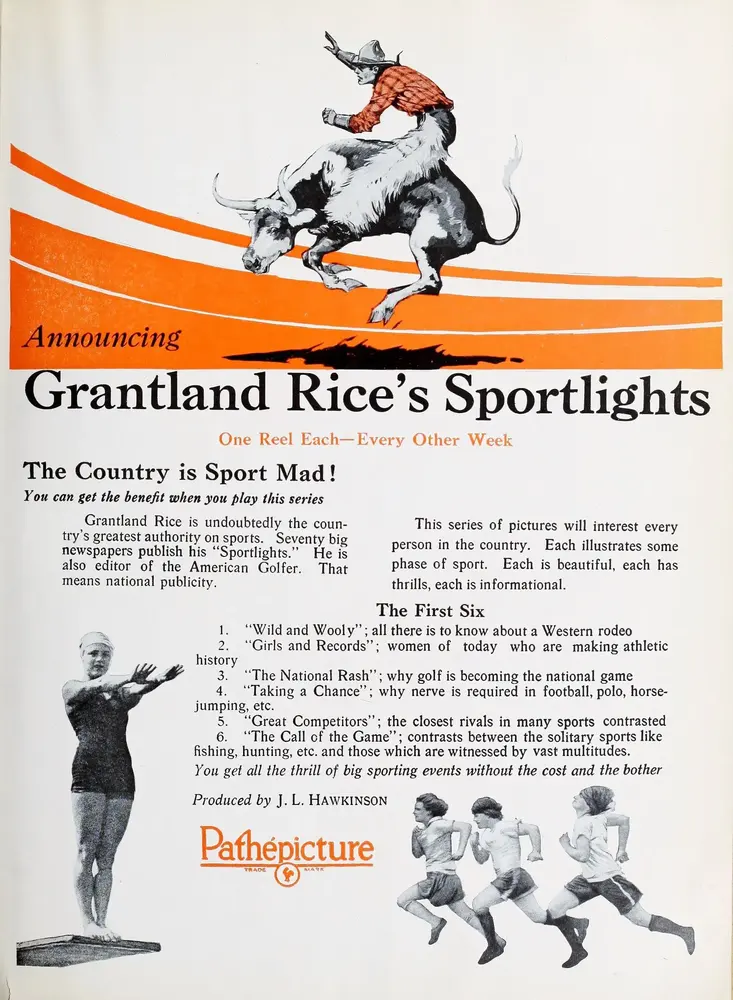
In an era often fixated on the tangible — the score, the finish line, the trophy — a film like 'Taking a Chance' emerges as a profound, almost philosophical, counterpoint. It doesn't merely chronicle athletic feats; it dissects the very psychological bedrock upon which all such triumphs are built: nerve. This isn't a narrative driven by character arcs or intricate plot twists in the traditional sense, but rather a compelling, almost documentary-style essay on the indispensable human element that transforms mere physical activity into breathtaking spectacle. The film invites us to peer beyond the surface of high-octane sports, to understand the internal calculus of risk, commitment, and unyielding resolve that defines moments of glory and, indeed, moments of profound learning. It’s a compelling argument, rendered with cinematic elegance, that the greatest challenge often lies not in conquering an opponent or an obstacle, but in mastering the self.
The segments dedicated to football are particularly illustrative, capturing the visceral intensity of a sport where every yard gained is a testament to collective and individual bravery. Here, 'nerve' isn't just about facing down a charging lineman; it's about the quarterback's unwavering gaze into the chaos, the receiver's commitment to a seemingly impossible catch amidst converging defenders, and the kicker's solitary focus under immense pressure. 'Taking a Chance' strips away the superficiality of the game, revealing the raw courage inherent in each collision, each strategic gamble. It’s a ballet of brute force, where the ability to anticipate, react, and execute under duress is paramount. The film emphasizes that without this underlying current of courage, the intricate plays and formidable physiques would devolve into mere exercises in futility. It’s a powerful reminder that the heart of football beats not just with muscle, but with an indomitable spirit. Contrast this raw, immediate courage with the more insidious, psychological battles depicted in a film like Under Suspicion, where the 'nerve' is a prolonged, internal struggle rather than a sudden, explosive act.
Transitioning to the more aristocratic, yet equally demanding, world of polo, the film offers a nuanced perspective on nerve. Here, it’s a symbiotic courage, a delicate yet firm understanding between rider and beast. The thundering hooves, the precision of the mallet swing, the daring charges across the field — all require an extraordinary blend of skill, judgment, and sheer audacity. A rider must trust their mount implicitly, guiding them through a maelstrom of other horses and mallets, making split-second decisions that could lead to triumph or disaster. The film beautifully articulates how a polo player’s nerve isn't just about their own physical prowess, but their ability to project confidence and control onto an animal, forging a single, formidable entity. It's a more refined, yet no less intense, manifestation of the same core courage seen in football, highlighting the diverse forms that 'taking a chance' can assume. The grand, almost regal, display of power and control here might evoke comparisons to the epic scale of ambition found in The Queen of Sheba, albeit in a sporting context.
Perhaps nowhere is the concept of nerve more exquisitely displayed than in the high-stakes world of horse-jumping. Each obstacle represents a physical and psychological barrier that must be overcome with absolute precision and unwavering commitment. The film captures the breathtaking moment of lift-off, the suspended animation over the formidable jumps, and the graceful landing, all predicated on an almost telepathic bond between horse and rider. The rider’s nerve is palpable: the ability to maintain focus, to guide the horse with subtle cues, and to commit entirely to the jump, knowing that a moment's hesitation could have dire consequences. It’s a dance with gravity and fear, where the smallest lapse in confidence can lead to a refusal or a fall. 'Taking a Chance' frames these moments not just as athletic achievements, but as profound acts of courage, where the boundaries of trust and daring are continually pushed and redefined. The intricate coordination and precise execution could draw thematic parallels to the meticulous planning and daring operations in De røvede Kanontegninger, where success hinges on unwavering nerve and perfect timing.
What makes 'Taking a Chance' resonate so deeply isn't just its vivid portrayal of specific sports, but its uncanny ability to extrapolate the concept of nerve into a universal human experience. The film implicitly argues that the courage required to face a charging opponent or clear a formidable jump is merely a heightened, more visible manifestation of the nerve we all employ in our daily lives. Whether it’s the nerve to pursue an unconventional dream, to stand up for one's beliefs, or to overcome personal adversity, the core psychological mechanism remains the same. It's about confronting uncertainty, acknowledging fear, and choosing to act despite it. The film, through its elegant visual storytelling, becomes a meditation on the very act of living fully, of embracing the inherent risks of existence with an open heart and a determined spirit. This broader application of courage, the quiet resilience in the face of life's challenges, is a theme beautifully explored in a different context in The Old Nest, where everyday fortitude takes center stage.
The film's direction is masterful, employing a visual language that is both dynamic and introspective. The cinematography is not just functional; it's evocative, capturing the kinetic energy of the sports while simultaneously delving into the emotional landscape of the participants. Slow-motion sequences are used judiciously, not merely for stylistic flourish, but to dissect the micro-moments of decision and commitment that define nerve. The framing often isolates the athlete, emphasizing their solitary battle against doubt and the immense pressure of the moment, even within a team sport. The sound design, too, plays a crucial role, amplifying the thud of impact, the roar of the crowd, or the quiet focus before a critical action, immersing the viewer fully in the sensory experience of high-stakes competition. It's a testament to how effectively a film can communicate complex ideas without relying on dialogue or overt character development, instead letting the sheer power of visual narrative speak volumes. This focus on the visual and experiential, rather than explicit dialogue, echoes the storytelling approach in films like Centocelle, where atmosphere and action convey the core message.
'Taking a Chance' subtly explores the psychological undercurrents that fuel or hinder nerve. It touches upon the omnipresent shadow of fear – fear of injury, fear of failure, fear of letting down a team or oneself. Yet, the film shows how true nerve isn't the absence of fear, but the mastery over it. It’s the ability to channel that primal energy into heightened focus, to enter a state of 'flow' where conscious thought dissolves into intuitive action. This is where the film finds its most profound insights: in the moments where athletes transcend their limitations, not through sheer physical force alone, but through an almost spiritual alignment of mind, body, and will. It highlights the mental game that precedes and accompanies every physical act, a battle fought in milliseconds, yet with eternal consequences for the individual's spirit. The internal fortitude required here brings to mind the relentless determination of characters grappling with external pressures, similar to the thematic struggles in Mr. Opp, where inner strength is constantly tested.
In an age where comfort and safety are often prioritized, 'Taking a Chance' serves as a powerful reminder of the inherent value of audacity. It champions the spirit of venturing forth, of embracing calculated risks, and of pushing the boundaries of what is perceived as possible. The film doesn't glorify recklessness, but rather celebrates a disciplined, intelligent courage born from practice, preparation, and an unshakeable belief in one's capabilities. It's a message that transcends the specific arenas of sport, resonating with anyone who has ever faced a daunting challenge and found the strength within themselves to meet it head-on. This emphasis on personal conviction and the courage to live authentically aligns with the spirit of characters found in The Stimulating Mrs. Barton, who defy conventional expectations through their sheer force of will.
Years after its initial release, 'Taking a Chance' remains a seminal work, not just within the canon of sports films, but as a broader inquiry into human potential. It’s a film that demands active engagement, prompting viewers to reflect on their own relationship with risk, fear, and the pursuit of excellence. Its brilliance lies in its simplicity of premise and its profound depth of execution, demonstrating that the most compelling stories are often those that explore the very fabric of human nature. It doesn't offer easy answers but poses fundamental questions about what it means to truly live, to dare, and to strive. The film’s enduring power is a testament to its timeless theme, reminding us that the greatest victories are often won not on the scoreboard, but in the quiet, resolute chambers of the human spirit. The film's philosophical depth and its exploration of fundamental human drives echo the timeless struggles depicted in literary adaptations like Barnaby Rudge, where character is forged in the fires of adversity.
While 'Taking a Chance' focuses on the physical arenas of sport, the concept of nerve resonates across diverse cinematic landscapes. Consider the sheer survival instinct and primal courage displayed in The Sea Wolf, where characters are pushed to their absolute limits, requiring a different, yet equally profound, kind of nerve to simply endure. Or the strategic daring and mental agility required in a high-stakes scenario, perhaps akin to the cleverness needed to navigate complex situations in The Skipper's Narrow Escape. Even films like This Way Out or Dodging a Million, which might lean into comedic or dramatic scenarios of escape and evasion, nonetheless feature protagonists who must summon a certain 'nerve' to extricate themselves from predicament. The common thread is the human capacity to confront daunting circumstances with resolve, whether it's a physical challenge, a moral dilemma, or a test of ingenuity. This film, however, distills that courage into its purest, most athletic expression, making it a unique and invaluable contribution to the discourse on human resilience.
The journey through 'Taking a Chance' is not just an observation of sporting prowess; it's an invitation to introspection. It subtly challenges the viewer to consider where they, too, have summoned their own nerve, or perhaps where they have shied away from doing so. It’s a film that leaves an indelible mark, not just for its visual splendor or thematic clarity, but for its profound understanding of the human spirit’s capacity for bravery. It stands as a testament to the idea that true greatness, in any field, is inextricable from the willingness to step into the unknown, to face the odds, and to, quite literally, take a chance.
IMDb 5
1928
Community
Log in to comment.